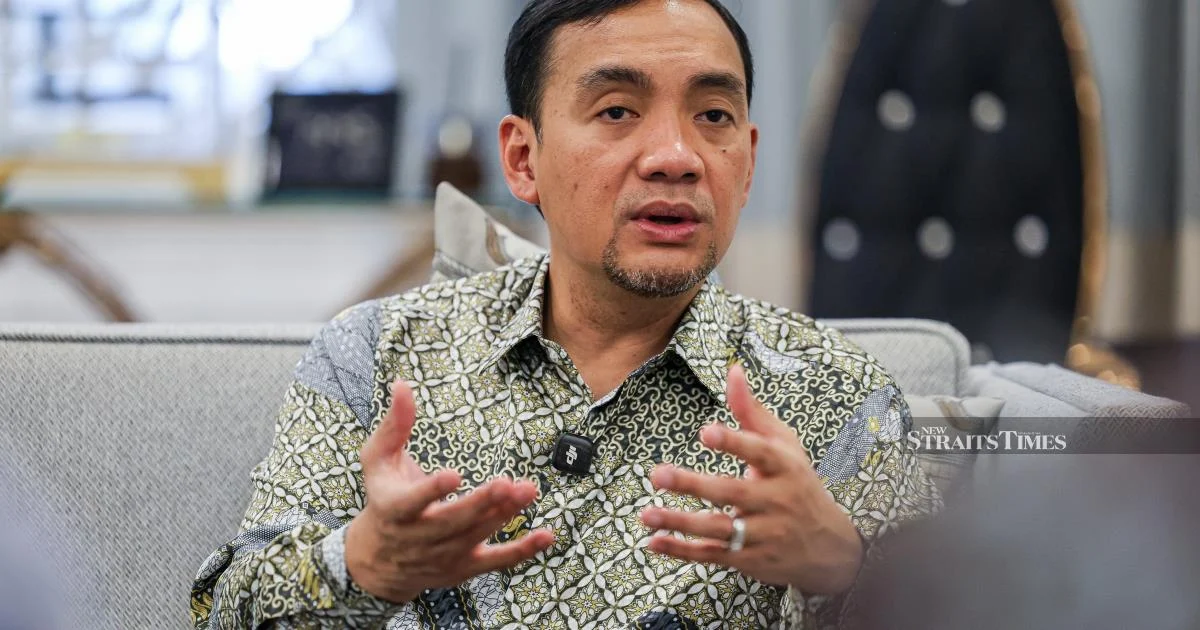
Johor's caretaker Menteri Besar Datuk Onn Hafiz Ghazi has firmly closed the door on any potential partnership between Barisan Nasional and the Democratic Action Party (DAP) should the coalition succeed in securing a fresh electoral mandate in the state. The declaration comes at a critical juncture as Johor prepares for its next state election, with Onn Hafiz signalling a hardline stance that prioritises ideological principles over pragmatic political alignment.
The rejection is framed squarely around fundamental differences in political ideology rather than mere tactical considerations or personality conflicts. Onn Hafiz's position reflects a broader conservative stance within the Malay-Muslim-dominated sections of Barisan Nasional, particularly within UMNO, which continues to view the DAP as philosophically incompatible with the coalition's core values and governing principles. This ideological argument serves as a powerful messaging tool to reassure conservative voters who might otherwise harbour concerns about Barisan's electoral prospects or the party's strategic direction.
The timing of Onn Hafiz's emphatic statement carries particular significance within the context of Malaysian politics. Over the past decade, Malaysian political alliances have become increasingly fluid and pragmatic, with parties frequently crossing traditional lines to form working governments. The 2020 Sheraton Move that toppled the Pakatan Harapan government, followed by the formation of the Perikatan Nasional administration, demonstrated that electoral mathematics often triumph over stated principles. In this environment, Onn Hafiz's categorical rejection of DAP appears designed to distinguish Barisan's approach and signal political constancy.
Johor holds particular importance as Malaysia's second-largest state and a traditional Barisan stronghold. The state's political fortunes carry symbolic weight across the entire federation, and electoral outcomes here frequently influence national political calculations. By staking out this unequivocal position regarding DAP, Onn Hafiz is both consolidating Barisan's base within Johor and potentially preempting speculation about post-election coalition arithmetic that might otherwise destabilise voter confidence. The statement effectively tells Johor voters that Barisan remains committed to its traditional values and will not compromise fundamental principles even if electoral circumstances become challenging.
The invocation of ideology as the decisive factor is noteworthy because it sidesteps more practical objections to a DAP partnership. Rather than citing specific policy disagreements or administrative concerns, Onn Hafiz frames the incompatibility as existential and unbridgeable. This framing resonates particularly strongly in Johor, where Malay-Muslim voters form a substantial majority and where traditional UMNO narratives about safeguarding constitutional provisions and religious interests retain considerable appeal. The ideological argument thus serves as both a genuine reflection of political differences and a sophisticated appeal to the state's core voting blocs.
The DAP's position in Malaysian politics has evolved considerably over recent decades, but the party continues to face the challenge of its predominantly non-Muslim membership base and its historically secular political platform. In Johor specifically, where Islamic institutions and Malay-Muslim interests occupy a central place in state governance and identity, the DAP's presence remains relatively marginal. Onn Hafiz's explicit rejection thus reflects political reality on the ground while simultaneously reinforcing a particular narrative about what constitutes acceptable political partnership within a state where religious and ethnic sensitivities run particularly high.
This statement also needs to be understood against the backdrop of broader Barisan Nasional reconstruction efforts. Following the party's loss of federal power in 2018 and subsequent internal turbulence, Barisan has been attempting to reestablish itself as the stable, values-based alternative to the fragmented opposition. By emphasising ideological consistency and rejecting what might be characterised as opportunistic alliances, Barisan leadership seeks to differentiate itself from Pakatan Harapan's coalition model, which critics argue has proven unwieldy and collision-prone due to divergent values and interests among its component parties.
For Malaysian and Southeast Asian observers, Onn Hafiz's position illustrates an enduring tension in modern democratic politics: the challenge of balancing ideological coherence with electoral pragmatism. While his rejection of DAP may reflect genuine differences in political philosophy, it also implicitly acknowledges that electoral outcomes might not always produce clear mandates requiring coalition negotiations. The strength and absoluteness of his language suggests he recognises the political risks of appearing to equivocate on fundamental principles, yet also leaves minimal room for flexibility should post-election negotiations require creative solutions.
The statement carries implications that extend beyond Johor's borders. If Barisan performs well in the state election and Onn Hafiz forms government without requiring coalition partners, his rejection of DAP becomes validated and strengthens his standing within UMNO and Barisan more broadly. Conversely, should Barisan face difficulties in winning an outright mandate, the categorical nature of his rejection could prove constraining in ways that complicate post-election negotiations. This dynamic reflects the calculated risk inherent in making such emphatic political declarations: they serve immediate strategic purposes but potentially limit future flexibility.

