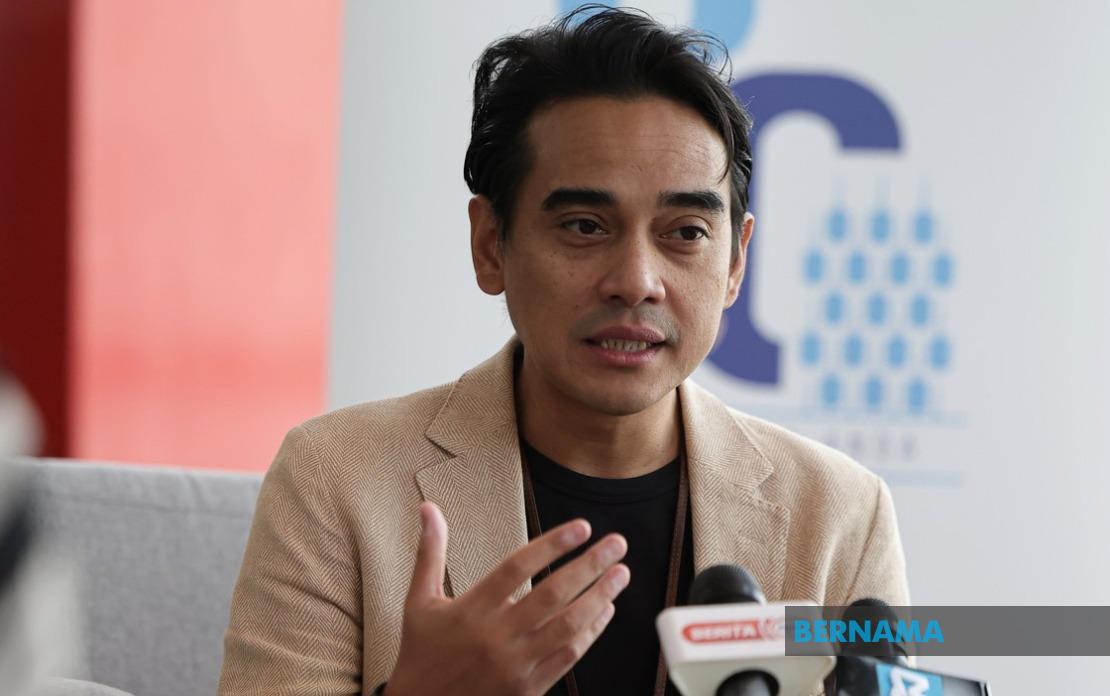
The Malaysian media industry faces a defining moment as artificial intelligence reshapes newsroom operations and journalistic practices. Director-General of Broadcasting Ashwad Ismail has issued a stark message to practitioners across the country: those unwilling to develop technological competency risk professional obsolescence. Speaking during a recent appearance on Bernama TV's The Nation programme, Ismail reframed the relationship between journalism and AI, positioning the technology not as a replacement for human reporters but as an essential tool that separates thriving professionals from those left behind.
Ismail's characterisation of AI adoption as fundamental to career survival reflects broader anxieties rippling through news organisations worldwide. His assertion—that another journalist with superior AI skills will inevitably surpass those who remain technologically stagnant—captures the competitive pressure mounting in Malaysian newsrooms. The warning arrives as media outlets grapple with shrinking budgets, declining print revenues, and the need to produce more content faster. In this environment, journalists who can leverage AI for research, story ideation, fact-checking, and even initial drafting gain measurable advantages over peers relying solely on traditional methods.
Crucially, Ismail cautioned against viewing AI as a threat to journalism's fundamental purpose. Rather than allowing automation to erode editorial standards or replace human judgment, he advocated positioning the technology as a complementary force that amplifies journalistic capacity. This nuanced approach acknowledges legitimate industry concerns while refusing to surrender to technological determinism. The distinction matters particularly in Malaysia, where trust in media institutions remains fragile and public confidence depends heavily on perceived editorial integrity and accuracy.
The broadcasting chief identified a critical gap in current industry practice: the absence of robust guidelines governing AI use in newsrooms. Without clear frameworks, media organisations risk deploying these tools inconsistently, potentially compromising journalistic ethics or creating accountability vacuums. Responsible AI integration requires deliberate policies addressing questions of attribution, algorithmic bias, data privacy, and the appropriate boundaries between automated and human decision-making. Such guidelines become especially urgent in Southeast Asia, where regulatory environments remain fluid and media practitioners often operate without comprehensive professional standards.
Ismail's emphasis on preserving human capacity and enhancing journalistic products rather than replacing journalists suggests a pathway for sustainable technology adoption. This perspective matters for Malaysian newsrooms preparing for digital transformation. Rather than viewing AI as a cost-reduction measure enabling mass layoffs, this framing treats the technology as a means of elevating output quality and allowing journalists to focus on high-value reporting that requires investigative rigor, contextual analysis, and ethical judgment. Whether newsrooms actually implement AI with this philosophy rather than prioritising efficiency gains remains an open question.
Beyond technological adaptation, Ismail identified another critical challenge threatening journalism's viability: eroding public trust. His solution centred on returning to journalism's foundational principles, particularly strengthening hyperlocal reporting and deepening community engagement. This prescription recognises that technology alone cannot salvage journalism's credibility crisis. Citizens increasingly distrust mainstream media across the region, viewing outlets as either politically compromised or disconnected from their daily concerns. Hyperlocal reporting—covering neighbourhood issues, municipal governance, school affairs, and community problems—directly addresses this alienation by demonstrating that newsrooms care about ordinary people's lives.
The emphasis on human connection as trust-building mechanism carries particular resonance in Malaysia's polarised media landscape. As misinformation spreads through social media and political factions weaponise news coverage, journalists who establish genuine relationships with communities become invaluable credibility anchors. These reporters earn trust through consistent presence, fairness, and responsiveness to audience concerns—attributes that no algorithm can replicate. AI might enhance the efficiency or breadth of hyperlocal coverage, but it cannot substitute for the authentic human engagement that Ismail identified as essential.
Ismail's remarks arrived as the Malaysian media industry prepares for HAWANA 2026, a major gathering that will bring together over 1,200 participants including journalists, ASEAN representatives, and government officials. Prime Minister Datuk Seri Anwar Ibrahim is scheduled to officiate the event at PICCA Convention Centre @ Arena Butterworth, Penang on June 20. This high-profile platform underscores the government's commitment to media development and suggests that technological adaptation will feature prominently in industry discussions during the coming years.
The convergence of these themes—AI adoption, trust rebuilding, and regional media cooperation—reveals the multifaceted challenges confronting Southeast Asian journalism. Malaysian media professionals cannot simply import technological solutions from Western newsrooms operating in different regulatory, cultural, and economic contexts. Instead, they must develop locally appropriate frameworks that harness AI's analytical power while reinforcing the human elements that regional audiences value: authentic community connection, cultural sensitivity, and ethical transparency.
For Malaysian journalists specifically, Ismail's message contains both warning and opportunity. The competitive pressure he described is real; news organisations increasingly favour practitioners who understand data analysis, automation workflows, and AI-augmented reporting techniques. Yet his equal emphasis on journalism's fundamentals—truthfulness, community service, and human judgment—suggests that technological skill alone insufficient without ethical grounding. The professionals who thrive will combine both: mastering AI tools while deepening their commitment to journalism's core mission of serving the public interest.
The path forward requires proactive industry leadership. News organisations should invest in AI training programmes that emphasise ethical application rather than mere technical proficiency. Professional bodies should develop guidelines addressing responsible AI use. Educational institutions should integrate technology and ethics instruction. Without deliberate effort to shape how AI enters Malaysian newsrooms, the technology may ultimately undermine the trust and credibility that Ismail rightly identified as journalism's most valuable asset.