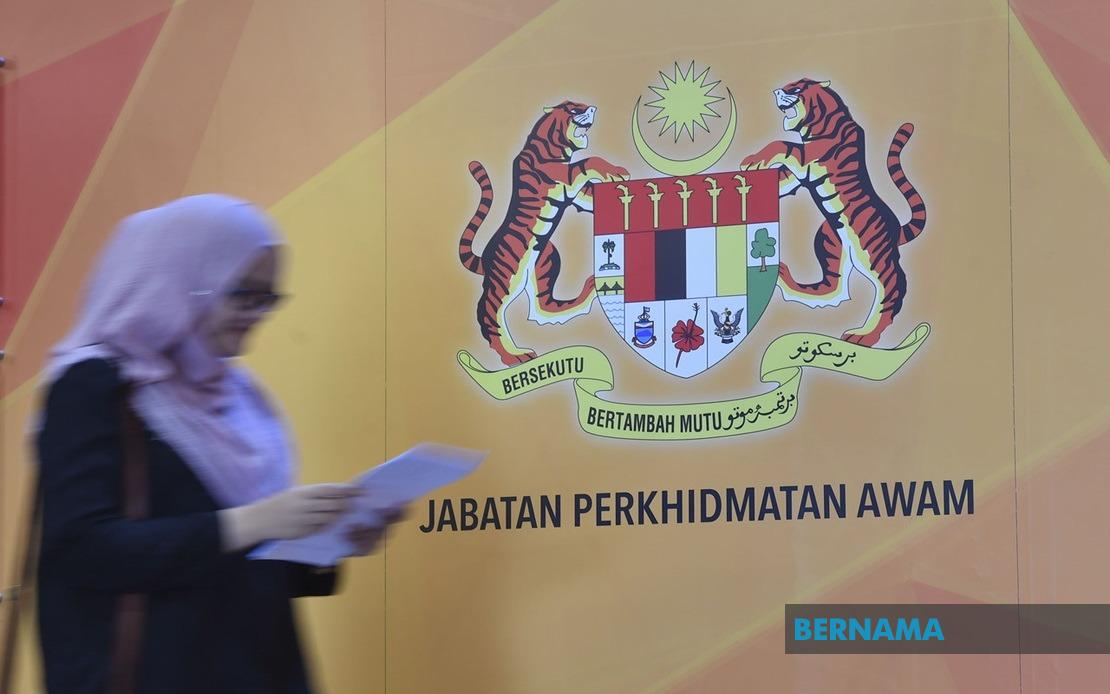
Malaysia's Public Service Department (JPA) has unveiled a significant intake of 640 sponsorship opportunities for students graduating with the Sijil Pelajaran Malaysia (SPM) in 2026, reinforcing the government's push to cultivate skilled professionals who will underpin the nation's economic transformation. The announcement reflects the MADANI Government's broader educational strategy to identify and nurture exceptional talent capable of enhancing Malaysia's competitive standing globally whilst addressing critical sectoral skill gaps.
The sponsorship portfolio encompasses four distinct pathways tailored to different aspirations and career objectives. The National Sponsorship Programme provides 30 positions, whilst the Special Programme targeting graduates from Japan, Korea, France and Germany brings 140 slots to the table. A further 200 places emerge through the Special Programme for Domestic SPM Graduates, and the JPA-MARA Special Programme (PKJM) contributes the largest tranche at 270 slots. This tiered structure allows the department to serve multiple objectives simultaneously: maintaining international partnerships through country-specific programmes, supporting domestic mobility, and facilitating inter-agency collaboration through the MARA partnership.
Studies supported through these schemes span strategically important disciplines spanning engineering, the sciences, technology, and social sciences—fields the government has identified as essential for driving Malaysia's structural economic advancement. Rather than operating as traditional scholarships, these arrangements function as convertible loans under the Academic Merit-Based Convertible Loan (PBUA) framework, introduced by JPA in June 2025. This mechanism represents a philosophical shift in how the public service invests in human capital: rather than outright grants, merit-based recipients commit to maintaining academic rigour with the possibility of loan conversion based on performance.
The geographical reach of these opportunities is notably expansive, extending well beyond Malaysia's borders to encompass universities in the United States, Australia, Japan, South Korea, France, Germany, the United Kingdom and New Zealand, alongside premier domestic institutions. For Malaysian families and students from middle to upper-middle income backgrounds, this constellation of options creates unprecedented pathways to world-class education without the immediate financial burden that typically constrains access to such programmes. The emphasis on developed economies with strong research infrastructure suggests JPA's strategy prioritises exposure to cutting-edge knowledge and methodologies that can be brought back and adapted for Malaysian contexts.
The application window and results announcement process demonstrate JPA's commitment to transparency and accessibility. Candidates who submitted applications during the earlier registration period could access their sponsorship outcomes online from 10 am on the announcement date through June 22, utilising the department's dedicated digital portal. This timeframe, though brief, reflects the operational constraints of managing mass applications whilst maintaining administrative efficiency. The online-first approach also reduces geographic barriers that previously disadvantaged applicants in East Malaysia and rural areas, though digital literacy and connectivity remain peripheral considerations in the implementation architecture.
The PBUA framework merits closer examination for what it reveals about evolving attitudes toward public investment in education. By conditioning financial support on demonstrated academic excellence throughout the recipient's tertiary journey, JPA introduces accountability mechanisms that traditional scholarship models lacked. Scholarship recipients understand from inception that their financial arrangement contains a performance component—a refinement that incentivises sustained excellence rather than treating educational sponsorship as a one-time allocation. For recipients, this structure positions academic achievement not merely as an aspirational goal but as a financial obligation intertwined with their studies.
From a sectoral perspective, JPA's emphasis on engineering, science, technology and social sciences responds to demonstrable labour market shortages and future-oriented economic requirements. Malaysia's transition toward higher-value manufacturing, biotechnology, digital services and professional services creates sustained demand for tertiary-educated workers in precisely these domains. By channelling sponsorship resources strategically toward these fields, JPA operates not merely as an educator but as a workforce strategist, attempting to align educational outputs with predictable economic needs. The inclusion of social sciences—historically undersupported in merit-based educational investment—signals recognition that Malaysia's development requires sophisticated expertise in economics, public administration, policy analysis and social innovation alongside technical capabilities.
For Southeast Asian observers and regional education analysts, the JPA announcement offers insights into how Malaysia positions itself within the competitive landscape for tertiary talent. The maintenance of bilateral educational exchange programmes with East Asian economies (Japan, South Korea) alongside partnerships with established Anglo-American and European universities reflects a diversified approach to knowledge acquisition. Rather than clustering sponsorships exclusively within any single cultural or educational sphere, JPA cultivates exposure to multiple intellectual traditions and pedagogical approaches. This heterogeneity better equips sponsored graduates to navigate an interconnected professional environment where cross-cultural fluency and methodological flexibility increasingly differentiate exceptional performers.
The implicit meritocratic foundation of these schemes—selection based on academic performance rather than socioeconomic background or political patronage—carries profound implications for Malaysian society's educational equity architecture. Whilst 640 slots remain modest relative to the annual SPM cohort of hundreds of thousands, the universal eligibility criteria and transparent selection process establish precedent. Successful applicants gain not only financial support but symbolic validation of their capabilities, strengthening their professional trajectories and contributing to a national narrative that rewards achievement irrespective of origin. This visibility of merit-based advancement, when amplified through successful sponsee achievements in international contexts, potentially reshapes domestic perceptions about what Malaysian students can accomplish when provided comparable opportunities to international peers.
The timing of this announcement—announced in mid-June for an intake occurring approximately twelve months later—provides prospective applicants with reasonable planning horizons. Students in the lower secondary levels can adjust subject selection and academic focus knowing that this pathway remains available. Parents and educators can factor these opportunities into longer-term educational planning rather than encountering them as sudden windfalls. For schools across Malaysia, awareness of these sponsorship possibilities creates additional incentive structures to maintain educational quality and stretch high-performing cohorts, as success in these competitive schemes generates institutional prestige.
Looking ahead, the sustainability and scalability of the 640-slot commitment warrant monitoring. Demographic trends in Malaysia show fluctuating SPM cohort sizes, whilst macroeconomic pressures periodically constrain public expenditure on education. The PBUA mechanism's effectiveness—particularly the loan conversion calculations and repayment terms for recipients who subsequently enter private sector employment—will influence whether this model remains financially viable or requires restructuring. Additionally, the geographic distribution of successful recipients (comparing urban and rural representation, regional disparities, and distribution across peninsular and East Malaysian states) will reveal whether these merit-based opportunities reinforce existing educational inequalities or genuinely broaden access to tertiary advancement for talented students across Malaysia's diverse communities.

