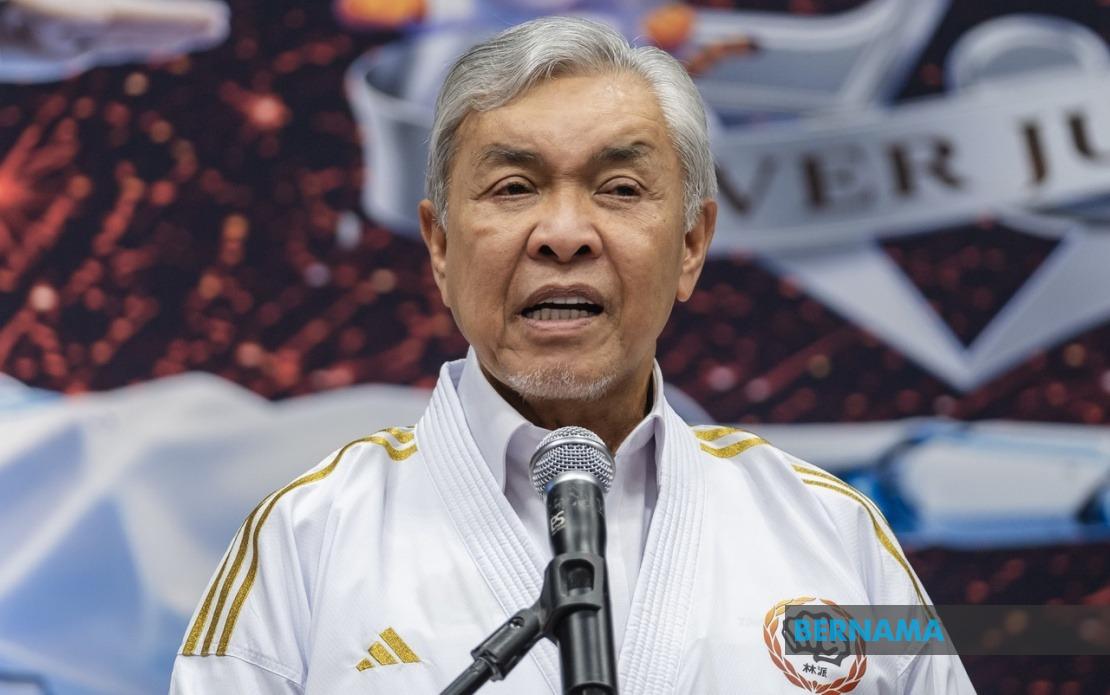
The Malaysian government is moving closer to integrating karate into the Malaysian Schools Sports Council (MSSM) championships, with Deputy Prime Minister Datuk Seri Dr Ahmad Zahid Hamidi pledging to table the proposal before Cabinet in the coming week. Speaking after opening the International Open Karate Championship 2026 at Titiwangsa Stadium in Kuala Lumpur, Ahmad Zahid, who chairs the Cabinet Committee on Sports Development, indicated that Education Minister Fadhlina Sidek would be asked to evaluate the feasibility of formally recognising karate within the MSSM competition structure.
The timing of this initiative reflects growing momentum within Malaysia's sporting administration to give karate formal status at the school level. Currently, while karate enjoys considerable popularity in Malaysian educational institutions and has a substantial following among younger athletes, it lacks official recognition as a medal sport within the premier national inter-school championship. The proposal represents a significant potential shift in how the country manages competitive martial arts across its school system.
The 25th edition of the International Open Karate Championship 2026, which catalysed Ahmad Zahid's announcement, demonstrated the sport's expanding international reach and competitive depth. The tournament drew over 1,850 competitors representing 17 nations, underlining karate's capacity to attract world-class participation and serve as a platform for high-level competition. Such prestigious international events on Malaysian soil provide a compelling backdrop for advocating enhanced domestic institutional support.
Putrajaya Karate Association president Datuk P. Thiagu, who organised the championship, has emerged as a vocal proponent of MSSM integration. Thiagu articulated the strategic rationale underpinning the push for formal recognition: including karate in the school championships would substantially strengthen the sport's developmental pipeline and create structured pathways for talent identification. The association views MSSM inclusion as essential leverage for cultivating the next generation of Malaysian karate athletes.
For Malaysian school karate enthusiasts, MSSM recognition would represent a watershed moment. Currently, despite karate's widespread presence in school curricula and extracurricular programmes, young athletes lack a unified, nationally sanctioned competitive framework comparable to that offered by MSSM for established sports. Formalising karate's status would legitimise the sport's standing within Malaysian education and provide schools with incentives to invest in coaching and programme development.
The grassroots development argument carries substantial weight in Malaysian sports policy discourse. Karate administrators contend that without institutional backing through major competition frameworks like MSSM, the sport risks failing to convert its existing school presence into sustained talent production. By contrast, MSSM recognition would create cascading benefits: enhanced school participation, improved coaching standards, better resource allocation, and ultimately greater capacity to produce world-competitive athletes.
This proposal also aligns with international trends in sports development. Karate's inclusion in the Tokyo Olympics and its continued presence in the Paris Games have elevated its status globally and prompted governments across Asia to strengthen domestic institutional support. Malaysia's potential MSSM integration reflects a recognition that karate has transcended niche status to become a mainstream competitive discipline worthy of establishment backing.
The Cabinet pathway outlined by Ahmad Zahid suggests the government takes the proposal seriously. By channelling the matter through the Cabinet Committee on Sports Development and securing the Deputy Prime Minister's personal commitment to present it to the full Cabinet, karate's advocates have positioned their case at the highest levels of sporting administration. This institutional elevation substantially increases the likelihood of positive consideration.
However, MSSM inclusion would require careful logistical and administrative planning. The championships already encompass numerous sports, and integrating a new discipline demands decisions regarding participation categories, venue requirements, judging standards, and certification of officials. The Education Ministry would need to assess whether existing MSSM infrastructure can accommodate karate or whether parallel facilities and governance arrangements are necessary.
Financial considerations will also factor into the Cabinet's deliberations. Establishing karate within MSSM involves budgetary implications for tournament organisation, coaching development, and athlete support. Officials would need to determine whether current sporting allocations can absorb these costs or whether additional appropriations are justified.
For Southeast Asian sports observers, Malaysia's potential move has broader significance. The region's karate community watches developments carefully, as decisions by major economies like Malaysia influence broader institutional patterns. Should MSSM integration succeed, other regional nations may follow suit, creating a more coordinated approach to karate development across Southeast Asia and enhancing the region's competitive standing internationally.
The next week's Cabinet discussion will prove decisive. Ahmad Zahid's public commitment and the visible success of the International Open Karate Championship 2026 have created momentum that Thiagu and the Putrajaya Karate Association are positioned to capitalise upon. If Cabinet approves the proposal and the Education Ministry proceeds with implementation, Malaysian karate could soon transition from a popular school activity to an officially sanctioned competitive sport with all the institutional resources and credibility that status confers.

