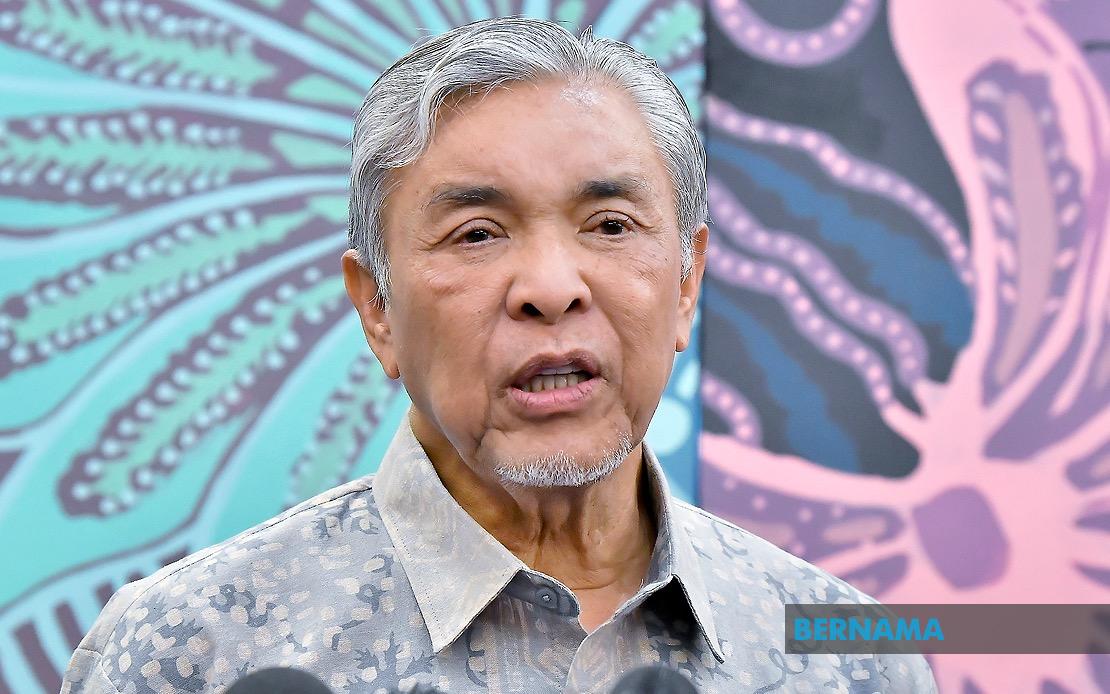
Deputy Prime Minister Datuk Seri Dr Ahmad Zahid Hamidi has moved to dispel widespread misconceptions surrounding the proposed expansion of the South East Johor Development Authority, emphasising that the initiative centres on facilitating coordinated development rather than acquiring land ownership within affected districts. Speaking at the KEJORA 2025 Excellent Service Awards ceremony in Kota Tinggi, Ahmad Zahid, who also holds the Rural and Regional Development portfolio, stressed the importance of clarifying the agency's intentions as the proposal gains traction among policymakers and stakeholders across the region.
The clarification comes amid concerns from communities and landowners in the proposed expansion zones who fear the widened mandate could lead to compulsory land acquisition or displacement. Ahmad Zahid's remarks signal the government's attempt to rebuild confidence in KEJORA's expansion plans by reframing the narrative around administrative coordination and strategic planning rather than territorial consolidation. This messaging appears designed to address grassroots apprehension while maintaining momentum for the broader developmental agenda in south-eastern Johor.
The proposal draws significant credibility from KEJORA's established track record in the region. The authority has demonstrated exceptional implementation capacity, with projects achieving a success rate of 98.3 per cent—a figure that substantially exceeds performance benchmarks for comparable development entities across Malaysia. This historical performance has become the cornerstone justification for extending KEJORA's operational scope, with policymakers arguing that the agency's proven competence warrants expanded responsibilities in coordinating development activities across a larger geographic footprint.
South-eastern Johor, particularly the Pengerang district, has emerged as a catalyst for regional economic transformation. The area is experiencing accelerated development through major industrial and infrastructure projects, complemented by expanding tourism sectors that are reshaping the district's economic profile. The expansion proposal reflects recognition that effective coordination across these growth areas requires administrative structures capable of harmonising multiple development initiatives, reducing bureaucratic friction, and ensuring that individual projects align with broader regional objectives.
Public sentiment toward the expansion appears favourable, based on findings from KEJORA's own feedback study. The survey revealed 96 per cent of respondents supporting the initiative, suggesting substantial community endorsement for the coordinated development model. However, such polling data requires contextual interpretation; survey methodology, question framing, and respondent demographics can significantly influence outcomes. The high approval rating nonetheless indicates that concerns about the expansion may be concentrated among specific groups rather than reflecting widespread opposition.
Despite administrative enthusiasm for the expansion, ultimate approval authority rests with the monarchy. Ahmad Zahid explicitly acknowledged that implementation remains contingent on consent from His Majesty Sultan Ibrahim and the Regent of Johor, Tunku Mahkota Ismail. This constitutional safeguard reflects Malaysia's constitutional framework, where state development matters require royal assent, ensuring that expansion cannot proceed without explicit approval from Johor's traditional institutions. The mechanism underscores the balanced relationship between executive administration and constitutional authority in Malaysian governance.
Resourcing for KEJORA's expanded operations appears substantial. The Rural and Regional Development Ministry has allocated approximately RM138 million to KEJORA for development initiatives within the region. This funding supports 107 programmes already implemented, with an additional 350 smaller projects scheduled under the existing allocation. The budgetary commitment demonstrates government confidence in KEJORA's delivery capacity and suggests that expansion plans are backed by tangible financial resources rather than aspirational policy statements.
Parallel administrative initiatives are reinforcing the development momentum in south-eastern Johor. Minister in the Prime Minister's Department Datuk Seri Azalina Othman Said, who represents Pengerang in Parliament, has proposed elevating the district to municipal status—a significant administrative upgrade that would grant Pengerang greater fiscal autonomy and institutional capacity. Ahmad Zahid publicly endorsed this proposal, indicating coordination between separate ministerial portfolios on advancing Pengerang's administrative standing and developmental infrastructure.
Azalina has also advocated for constructing a new hospital in Pengerang to accommodate the district's rapidly expanding population. Healthcare infrastructure represents a critical development gap in rapidly-growing regions, where population growth frequently outpaces service provision. The hospital proposal addresses not only immediate medical service shortages but also signals government recognition that Pengerang's trajectory requires substantial investment in social infrastructure alongside economic development. Such investments typically generate positive multiplier effects throughout regional economies.
The KEJORA expansion must be understood within Malaysia's broader regional development strategy. South-eastern Johor occupies strategic significance due to its proximity to Singapore, its port facilities, and its emerging petrochemical and energy sectors. Enhanced coordination through expanded KEJORA authority could improve integration between state and federal development frameworks while reducing implementation bottlenecks that frequently impede infrastructure projects. Effective coordination becomes increasingly critical as project complexity escalates and resource competition intensifies across multiple development priorities.
For Malaysian businesses and regional investors, the expansion carries implications for project approval timelines and administrative engagement. Centralised coordination under KEJORA could potentially streamline development processes by consolidating approvals and reducing jurisdictional fragmentation. However, expanded authority also concentrates decision-making power, which necessitates robust transparency mechanisms and community consultation processes to maintain legitimacy and public confidence. The success of the expansion will depend substantially on whether KEJORA can maintain operational efficiency while managing increased geographic and administrative scope.
The proposal reflects evolving approaches to regional governance in Malaysia, where authorities increasingly adopt coordinated development models rather than siloed sectoral administration. KEJORA's expansion suggests confidence in this institutional model, though implementation will test whether agencies can effectively manage expanded mandates without compromising service quality or community engagement. The coming months will reveal whether the initiative achieves its coordination objectives or generates administrative complications that undermine initial objectives.

