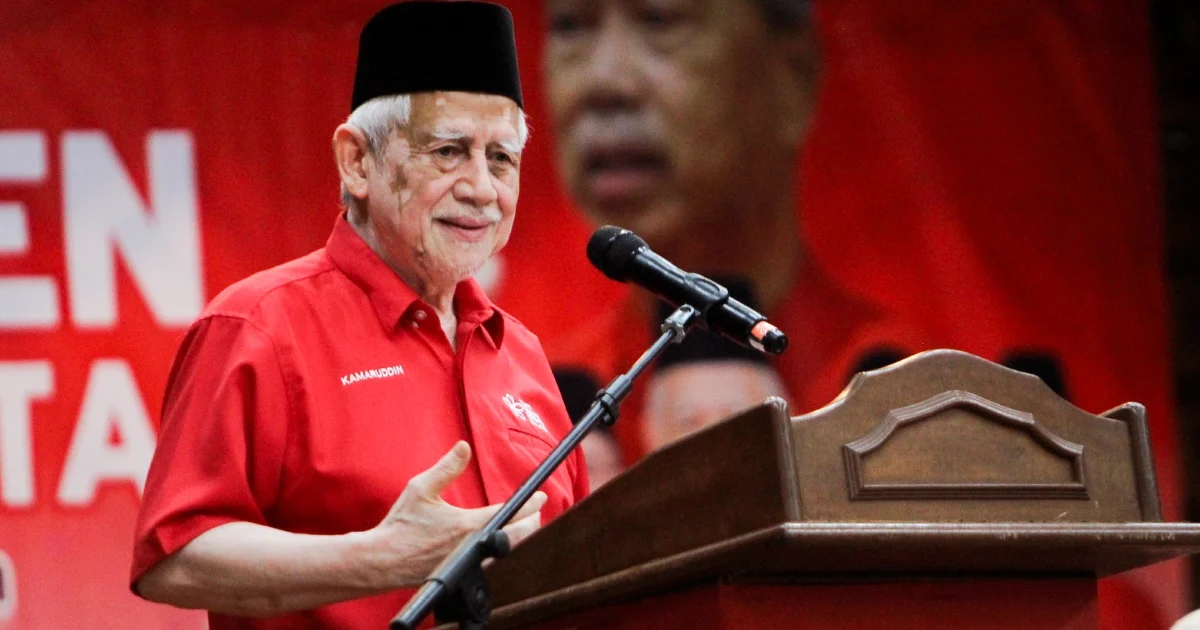
Kelantan Bersatu has demonstrated measured composure following Perikatan Nasional's announcement to remove two prominent figures from its leadership hierarchy. The decision to exclude Datuk Seri Mohamed Azmin Ali and Datuk Dr Mohd Radzi Md Jidin from the coalition's leadership line-up, announced late in the evening, appears to have triggered minimal disruption within the state-based faction, suggesting either an anticipated change or a demonstration of organisational discipline.
The development reflects ongoing internal adjustments within Perikatan Nasional as the coalition continues to navigate its political positioning following the 2023 general elections. Such leadership restructuring is not uncommon within Malaysia's coalition politics, where parties regularly recalibrate their internal arrangements in response to electoral performance, factional dynamics, or broader strategic considerations. For observers monitoring PN's cohesion, the reaction from Kelantan's contingent offers insight into how grassroots party machinery responds to central directives.
Mohamed Azmin Ali, who has served in various ministerial and party positions and maintains significant standing within Bersatu, represented a notable figure whose removal signals potential shifts in PN's power distribution. His tenure has been marked by both notable legislative achievements and considerable political controversy, making his repositioning a matter of observable consequence within the coalition framework. The Gombak Member of Parliament has previously held posts including the International Trade and Industry Ministry under the Muhyiddin administration, lending him institutional weight within party structures.
Mohd Radzi Md Jidin, similarly, held considerable significance as a senior party figure and state-level politician. His removal from the leadership line-up represents another substantial reshuffling within PN's upper echelon. The transitions affecting both figures underscore the coalition's attempts to recalibrate its organisational effectiveness, whether through consolidating decision-making power, addressing internal criticism, or repositioning ahead of anticipated state or federal political developments.
Kelantan Bersatu's apparent equanimity regarding these changes carries implications for party stability. The faction's muted response suggests either that party members anticipated such moves following private consultations, or that the state-level organisation maintains sufficient cohesion to absorb leadership adjustments without triggering dissent. In Malaysian party politics, where factional tensions frequently surface around personnel decisions, such measured reactions are noteworthy and indicate functioning internal communication channels.
The timing of the announcement—released during evening hours—may itself merit consideration. Such timing sometimes reflects strategic communications management, allowing time for internal messaging before public engagement. For a coalition managing relationships across multiple parties and state-level organisations, coordinated communication becomes essential to preventing speculation or contradictory public statements from different factions.
For Malaysian political observers and regional analysts, these developments within Perikatan Nasional carry broader significance. The coalition's ability to manage internal changes without triggering visible fractures remains critical to its viability as a political force. Unlike Pakatan Harapan, which initially struggled with coordination across multiple parties, PN has demonstrated relative organisational discipline, though this remains subject to periodic testing through such personnel decisions.
Kelantan's particular position within PN carries additional weight. The state serves as a significant power base for the coalition, particularly through PAS's dominant position in state politics. Bersatu's faction within Kelantan operates within this context, and its response to central party decisions reflects how coalition partners manage internal dynamics while maintaining broader political stability. The measured response suggests party mechanisms are functioning appropriately to absorb such announcements.
Looking forward, these leadership adjustments may presage additional organisational changes within PN as the coalition positions itself for upcoming electoral and governance challenges. Whether these moves represent preparation for state elections, recalibration of ministerial portfolios, or responses to internal performance evaluations remains subject to subsequent developments. The coalition's ability to execute such changes while maintaining public stability will influence how both supporters and critics assess its institutional maturity and long-term viability as a governing force in Malaysian politics.