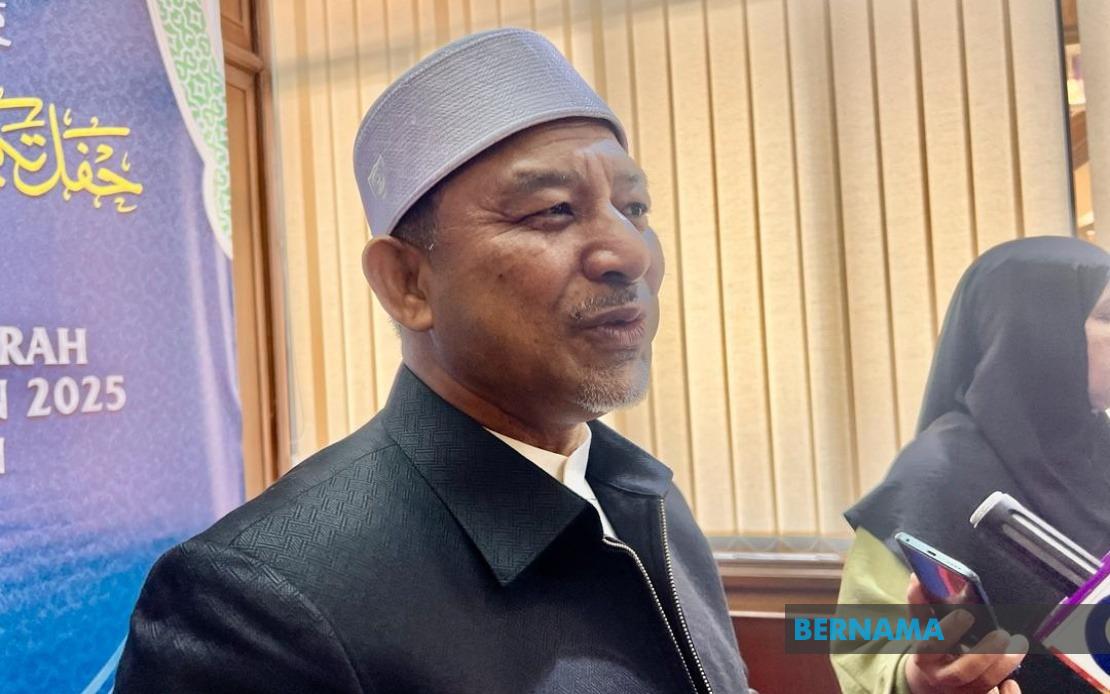
Kelantan's government has channelled RM747,000 towards recognising academic excellence among students who demonstrated outstanding performance in three major national examinations last year. The funds have been distributed to 1,494 recipients of the Sijil Pelajaran Malaysia (SPM), Sijil Tinggi Persekolahan Malaysia (STPM), and Sijil Tinggi Agama Malaysia (STAM) qualifications at a ceremony held in Kota Bharu on June 28. Each student received RM500 as tangible acknowledgment of their academic achievements, a gesture that Menteri Besar Datuk Mohd Nassuruddin Daud characterised as the state's token of appreciation for their excellence.
The allocation represents a significant commitment by the state administration to fostering a culture of scholastic achievement. Notably, the number of high-performing students recognised this year reached 1,494, a considerable jump from the 1,300 honoured in the previous cycle. This upward trajectory suggests that Kelantan's educational institutions are producing increasingly strong academic outcomes, and the recognition scheme appears to be motivating students to strive for higher standards. The expansion in the cohort of rewarded students indicates not merely a population increase but rather a genuine improvement in the overall quality of examination performance across the state.
Kelantan's Menteri Besar emphasised that education constitutes a cornerstone priority for the state government, justifying the substantial financial commitment through a broader strategic vision. Beyond the immediate excellence incentives, the administration has established complementary support mechanisms designed to facilitate student progression into tertiary education. Through the Kelantan Darulnaim Foundation (YAKIN), the state government provides educational loans to Kelantanese pursuing higher qualifications, with a built-in incentive structure that converts these loans into scholarships for students who achieve excellent results during their university studies.
This conversion mechanism represents thoughtful policy design, as it rewards sustained academic performance rather than merely initial examination success. Students who secure entry to universities through the loan scheme face a clear pathway to scholarship conversion, effectively reducing their financial burden if they maintain academic excellence at the tertiary level. Such progressive support structures recognise that financial constraints often constitute a significant barrier to educational mobility in Malaysia, particularly for families in states with lower average incomes. By addressing funding gaps through both initial loans and performance-conditional conversions, Kelantan creates multiple touchpoints for supporting talented students from modest backgrounds.
The recognition programme also extends to educational institutions managed by the Kelantan Islamic Foundation (YIK), reflecting the state's commitment to strengthening both secular and religious educational pathways. This inclusive approach acknowledges the diverse educational landscape within Kelantan and ensures that excellence across different educational streams receives equal validation and support. The distinction underscores a holistic view of educational development rather than narrowly privileging one educational tradition over another.
At the awards ceremony, held at the Kota Darulnaim Complex, special recognition was extended to Siti Maisarah Yahya Lotfi from Sekolah Menengah Kebangsaan Dato' Biji Wangsa in Tumpat, who achieved the distinction of being named the National-Level Best Overall STPM 2025 Student. Her selection represents the apex of academic achievement at the STPM level nationwide, highlighting Kelantan's capacity to produce students of exceptional calibre who compete successfully at the national stage. Such individual achievements amplify the impact of state-level recognition schemes by demonstrating tangible evidence that Kelantan's students can excel not merely within state comparisons but against peers from more economically developed regions.
Beyond the education sector focus, the Menteri Besar addressed a separate but significant land rights issue during his public remarks, revealing tensions between development authority operations and settler livelihoods in rural Kelantan. The South Kelantan Development Authority (KESEDAR) has reportedly seized land from more than 100 settlers at the Chalil Land Development Scheme (RKT) in Gua Musang, citing reclassification of the territory as forest reserve. These settlers had cultivated their plots for approximately two decades, creating established livelihoods and community structures that now face disruption through administrative decision-making.
Mohd Nassuruddin indicated that his administration views this matter with sufficient seriousness to warrant immediate investigation and thorough review by the Kelantan Forestry Department and the state Land and Mines Office (PTG). The directive suggests acknowledgment that the land status change warrants scrutiny, particularly given the extended cultivation period and the settlers' apparent lack of advance warning regarding reclassification. This approach signals a departure from bureaucratic automaticity, though the ultimate resolution remains uncertain given the technical complexity of overlapping land classifications and the established environmental protection rationale for forest reserve designation.
The twin policies revealed during the Menteri Besar's public engagement illustrate Kelantan's governance approach spanning human capital development and resource management. The substantial investment in educational incentives reflects confidence in building the state's competitive positioning through enhanced human capital, while the land rights review suggests pragmatic recognition that development authority decisions affect real populations whose grievances merit administrative consideration. Together, these initiatives position Kelantan as attempting to balance modernisation objectives with social stability considerations, though the long-term success of this balancing act depends on effective implementation and genuine resolution of identified conflicts.

