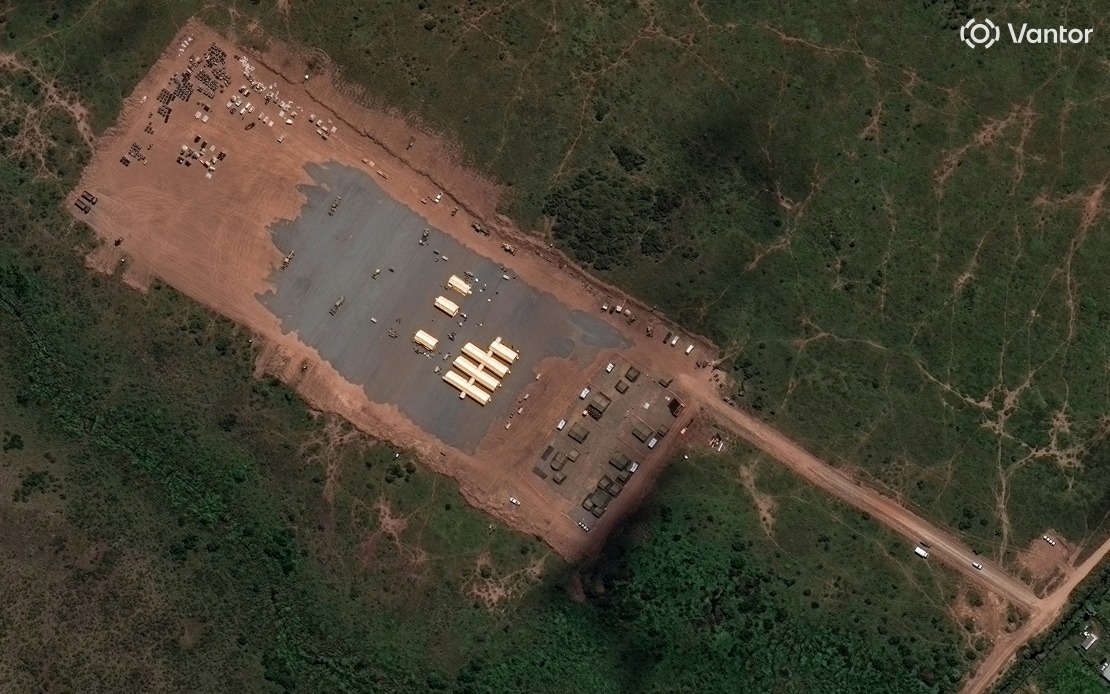
A Kenyan High Court judge has ruled that Health Minister Aden Duale wilfully defied judicial orders by permitting construction work to proceed on a controversial US-backed Ebola quarantine facility. Judge Patricia Nyaundi's contempt finding on Monday marks an escalation in a dispute that has pitted the government's biosecurity ambitions against constitutional concerns and community opposition in the northeastern Laikipia region.
The 50-bed isolation complex is situated at Laikipia Air Base, roughly 200 kilometres north of Nairobi and approximately 8 kilometres from the town of Nanyuki. According to government explanations, the facility would serve as a quarantine hub for American personnel potentially exposed to the Ebola virus during disease response operations in the Democratic Republic of the Congo and neighbouring countries. The facility represents one layer of a broader health cooperation framework between Nairobi and Washington, though that arrangement has become unexpectedly contentious.
Judge Nyaundi determined that Duale had breached court orders issued on May 28 and reaffirmed on June 2, which explicitly halted the project pending legal review. Despite these directives, she found, the minister continued to oversee and commission construction activities at the site. The judge directed Duale to appear in person the following day for arguments in mitigation and to receive sentencing for the contempt violation, signalling serious potential consequences for the minister.
The underlying legal challenge originated with the Katiba Institute, a constitutional rights organisation that petitioned the High Court arguing the project violated multiple legal standards. The institute contended that the initiative lacked proper transparency, failed to secure meaningful public participation from affected communities, and raised unresolved questions about public health protocols and constitutional safeguards. The court accepted these arguments sufficiently to issue the suspension order, effectively freezing the project pending fuller examination of its legality.
President William Ruto's subsequent public disclosure that he had authorised the facility at the direct request of United States President Donald Trump intensified domestic controversy. By framing the arrangement as a bilateral health partnership gesture, Ruto inadvertently crystallised the political dimensions of the dispute—what the government presented as responsible disease surveillance infrastructure, critics viewed as foreign military or intelligence positioning dressed in public health language.
Government defenders have reframed the facility as essential to Kenya's disease preparedness, emphasising that the country's role as East Africa's primary transportation, diplomatic and financial hub creates exposure risks that justify such capacity. They argue that Kenya cannot responsibly manage potential Ebola cases without adequate isolation infrastructure, and that hosting this facility strengthens not only national but regional pandemic response capabilities. The United States Embassy in Nairobi has similarly maintained that the facility poses no epidemiological threat to surrounding populations and constitutes legitimate pandemic preparedness within a broader regional capacity-building initiative.
Local opposition has nevertheless intensified dramatically. Communities in Laikipia County have organised sustained protests against the project, with demonstrators rejecting both government assurances and the court suspension order itself. Police records, witness accounts and reports from human rights organisations document at least three deaths occurring during protest activities, suggesting that the facility dispute has triggered serious social tensions and, at times, violent confrontations between security forces and demonstrators.
For Malaysian observers, the Kenyan case illuminates tensions that resonate across Southeast Asia regarding biosecurity infrastructure, foreign military cooperation and sovereign decision-making. Malaysia, like Kenya, occupies a crucial regional transport and trade position while remaining concerned about disease incursion risks. The Laikipia controversy demonstrates how ostensibly technical public health projects can become politically fraught when they involve foreign governments, military installations and limited domestic consultation.
The contempt proceeding against Duale represents more than a routine judicial sanction—it reflects a broader institutional standoff between the executive branch's security prerogatives and judicial oversight of constitutional compliance. The fact that a sitting health minister faces potential punishment for defying court orders signals that Kenya's judiciary retains institutional autonomy to constrain executive actions, even when those actions supposedly serve national security or health interests.
The case also illustrates how pandemic preparedness initiatives can generate unexpected political costs. While few observers question the need for enhanced disease surveillance capacity, the manner of implementation—involving foreign governments, potentially classified arrangements, and decisions made without full parliamentary debate or community consent—can undermine public trust and provoke legal challenges that delay or derail projects.
As Duale prepares to return to court, the outcome will test both Kenyan constitutional law and the government's capacity to negotiate between competing imperatives of disease preparedness and democratic accountability. For Kenya's East African neighbours, including Tanzania and Uganda, the precedent carries significance for how governments may implement their own biosecurity initiatives.
The suspension order remains in force pending the contempt hearing outcome, effectively freezing the facility's construction indefinitely. Whether Duale receives a custodial sentence, a financial penalty, or some other sanction will signal the strength of judicial resolve to enforce compliance with orders that limit executive discretion in national security matters.

