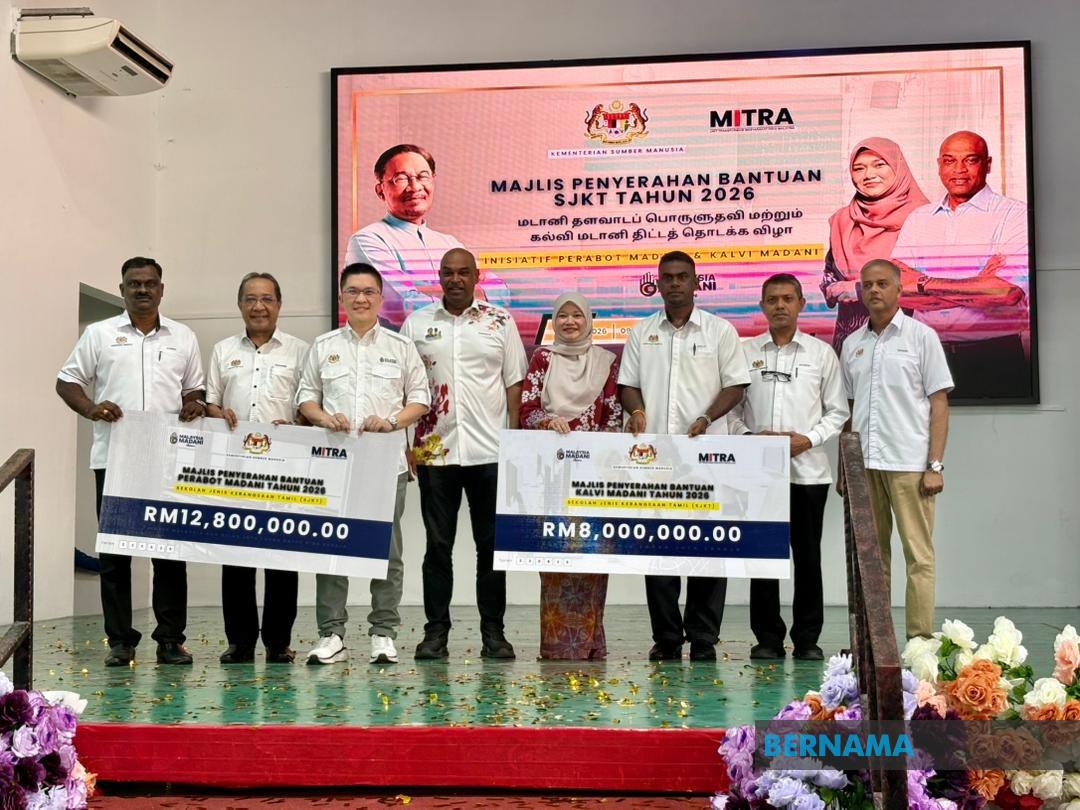
The Ministry of Human Resources has unveiled a comprehensive response to job displacement caused by ongoing global supply chain instability, pledging to channel affected workers into Technical and Vocational Education and Training programmes that equip them with marketable skills for Malaysia's evolving labour market. Speaking at an event in Johor Bahru, Human Resources Minister Datuk Seri R. Ramanan emphasised the government's commitment to bridging the gap between displaced workers and available employment opportunities across key economic sectors.
Workers from manufacturing, services and construction industries—sectors particularly vulnerable to international supply chain volatility—will form the initial beneficiary pool for the initiative. Rather than leaving displaced workers without immediate recourse, the government has structured a two-pronged approach combining skills development with targeted employment matching. This strategy reflects recognition that simply offering training without employment pathways risks creating additional frustration among workers seeking rapid reintegration into the workforce.
The Social Security Organisation's MYFutureJobs platform will serve as the practical mechanism for connecting retrained workers with employers actively recruiting. The platform's job matching function will be calibrated to ensure that individuals completing TVET programmes are guided toward positions genuinely suited to their newly acquired qualifications and career aspirations. This careful matching process acknowledges that inappropriate job placements can lead to rapid job switching and reduced worker satisfaction, ultimately benefiting neither employers nor employees.
The announcement coincided with the launching of the MADANI Furniture Initiative, which will distribute RM12.8 million worth of educational furniture and equipment across 361 government-aided Tamil vernacular schools nationwide. The initiative represents a parallel commitment to educational infrastructure, reaching 39,692 pupils and 5,290 teachers in these institutions. The phased supply of high-quality furniture—including tables, chairs, storage cabinets and cooling fans—will proceed from June through August, ensuring schools receive resources to enhance their physical learning environments.
Complementing the furniture distribution, the KALVI MADANI Programme commits RM8 million toward comprehensive educational support targeted at approximately 10,410 Indian pupils studying in 315 selected Tamil vernacular schools. This programme extends beyond physical infrastructure to address holistic student welfare, incorporating free tuition classes that provide additional academic support, nutritional assistance recognising the link between nutrition and learning outcomes, and learning kits with digital devices that narrow the technology access gap affecting disadvantaged communities.
Teacher welfare initiatives embedded within the KALVI MADANI Programme acknowledge that educational quality depends substantially on educator wellbeing and resources. By allocating funds specifically for teacher support, the government addresses a persistent challenge in vernacular education systems where resource constraints have historically affected both educator morale and instructional quality. This approach signals understanding that sustainable educational improvement requires investment across the entire ecosystem rather than student-focused measures alone.
The timing of these initiatives reflects broader government priorities balancing economic resilience with social inclusion. As global supply chains continue experiencing disruption from geopolitical tensions, pandemic aftereffects and shifting trade patterns, Malaysian policymakers recognise that worker displacement has immediate human consequences requiring swift intervention. The TVET pathway represents a forward-looking response, building workforce adaptability crucial for surviving ongoing international volatility.
For Malaysia's manufacturing sector specifically, supply chain disruptions have created both risks and opportunities. While some firms have relocated operations or restructured production, others have pivoted toward higher-value manufacturing requiring more technically skilled workforces. TVET programmes can facilitate worker transitions into these emerging roles, though success depends on alignment between training content and actual market demands. Industry consultation will be essential to ensure curricula remain responsive to evolving employer needs.
The construction and services sectors face parallel transformation pressures. Construction increasingly incorporates green building standards and digital project management tools, while services ranging from logistics to hospitality have accelerated digital adoption. TVET providers must continuously update offerings to reflect these sectoral shifts, ensuring that workers emerging from training programmes possess skills matching contemporary workplace requirements rather than capabilities suited to yesterday's operations.
For workers themselves, participation in TVET programmes offers tangible pathways toward economic recovery and long-term career stability. However, programme success hinges on meaningful accessibility, quality instruction, and genuine employment opportunities following completion. Workers must perceive that time invested in training generates measurable career advancement rather than serving as a temporary holding pattern for displaced labour.
The vernacular school initiatives carry distinct significance within Malaysia's multicultural context. Tamil vernacular schools have historically operated with fewer resources than counterpart institutions, and targeted infrastructure investment signals commitment to educational equity. The combination of physical improvements, academic support and teacher welfare indicates recognition that quality education requires multifaceted investment rather than single-dimensional interventions.
Regionally, Malaysia's approach to managing supply chain displacement offers lessons for Southeast Asian neighbours confronting similar challenges. The integration of skills development, employment matching platforms and social support suggests comprehensive policy thinking that extends beyond workforce retraining to encompass broader economic and social resilience. As regional economies navigate persistent global uncertainties, coordinated approaches to worker support and educational investment may become increasingly important for maintaining labour market stability.
Moving forward, effectiveness metrics will prove critical. Tracking how many displaced workers complete TVET programmes, secure employment through MYFutureJobs matching and sustain positions long-term will reveal whether current initiatives adequately address displacement challenges. Similarly, monitoring improvements in Tamil vernacular school outcomes will indicate whether infrastructure and support investments translate into tangible educational gains for disadvantaged student populations.

