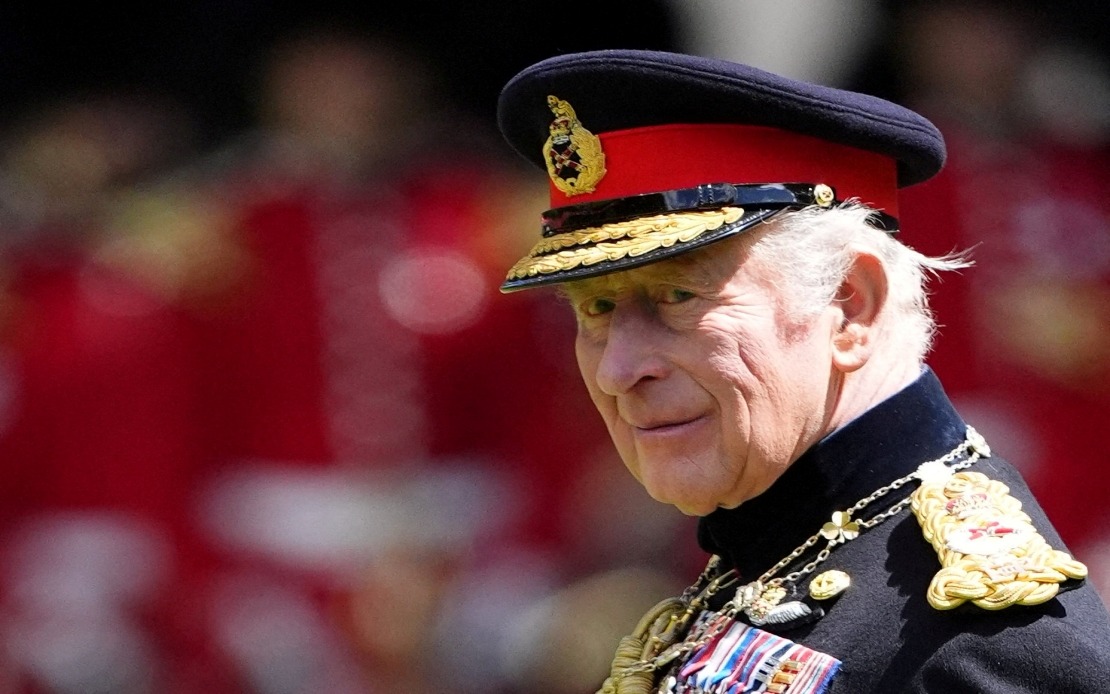
King Charles III has entered uncharted territory in British royal history by becoming the first reigning monarch to publicly disclose his personal tax payments. Buckingham Palace announced on Thursday that the king paid £12.9 million during the 2024-2025 tax year, marking a significant step towards greater financial transparency within the Royal Household. This disclosure represents a watershed moment for an institution traditionally shrouded in fiscal secrecy, signalling a deliberate shift in how the Crown communicates its financial obligations to the public.
The timing and substance of this announcement reflect a broader modernisation effort by the Royal Household to demonstrate accountability. The figures were released alongside fresh documentation outlining the complex sources of royal finances, underscoring the palace's determination to demystify how the monarchy funds its operations and personal expenses. For Malaysian and Southeast Asian observers accustomed to discussions about royal expenditure and public accountability, this transparency move offers an instructive contrast with how different monarchies approach financial disclosure.
The sums involved underscore the substantial nature of the Crown's financial position. In the previous tax year of 2023-2024, King Charles III paid £11.7 million in personal taxes, bringing his total tax contributions since ascending the throne in September 2022 to more than £30 million. These figures derive primarily from his personal investments and the privately held estates of Balmoral and Sandringham, which generate significant revenue streams that form the backbone of his personal income.
Crucially, it is worth noting that British monarchs possess no legal obligation to pay income tax, capital gains tax, or inheritance tax. This exemption has long existed as part of the Crown's constitutional privileges. However, commencing in the 1990s, successive monarchs adopted a voluntary arrangement to pay income tax and capital gains tax on their personal finances, establishing a precedent that King Charles III continues. This voluntary framework distinguishes between the monarch's official public duties and their private financial affairs.
The king's approach to financial disclosure is not entirely new. When he served as Prince of Wales, Charles regularly published information regarding his tax contributions, demonstrating a personal commitment to openness that predates his accession to the throne. Nevertheless, the elevation of these disclosures to the level of a reigning monarch represents a qualitative leap in terms of public prominence and institutional significance. The principle that even the head of state is subject to taxation mirrors broader democratic values, even within a constitutional monarchy framework.
James Chalmers, the keeper of the Privy Purse and senior financial officer for the Royal Household, offered perspective on the underlying rationale for this transparency initiative. He emphasised that while royal finances may appear convoluted to the uninitiated observer, the foundational system operates on clear principles anchored in law and refined through decades of practice. Chalmers suggested that this structured approach ensures the monarch can discharge duties with both independence and accountability while advancing the long-term interests of the nation. His remarks attempt to frame transparency not as a concession to public pressure but as an integral component of how modern monarchy functions.
The disclosure carries particular significance in an era of heightened scrutiny regarding institutional finances and public trust. Numerous democracies and constitutional monarchies face persistent questions about how publicly funded institutions manage resources and demonstrate fiscal responsibility. By voluntarily revealing his personal tax contributions, King Charles III attempts to preempt such criticism whilst reinforcing the notion that the Crown operates within established legal and ethical frameworks rather than above them.
For regional audiences in Malaysia and across Southeast Asia, where questions about royal finances occasionally surface in public discourse, this British precedent offers food for thought regarding the relationship between transparency and institutional legitimacy. Different monarchies have adopted varying approaches to financial disclosure, reflecting distinct constitutional traditions and cultural contexts. The British model, which balances private prerogatives with voluntary public accountability, represents one approach among several.
The Royal Household's move also reflects awareness that contemporary expectations regarding institutional transparency extend even to heads of state. Social media and digital communication have democratised access to information, making it increasingly difficult for traditional institutions to maintain opaque financial arrangements without inviting suspicion or criticism. Proactive disclosure thus serves as a strategic tool for maintaining public confidence and demonstrating that the monarchy operates according to norms applicable to major public institutions.
Looking forward, this precedent may influence how other Commonwealth realms and monarchies approach financial transparency. Should King Charles III's disclosure policy prove popular with the British public and strengthen rather than undermine confidence in the institution, other royal households may face pressure to adopt similar measures. The interplay between tradition and modernisation remains a constant theme in how hereditary monarchies adapt to contemporary democratic expectations.
The financial figures themselves merit contextualisation. The £12.9 million tax contribution, whilst substantial in absolute terms, represents a voluntary gesture by an individual whose personal wealth is conservatively estimated in the hundreds of millions of pounds. The disclosure thus carries symbolic weight beyond its numerical significance, communicating a commitment to shared civic responsibility even among those exempt from legal obligations.
Ultimately, King Charles III's decision to disclose his personal tax payments reflects a conscious calibration of how modern monarchy navigates the tension between tradition and public accountability. By embracing transparency in his financial affairs, the king seeks to demonstrate that the Crown, while distinct in its constitutional role, remains embedded within democratic norms and values. Whether this approach succeeds in bolstering public trust and establishing a new standard for royal financial disclosure remains a question that will unfold over coming years.

