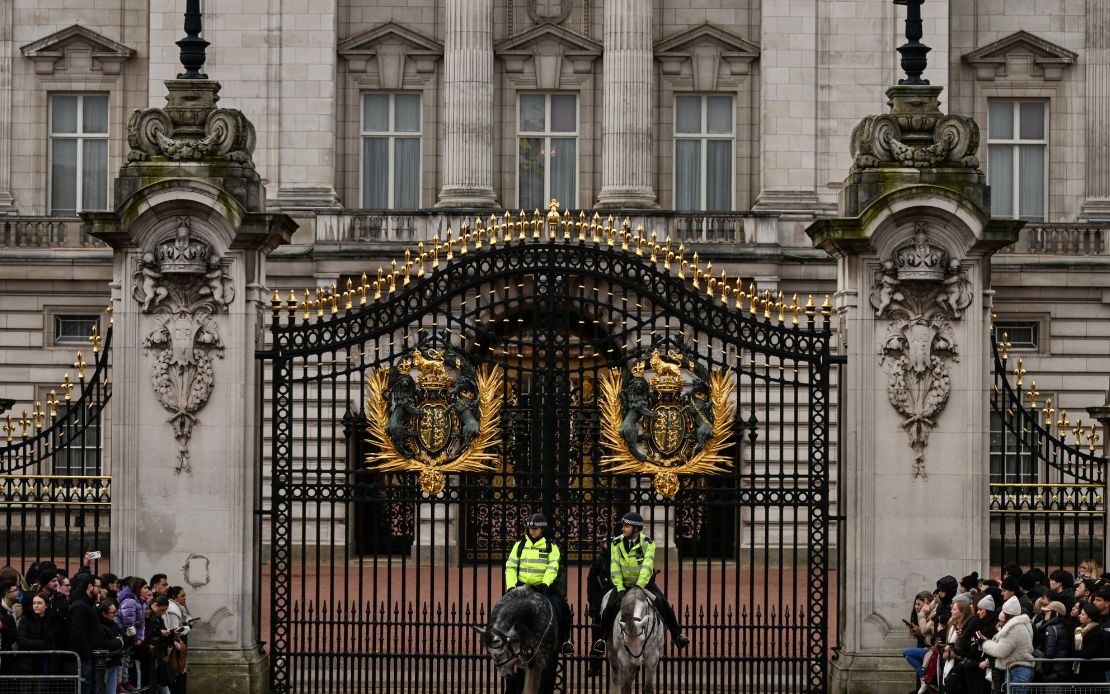
The British Royal Household has clarified that King Charles III and Queen Camilla intend to maintain Buckingham Palace as the institutional heart of the monarchy's ceremonial operations following the conclusion of its extensive renovation programme, while establishing their private domestic life elsewhere. This distinction between public function and private residence marks an important evolution in how the British Crown utilizes its most iconic property and represents a deliberate modernization of royal household arrangements.
Official palace operations will centre on hosting state ceremonies, diplomatic receptions, and major royal occasions at Buckingham Palace once the restoration work concludes. The royal residence will serve as what the Royal Household characterizes as the principal workplace for household staff and administration, reinforcing its role as the operational hub of the monarchy rather than simply a ceremonial backdrop. This arrangement underscores the palace's significance as both a working institution and a symbol of British sovereignty.
The decision reflects contemporary approaches to managing heritage properties and public access. Palace officials anticipate that by not requiring it to function as a full-time private residence, Buckingham Palace can operate more efficiently as a venue for public engagement and national events. The Royal Household statement explicitly notes aspirations to expand public access opportunities to the palace, positioning it as a national heritage asset that benefits from increased visitation and educational programming.
The refurbishment initiative, formally known as the Buckingham Palace Reservicing Programme, has now entered its final year after nearly a decade of work. This comprehensive renovation addresses the structural and mechanical systems of a building constructed in the 19th century, ensuring its preservation for future generations while upgrading fundamental utilities and infrastructure that had not been substantially modernized in decades. The extended timeline reflects the complexity of undertaking such extensive work while managing the palace's continued ceremonial use during portions of the project.
Public engagement with royal properties remains significant. During the 2025-2026 financial year, approximately 97,000 guests attended 827 events held across various royal palaces, demonstrating sustained public interest in experiencing these historic venues. This visitor engagement generates both cultural value and financial contributions to the operations of the royal household, making expanded access an economically sensible strategy alongside its ceremonial benefits.
Funding for the monarchy's operations comes through the Sovereign Grant, a public funding mechanism specifically designated to support the monarch's official duties and maintain royal residences. For the 2025-2026 financial year, this allocation reached £132.1 million, equivalent to approximately US$174 million. Of this total funding, £67.5 million—roughly US$89.11 million—was dedicated specifically to preservation and protection of the occupied royal palaces, highlighting the substantial ongoing investment required to maintain these aging structures.
The distinction between ceremonial and residential functions carries practical implications for palace management and operational efficiency. By separating these roles, the Royal Household can tailor maintenance schedules, access protocols, and staffing arrangements to the specific needs of state functions rather than accommodating round-the-clock private domestic operations. This specialized approach enables more focused resource allocation and potentially enhances both the quality of official events and the sustainability of the heritage preservation effort.
For Malaysian and Southeast Asian observers, this arrangement offers insights into how established monarchies manage the intersection of historical responsibility and contemporary governance expectations. The British approach of maintaining symbolic ceremonial centres while residing in more practical private settings represents one model among various approaches adopted by constitutional monarchies globally. It demonstrates how institutional prestige and public accessibility can be balanced with practical residential arrangements in an era where heritage maintenance competes with modernization demands.
The palace's continued role as ceremonial centre aligns with broader trends in heritage management where public institutions increasingly serve multiple functions—combining historical preservation, educational access, revenue generation through tourism, and official state use. This multi-purpose approach has become standard practice at significant heritage sites across Europe and internationally, reflecting both fiscal constraints and evolving public expectations regarding access to national treasures.
Looking forward, the completion of the refurbishment project will mark the beginning of an operational phase where Buckingham Palace functions primarily as an official venue rather than as a full-time residence. This transition will be closely observed by heritage conservation professionals and royal institution experts as a case study in maintaining centuries-old structures for contemporary state purposes. The arrangements established during this period will likely influence how the palace operates for decades to come, setting precedents for balancing preservation imperatives with public engagement objectives.

