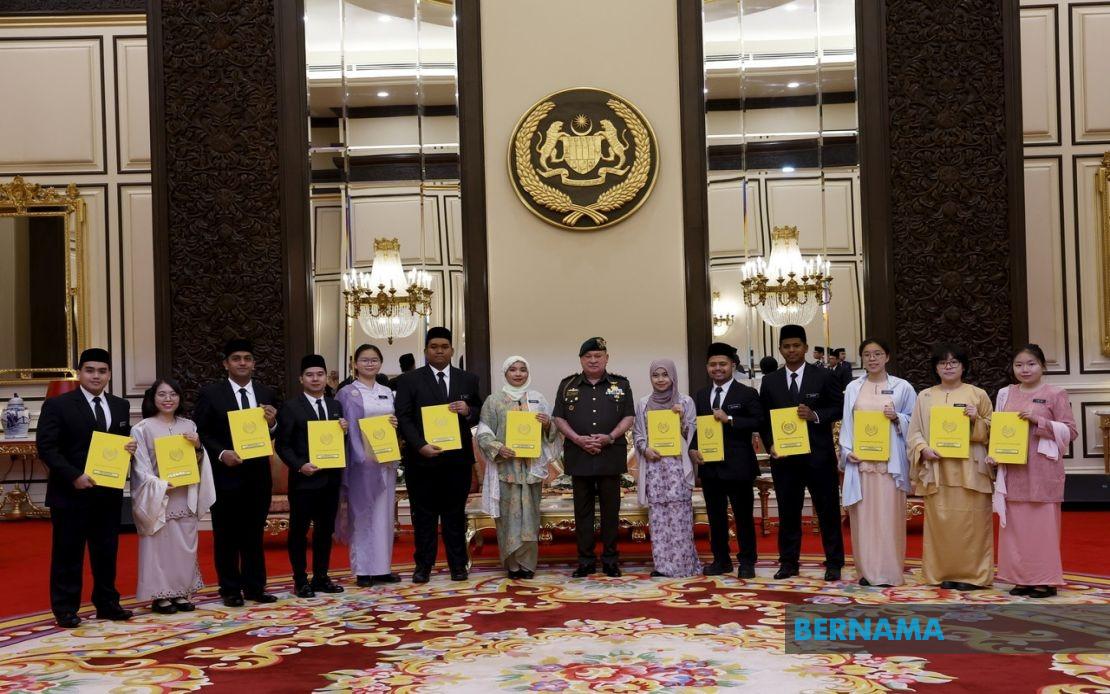
His Majesty Sultan Ibrahim, King of Malaysia, has awarded the 2026 Yang di-Pertuan Agong Scholarships to 14 accomplished scholars at a formal ceremony conducted at Istana Negara in Kuala Lumpur. The occasion underscores the Crown's commitment to nurturing excellence in higher education and advancing Malaysia's research capabilities through targeted investment in its most promising academic minds.
The scholarship recipients represent a carefully selected cohort pursuing advanced degrees at the highest level. Seven scholars will undertake doctoral research programmes, while an equivalent number have been chosen for Master's (Research) track studies. This distribution reflects the scholarship programme's dual focus on both intermediate and advanced research training, ensuring a pipeline of expertise across multiple disciplines within Malaysia's academic ecosystem.
The geographic reach of the awards extends beyond Malaysia's borders. Four recipients will conduct their research at internationally recognised universities overseas, enabling them to engage with leading global research communities and return with world-class credentials. The remaining ten scholars will study at domestic research-intensive universities, strengthening research capacity within Malaysia's own institutional infrastructure and reducing the outflow of talent while building local scholarly networks.
The ceremony brought together senior government figures overseeing the nation's academic and public sector frameworks. Tan Sri Wan Ahmad Dahlan Abdul Aziz, the Director-General of the Public Service, and Tan Sri Dr Azmi Rohani, the Comptroller of the Royal Household, both attended the event, underscoring the government's recognition of the scholarship's importance in developing the public sector's intellectual capital.
Following the presentation, Wan Ahmad Dahlan spoke to assembled reporters about the scheme's exceptional standing. He characterised the BYDPA as the most prestigious scholarship available within Malaysia's government-sponsored higher education ecosystem. Beyond symbolic prestige, the scholarship delivers tangible advantages to recipients through its funding architecture—the programme disburses the highest financial support among all government scholarship initiatives, removing financial barriers that might otherwise constrain academic ambition or force talented individuals into career paths determined by economic necessity rather than aptitude.
For Malaysian readers, the BYDPA awards carry significance that extends beyond the individual beneficiaries. The scholarship programme functions as a strategic tool for building research infrastructure and intellectual capacity. By identifying and supporting early-career researchers at the Master's and PhD levels, Malaysia invests in the human capital required to tackle complex national challenges, from healthcare innovation to industrial advancement and environmental sustainability. The presence of international placements signals confidence in Malaysian scholars' ability to compete at the global level, while domestic awards ensure that expertise remains accessible to local institutions and policy-making bodies.
The programme reflects broader trends in Southeast Asian higher education policy, where countries compete for academic talent by offering enhanced funding and international opportunities. Malaysia's approach—balancing overseas and domestic placement—demonstrates a nuanced strategy. Scholars returning from international study bring global perspectives and networks while maintaining connections to Malaysian research environments. Those studying locally create immediate research output for Malaysian universities while building collaborative relationships within the region.
The selection criteria for BYDPA awards, though not detailed in official statements, typically emphasise academic excellence, research potential, and alignment with national development priorities. Recipients must demonstrate not only strong academic records but also the intellectual independence and curiosity required to navigate advanced research independently. The equal split between PhD and Master's recipients suggests deliberate portfolio management, recognising that both levels contribute distinct value to the national research ecosystem.
For aspiring Malaysian scholars, the BYDPA represents a gold-standard pathway for research-oriented careers. The combination of prestigious recognition, generous funding, and placement at world-leading institutions creates transformative opportunities. Recipients often proceed to influential careers in academia, research institutions, and policy-influencing roles within government and the private sector. The scholarship thus functions not merely as educational assistance but as a talent incubator for Malaysia's future research and intellectual leadership.
Looking forward, the 2026 cohort joins a growing community of BYDPA holders who collectively shape Malaysia's research landscape and international academic reputation. Their success in doctoral and master's programmes will generate published research, establish international collaborations, and build the institutional capacity required for Malaysia to compete as a knowledge-driven economy. The Crown's personal involvement in presenting scholarships—rather than delegating the function to bureaucratic channels—signals that academic excellence and research capacity remain matters of genuine national importance, a message that resonates throughout Malaysia's educational system and reinforces the pathway for ambitious students considering advanced study.

