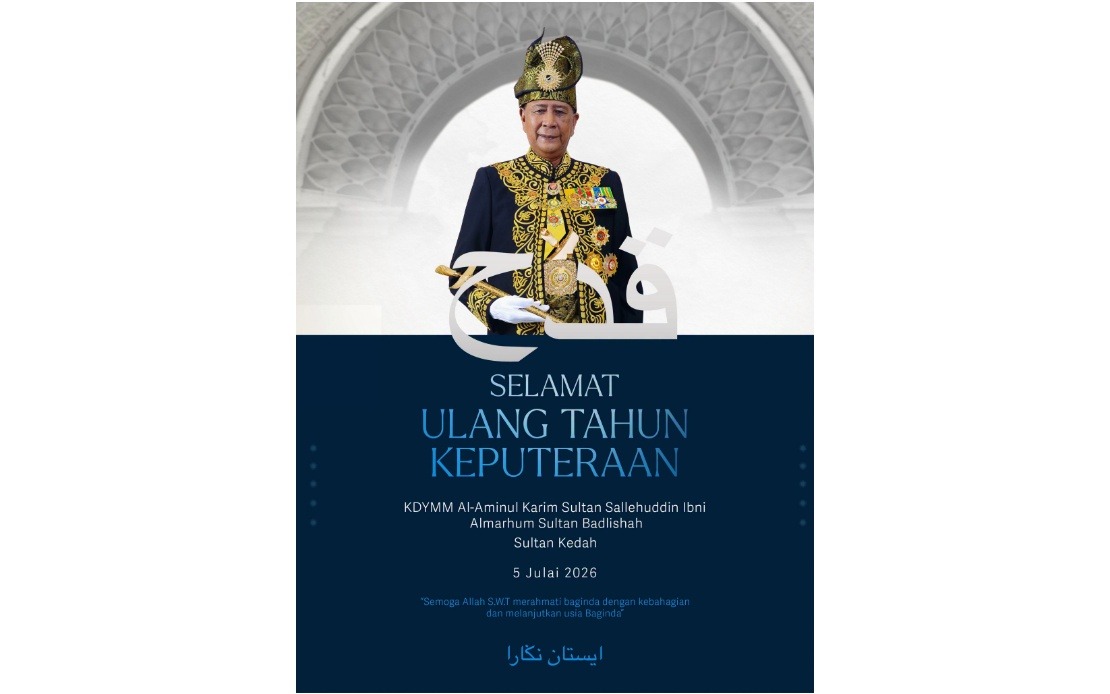
His Majesty Sultan Ibrahim, King of Malaysia, marked the 84th birthday of the Sultan of Kedah, Al-Aminul Karim Sultan Sallehuddin Sultan Badlishah, with formal birthday greetings conveyed through official channels on July 5. The gesture reflects the constitutional protocols observed within Malaysia's royal institutional framework, where the reigning monarch traditionally acknowledges significant occasions within the royal households of the constituent states.
The King's message, shared publicly via the official Facebook platform associated with the Palace, extended wishes centered on spiritual blessings and personal wellbeing. His Majesty invoked divine protection and mercy upon the Kedah ruler, praying that Sultan Sallehuddin would continue to enjoy good health, happiness, and a prolonged life under Allah's guidance. Such ceremonial acknowledgments serve as important symbolic reinforcements of the bonds linking Malaysia's federal monarchy with its state sultanates, particularly significant given the intricate constitutional relationship between the reigning King and the individual sultans who collectively form the Conference of Rulers.
Prime Minister Datuk Seri Anwar Ibrahim similarly seized the occasion to present his own birthday felicitations, demonstrating the executive branch's respect for the royal institution and its constituent members. The Prime Minister's message, also disseminated through social media, extended beyond Sultan Sallehuddin himself to encompass the wider Kedah royal family, including Sultanah Maliha Tengku Ariff and other members of the household. This broader approach reflects Malaysian ceremonial custom, which treats royal families as collective institutions worthy of national recognition and official regard.
The Prime Minister's wishes specifically invoked the Islamic concept of divine mercy and guidance, requesting that the Kedah royal family remain steadfast in their service to the state. References to the Sultan's enduring sovereignty underscore the government's recognition of the constitutional role vested in the hereditary rulers as custodians of Islamic affairs within their respective states and as ceremonial heads of state governance structures. The traditional salutation "Daulat Tuanku. Dirgahayu Tuanku" encapsulates centuries of Malaysian political tradition, combining wishes for the ruler's eternal prosperity with the concept of long life and sustained reign.
Sultan Sallehuddin's tenure as the Sultan of Kedah represents one of the longer reigns among Malaysia's current sultanates, positioning him as a senior figure within the royal hierarchy. His advanced age at 84 places him among the elder statesmen of the Malaysian monarchy, having witnessed significant transformations in the nation's political and constitutional landscape. The birthday recognition by both the King and Prime Minister underscores respect for his seniority and the institutional stability he has provided to Kedah over his prolonged reign.
The public nature of these birthday messages carries implications beyond mere ceremonial pleasantry. In Malaysia's constitutional monarchy, the relationship between the federal Crown and the state sultans remains delicate and constitutionally significant. Formal acknowledgments of this variety serve to reinforce cooperative bonds between the Palace and state rulers, maintaining the unified royal institution that underpins Malaysia's federal structure. For readers in the Southeast Asian context, such protocols exemplify how traditional monarchical systems continue to function within modern nation-states, balancing ceremonial significance with constitutional substance.
Kedah, as one of Malaysia's northern states with a sultanate dating back centuries, holds particular cultural and historical importance within the broader Malaysian federation. The state's royal family has long served as custodians of Islamic heritage and Malay-Muslim traditions, roles that gained constitutional recognition following Malaysia's independence. Sultan Sallehuddin's extended tenure has spanned periods of significant social and economic development within the state, from post-colonial nation-building through contemporary urbanization and modernization efforts.
The birthday occasion also reflects the rhythm of Malaysia's royal calendar, punctuated by numerous official recognitions of sultanate anniversaries and personal milestones. These ceremonies, though formal, carry genuine weight within Malaysian political culture, where the monarchy remains a powerful symbol of national continuity and institutional legitimacy. For international observers and regional analysts, such moments illuminate how traditional institutions continue to command respect and maintain ceremonial prominence within contemporary Southeast Asian politics.
The convergence of birthday wishes from both the reigning monarch and the Prime Minister demonstrates the hierarchical yet collaborative nature of Malaysia's executive and institutional structures. The King, as the supreme constitutional authority, initiates formal recognition, while the Prime Minister, representing the civilian government, offers his own respectful acknowledgments. This parallel messaging reinforces the principle of constitutional balance that characterizes Malaysia's system, where diverse centers of authority maintain functional interdependence while respecting each other's distinct institutional roles.
Moving forward, Sultan Sallehuddin's milestone birthday serves as a moment for reflection on the enduring significance of Malaysia's royal institutions within the broader Southeast Asian political landscape. As regional governments grapple with questions of institutional modernization and democratic governance, Malaysia's continued vitality of its sultanate system offers compelling examples of how traditional institutions can coexist with contemporary political frameworks. The birthday acknowledgments represent more than protocol; they affirm the continuing relevance of constitutional monarchy as a stabilizing force within Malaysian society and governance.

