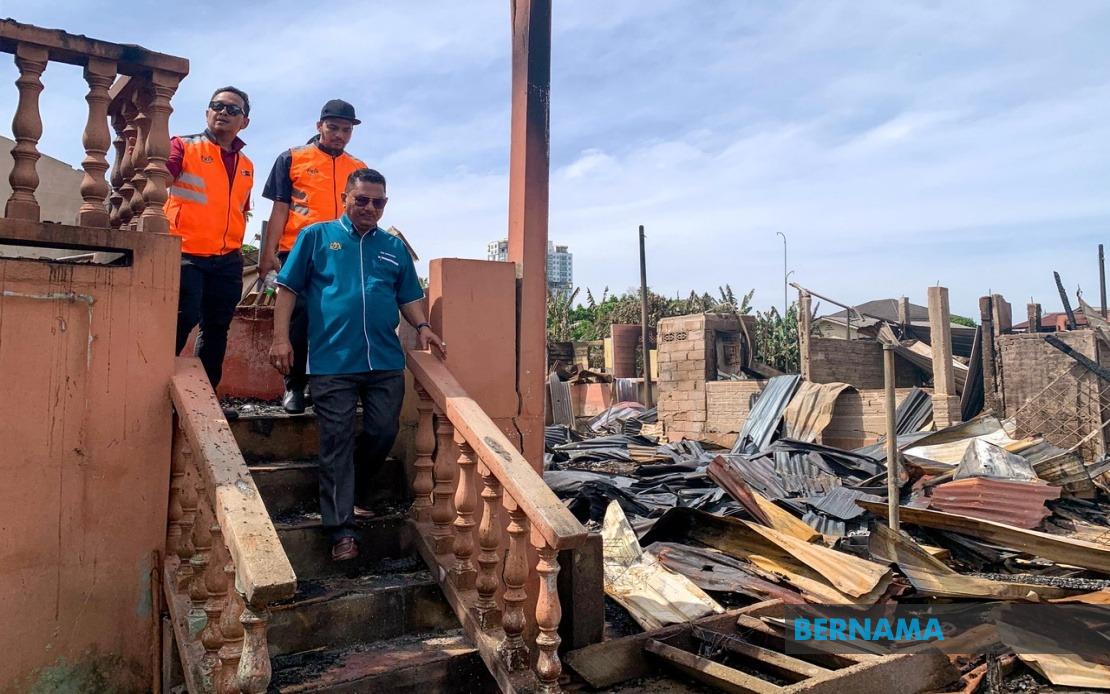
A devastating residential fire that consumed 27 houses in Kampung Gok Kapur, Kota Bharu on June 8 has been definitively traced to the deliberate burning of papers indoors, the Kelantan Fire and Rescue Department (JBPM) revealed this week. The incident rendered 110 residents homeless and exposed critical gaps in fire safety awareness within rural Malaysian communities where open-flame practices remain commonplace despite urban fire prevention campaigns.
Kelantan JBPM director Farhan Sufyan Borhan confirmed that the department's forensic investigation unit established through physical evidence and witness statements that the fire originated when a gas lighter was applied directly to a pile of papers in the kitchen of one residential unit. This seemingly minor action cascaded into tragedy as the initial flames ignited surrounding combustible materials within the confined kitchen space, a pattern consistent with how domestic fires escalate rapidly in densely-built village settings where houses share walls and common materials.
The mechanism of destruction reveals how quickly fire propagates through Malaysian kampung layouts, where wooden structures and close proximity between homes create ideal conditions for horizontal spread. Once the initial room became engulfed, the advancing flames breached the structure's exterior, jumping to adjacent houses where they encountered additional fuel sources and continued their destructive path across the settlement. This domino effect transformed what began as a localized domestic incident into a multi-house catastrophe, a reality that distinguishes village fires from their urban counterparts where fire breaks and building codes provide greater protection.
Crucially, investigators determined that negligence accompanied the burning activity, indicating that whoever ignited the papers either failed to recognise the fire risk or operated without adequate supervision or containment measures. This distinction matters significantly for policy purposes, as it moves beyond accident classification into the realm of preventable human error. The individual's action—burning papers indoors during what presumably was routine household activity—represents the type of everyday decision that authorities across Southeast Asia struggle to influence through public messaging alone.
The aftermath displaced 110 villagers entirely, forcing them to relocate temporarily to the nearby Mukim Banggol Mosque, which served as an emergency evacuation shelter. While no deaths or serious injuries were reported, the psychological and economic impact on residents cannot be underestimated. Families lost homes, possessions, and community infrastructure simultaneously, a disruption that carries implications extending far beyond the immediate fire scene and into questions of disaster preparedness in rural areas where formal emergency management systems remain less developed than in urban zones.
Farhan Sufyan Borhan's statement underscores the fire service's recognition that the incident carries lessons applicable across Malaysia's residential landscape. His explicit warning against using open flames for burning activities inside or near homes, though straightforward, addresses a persistent cultural practice in kampung communities where burning waste materials and clearing kitchen waste through controlled fire remains ingrained despite modernisation. The instruction to be cautious when handling open flame sources similarly reflects a department-wide assessment that technical knowledge about fire behaviour cannot be assumed even among populations with decades of residential experience.
The investigation report's planned handover to police signals potential criminal negligence proceedings, though prosecutors must weigh the severity of charges against community impact and the individual's circumstances. In many Malaysian jurisdictions, such incidents result in warnings, fines, or conditional discharge rather than custodial sentences, particularly when culpability stems from carelessness rather than malicious intent. However, precedent-setting charges carry weight in societies where fire prevention depends partly on the deterrent effect of accountability.
For regulatory bodies overseeing fire safety across Malaysia and the broader Southeast Asian region, the Gok Kapur incident reinforces that technological fire detection systems and building codes alone cannot eliminate residential fire risk. The episode demonstrates that prevention requires sustained engagement with cultural attitudes toward fire use in domestic settings, particularly in communities where traditional practices intersect with modern housing configurations. Educational campaigns must therefore move beyond abstract safety messaging toward contextualised guidance acknowledging how and why residents actually use fire in kitchens and household areas.
The incident also highlights the vulnerability of clustered rural housing where one resident's negligence creates risk for dozens of neighbours, a collective action problem that demands both individual responsibility and community-level infrastructure investment. Installing fire detection systems, establishing neighbourhood response protocols, and ensuring mosque facilities can accommodate displaced residents represent structural responses complementing behavioural change initiatives. Southeast Asian countries facing similar residential fire patterns in rapidly urbanising kampung areas can adapt these insights into localized prevention frameworks.
Looking forward, the fire service's commitment to pursuing further action through relevant authorities signals an institutional determination to address root causes beyond the immediate incident. Whether this translates into enhanced enforcement of building codes, intensified public awareness initiatives, or modified regulations around indoor burning activities remains to be seen. However, the case demonstrates that Malaysian authorities increasingly recognise residential fire prevention as a governance priority requiring coordination across multiple agencies rather than isolated fire service response.

