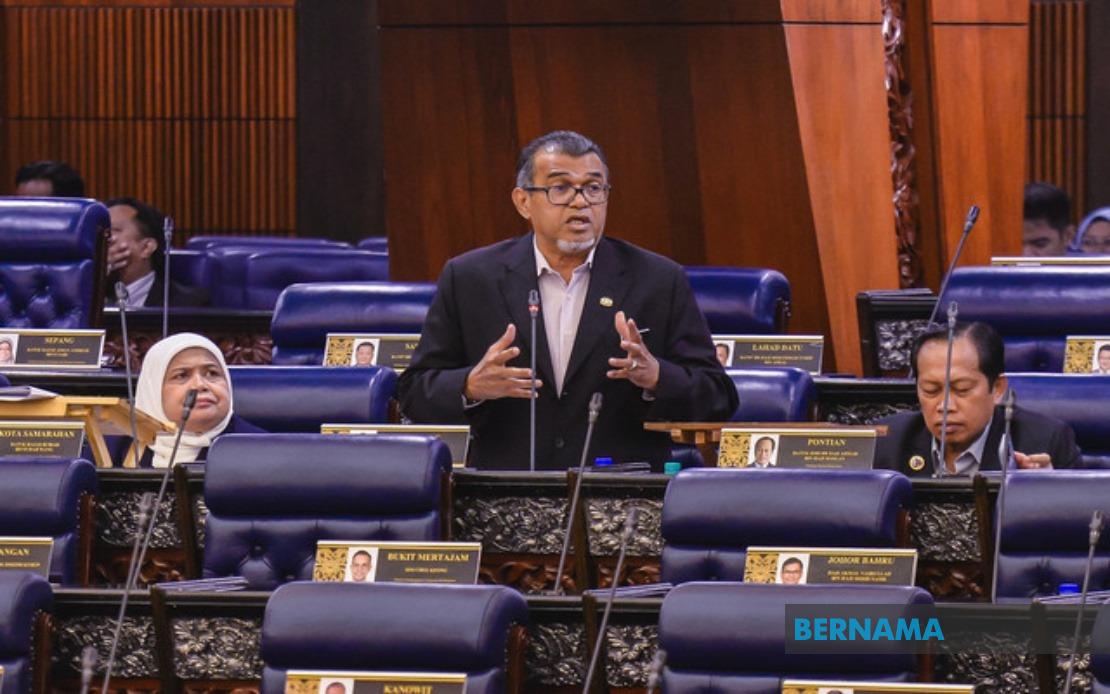
Deputy Transport Minister Datuk Hasbi Habibollah has indicated that the nearly RM500 million expansion project for Kota Kinabalu International Airport (KKIA) remains on track pending resolution of outstanding land and site-related matters with the Sabah state government. Speaking during Question Time in Parliament, Hasbi explained that while the necessary funding approvals have already been secured, several critical technical and administrative hurdles must be cleared before construction can commence on the facility serving Sabah's largest city.
The expansion initiative forms part of a larger national infrastructure investment programme. Prime Minister Datuk Seri Anwar Ibrahim, acting in his concurrent capacity as Finance Minister, unveiled an ambitious RM2.3 billion allocation during last October's Budget 2026 presentation, earmarked for terminal and operational enhancements across four key airports: Penang, Kota Kinabalu, Tawau and Miri. The government has targeted completion of these projects by 2028, reflecting the administration's determination to modernise Malaysia's regional aviation infrastructure ahead of the anticipated tourism boom.
Hasbi's remarks came in response to a question from Datuk Shahelmey Yahya, the Putatan Member of Parliament representing Barisan Nasional, who sought clarification on the implementation timeline for both the KKIA and Tawau Airport expansion schemes. The deputy minister confirmed that Tawau's expansion work has already commenced, positioning it ahead of its Kota Kinabalu counterpart in the execution timeline. However, he stressed that the KKIA project cannot proceed without first obtaining final sign-off from Sabah authorities on multiple fronts, including precise land requirements, the physical location of the expansion site, and the treatment of areas bordering the existing runway infrastructure.
The delays underscore the complexity of managing major airport expansions in Malaysia, where coordination between federal authorities and state governments remains essential. Land acquisition and site finalisation typically represent significant bottlenecks in infrastructure projects across Southeast Asia, where competing land uses, property rights, and environmental considerations often require extended negotiation periods. In Sabah's context, the state government's involvement reflects the constitutionally protected role of states in land matters, necessitating collaborative planning between federal transport authorities and state-level decision-makers.
Beyond the primary expansion scheme, parliamentary discussion also touched on the future of Pangkor Airport, an island facility that has languished without commercial airline service since May 2022. When asked whether the government intended to revitalise the airport or restore regular passenger flights, Hasbi indicated that while the Ministry of Transport and Malaysia Airports Holdings Bhd remain receptive to proposals, any resumption of commercial operations would ultimately hinge on airlines' own business case assessments and profit projections.
Pangkor Airport previously operated charter services, with Berjaya Air providing regular movements using Dash 7 aircraft whilst SKS Airways maintained connections from Sultan Abdul Aziz Shah Airport in Subang. The cessation of these operations reflected shifting commercial patterns and potentially insufficient passenger demand to sustain scheduled services. Hasbi acknowledged that maritime transport currently remains the dominant travel mode for both tourists and residents accessing Pangkor, a factor that significantly constrains the commercial viability of air service resumption.
The deputy minister's comments clarified an important point regarding regional airports: contrary to perceptions that facilities like Pangkor have been abandoned, these assets continue serving multiple functions beyond commercial passenger transport. Pangkor Airport, alongside similar facilities on Redang Island and Tioman Island, remain operational for private aviation, military movements, helicopter operations, emergency landings and the crucial flying doctor service programme. Malaysia Airports personnel remain stationed at these locations to preserve asset integrity and ensure readiness for deployment when required.
This multipurpose approach reflects pragmatic aviation management in a diverse geographical setting. While commercial service restoration requires viable airline participation, smaller regional airports fulfil important national objectives including emergency medical access and security operations. The government recognises that air connectivity fundamentally underpins economic development in the tourism sector, particularly for island and remote destinations that struggle to compete without reliable air access.
The policy position articulated by Hasbi suggests the federal government will not artificially subsidise unviable commercial routes but remains open to partnering with airlines prepared to establish services based on genuine market conditions. This stance balances fiscal responsibility with recognition that aviation infrastructure investment can generate substantial returns when properly configured. For destinations like Pangkor, improved air connectivity could catalyse tourism development and boost local economic activity, contingent on airlines identifying profitable operating models.
The KKIA expansion project carries particular significance for Sabah's economic prospects. Kota Kinabalu functions as the primary gateway for the state's tourism sector, and airport capacity limitations constrain visitor growth and investment potential. The RM500 million injection, delivered within the broader RM2.3 billion airports programme, represents substantial federal commitment to enhancing regional connectivity infrastructure. Resolving the outstanding land and site issues therefore carries implications extending beyond the immediate construction timeline, as delays decelerate economic activity that depends on improved air access.
These airport developments intersect with Malaysia's broader aviation strategy, which emphasises regional hub consolidation and capacity augmentation. As domestic and regional traffic patterns evolve, secondary airports like Kota Kinabalu and Tawau require investment to accommodate growth and reduce congestion at primary facilities. The 2026 budget allocation reflects understanding that distributed regional capacity benefits both passenger experiences and overall system efficiency.
Moving forward, the success of these airport modernisation initiatives depends critically on maintaining momentum in inter-agency coordination and land resolution processes. For Malaysia's tourism and economic sectors, timely completion of the KKIA, Tawau, Penang and Miri expansion projects will establish crucial infrastructure foundations for the remainder of this decade. Stakeholders in Sabah and the broader region will be monitoring progress on the Kota Kinabalu project closely, as resolution of current administrative obstacles will signal the government's capacity to deliver on its infrastructure commitments.

