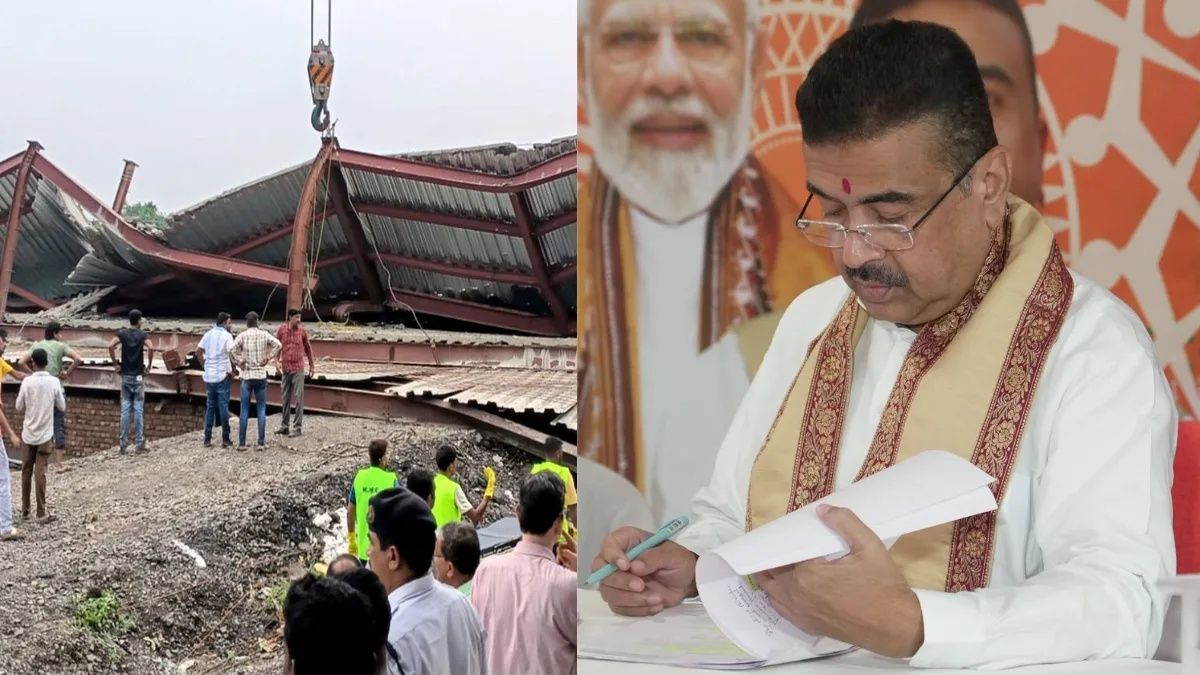
The recovery operation at a collapsed warehouse in Kolkata's Taratala district entered its second day Thursday as the confirmed death toll climbed to 11, with rescue teams from multiple agencies bracing for the discovery of additional victims beneath the rubble. A fresh body was recovered and transported to the Trauma Care Centre at SSKM Hospital around 1.15pm, though officials have yet to formally identify the deceased. The continuing search underscores the severity of the structural failure that brought down the facility, which stored materials and employed numerous workers at the time of collapse.
The disaster has triggered an extraordinary response involving seamless coordination between federal and state authorities. Personnel deployed from the Indian Army, the National Disaster Response Force (NDRF), and various other government agencies maintained their intensive operations at the site as rescue coordinators warned that the number of workers still potentially trapped under debris remains uncertain. This multi-agency approach represents the kind of emergency mobilisation typically reserved for large-scale catastrophes, reflecting both the complexity of the recovery effort and the determination to locate survivors.
West Bengal Chief Minister Suvendu Adhikari seized the moment to deliver a scathing political assessment, addressing the assembly with extensive documentation suggesting that systematic failures in the building approval process precipitated the collapse. He alleged that the original construction plan for the Taratala warehouse had received clearance from the Kolkata Municipal Corporation despite containing significant structural deficiencies. By presenting official records bearing the signature of former Mayor Firhad Hakim, Adhikari sought to establish that previous municipal administrations had either overlooked critical design flaws or deliberately approved substandard plans in exchange for illicit payments.
The Chief Minister's public accountability campaign extended to questioning the professional conduct of engineers and officials who had sanctioned the original blueprint. He characterised the approval system under the previous Trinamool Congress-led municipal board as corrupt and dysfunctional, describing the city itself as having become a "city of death" under layers of administrative malfeasance and the extraction of unauthorised fees. This rhetoric, while politically charged, reflects genuine concerns about how building safety standards are enforced across West Bengal's municipalities.
In response to the disaster, Adhikari's government moved swiftly to impose a broad suspension on construction activities across Kolkata and eight surrounding districts, including Rajarhat-New Town, Maheshtala, Budge Budge, Pujali, Bishnupur, Sonarpur, and Baruipur. The four-week moratorium exempts only essential services projects but halts all other building work, creating significant disruption to the region's construction industry. During this suspension period, authorities will conduct a comprehensive audit of every approved building plan already in the approval pipeline, potentially affecting hundreds of projects at various stages of development.
The audit will be overseen by a specially constituted high-level committee chaired by Additional Chief Secretary Rajesh Pandey and comprising senior government officials alongside technical experts from institutional partners including IIT Kharagpur, the Rail India Technical and Economic Service, Indian Railway Construction Limited, the Fire Services Department, and the Public Works Department. This multidisciplinary composition suggests the government intends a thorough reassessment of structural integrity standards and approval protocols. The inclusion of railway engineering organisations and fire safety representatives indicates the audit will examine not merely whether plans comply with existing regulations, but whether those regulations themselves are adequate.
Authorities have already arrested five individuals connected to the incident, including the construction company's site supervisor, the iron structure fabricator responsible for the metal framework, the land lessee, the labour contractor involved in hiring workers through Trimex, and a broker implicated in facilitating the illegal approval process. However, the primary accused, identified as Azgar, remains absconding, suggesting either an attempt to evade custody or complications in locating an individual who may have attempted to flee the region following the collapse.
The Chief Minister's response carries particular significance for Malaysia and the broader Southeast Asian region, where rapid urbanisation and construction booms have similarly exposed gaps in building safety oversight. West Bengal's approach—combining swift enforcement action with systematic regulatory review—offers a model for how governments might respond when catastrophic failures reveal systemic corruption in building approvals. The emphasis on professional accountability and the threat of property confiscation to compensate victims establishes consequences beyond simple imprisonment, potentially creating stronger deterrents against future lapses.
The warehouse collapse also highlights how infrastructure and building safety intersects with labour protection across the subcontinent. The workers trapped or killed were largely informal sector employees who lacked the safety protections, insurance coverage, or legal recourse that formalised employment would provide. This tragedy, therefore, extends beyond questions of engineering standards to encompass the broader challenge of protecting vulnerable workers in construction industries where informal arrangements and weak regulatory enforcement create lethal conditions.
Looking forward, the audit commissioned by West Bengal authorities will test whether governments can meaningfully reform building approval systems in the aftermath of disaster. Success would require not only identifying technical deficiencies in existing structures but also rooting out the corruption networks that enable unsafe construction to proceed. The coming weeks will reveal whether the construction suspension translates into genuine safety improvements or becomes merely a political gesture that dissolves once public attention shifts elsewhere.

