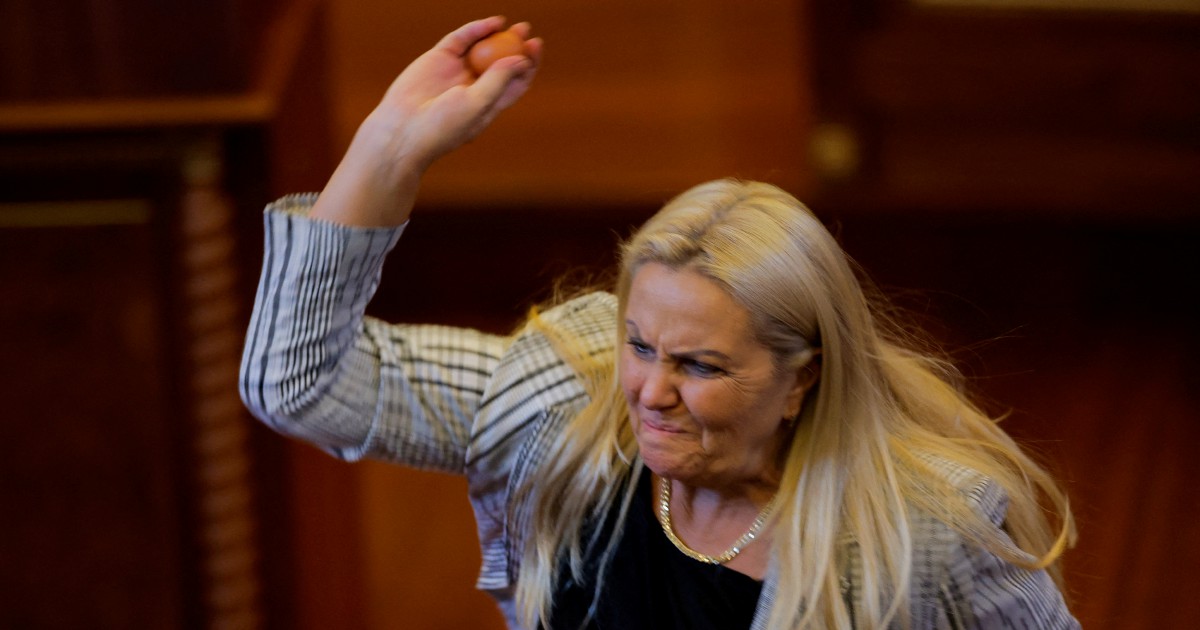
The political turmoil in Kosovo took a dramatic turn on Saturday when parliamentary proceedings were forced to halt following a physical altercation between opposition members and caretaker Prime Minister Albin Kurti. An opposition lawmaker threw eggs at the premier during the session, an incident that exemplifies the deteriorating decorum and institutional breakdown affecting the Balkan nation's governance structures.
This confrontation represents a significant escalation in the protracted political dispute that has plagued Kosovo for months. The caretaker government, led by Kurti, continues to operate in a state of institutional limbo, lacking the stable mandate typically enjoyed by legitimately elected administrations. Such arrangements typically breed tension and resentment among political opponents, who view caretaker governments as lacking democratic legitimacy for major policy decisions.
The egg-throwing incident is symptomatic of deeper fractures within Kosovo's political landscape. Opposition parties appear increasingly willing to resort to disruptive tactics and confrontational behaviour within parliamentary chambers, suggesting that conventional democratic forums have become inadequate venues for resolving fundamental disagreements. When legislators abandon procedural civility, it signals that the underlying disputes have transcended ordinary policy differences.
Kosovo's political system has grappled with repeated cycles of government formation and collapse over the past two decades. The prospect of another snap election looms as competing factions fail to negotiate stable governing coalitions or reach consensus on critical issues. For a relatively young state still consolidating democratic institutions, the frequency of electoral cycles strains both administrative capacity and citizen confidence in governance.
The instability carries implications beyond Kosovo's borders. As a nation with ethnic complexities and security concerns, protracted political dysfunction can undermine efforts to strengthen rule of law, tackle corruption, and address relations with Serbia. Neighbouring countries and international partners, including the European Union and United States, maintain keen interest in Kosovo's institutional health, viewing stable governance as essential for regional stability.
Caretaker administrations occupy an awkward constitutional position. While they possess operational authority to manage routine government functions, they lack the electoral mandate to undertake transformative policies or make decisions with long-term implications. Opposition parties frequently challenge such governments' legitimacy, particularly when controversial measures are proposed. The tension between functional necessity and democratic accountability creates perpetual friction.
The parliamentary suspension itself reflects the volatility of contemporary Kosovar politics. When legislative chambers cannot contain debate through established rules of procedure, institutional breakdown accelerates. The fact that physical confrontation forced suspension rather than security removing the offending lawmaker suggests either security was unprepared or deliberate restraint was exercised—both scenarios indicating systemic dysfunction.
Seasoned observers of Balkan politics recognise that such incidents, while seemingly theatrical, frequently herald genuine institutional crises. The progression from verbal sparring to physical altercation signals that political actors have exhausted negotiation channels and are signalling their willingness to escalate confrontation. For Kosovo, where violent political episodes have marked recent history, such deterioration warrants serious attention from international observers and governing authorities.
The possibility of snap elections creates its own complications. Electoral campaigns consume political energy that might otherwise focus on governance challenges, security threats, and economic development. Kosovo faces substantial practical challenges in areas including infrastructure development, employment generation, and investment attraction. Perpetual electoral cycles divert governmental capacity and divert resources toward campaigning rather than policy implementation.
International mediators and regional organisations continue attempting to facilitate stable government formation in Kosovo. However, external pressure can only accomplish limited objectives when domestic political actors lack genuine commitment to compromise. The egg-throwing incident demonstrates that some factions remain willing to prioritise confrontation over negotiated settlement, suggesting mediation efforts face uphill struggles.
For Kosovo's citizenry, this instability represents a fundamental governance failure. Citizens deserve functioning institutions capable of delivering basic services, addressing corruption, and creating conditions for economic opportunity. Political theatre that disrupts parliamentary functions undermines public confidence in democratic processes, potentially driving disillusionment with representative government itself.
The regional context matters considerably. Kosovo's status remains contested internationally, with Serbia refusing full recognition and Russia maintaining obstructionist stances at the United Nations Security Council. Under such circumstances, Kosovo requires internally cohesive governance to project stability and consolidate its international position. Political crises provide opportunities for hostile actors to exploit divisions and complicate Kosovo's development trajectory.
Moving forward, Kosovo's political leadership must demonstrate commitment to institutional norms and procedural civility, regardless of substantive disagreements. Without fundamental respect for parliamentary processes and democratic conventions, even elected governments struggle to function effectively. The egg-throwing incident, while seemingly minor, signals that Kosovo's political culture requires urgent reformation if the nation is to achieve the institutional maturity necessary for sustained development and regional cooperation.

