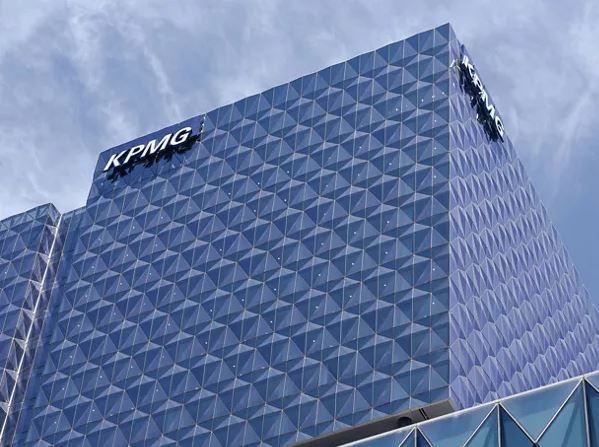
The professional services giant KPMG Australia has moved to discipline staff involved in a major audit integrity scandal, imposing financial penalties of up to A$180,000 (US$125,838) on seven individuals following an internal investigation. The firm's announcement on Monday marks a significant reckoning for misconduct that has severely damaged its reputation and triggered regulatory scrutiny at the highest levels of Australian corporate oversight.
The internal probe substantiated allegations that employees had inappropriately shared confidential client documents within the firm, a finding that contradicts KPMG's earlier position. The firm's statement acknowledged the gravity of the breach, with a company spokesperson explicitly characterising the conduct as "unacceptable and inconsistent with our values, policies and obligations to protect client information." This admission represents a dramatic shift from the firm's previous assertions that internal investigations had failed to establish wrongdoing, suggesting that the scope and depth of the inquiry intensified significantly.
The disciplinary measures imposed on the seven staff members reflect varying degrees of culpability and organisational rank. Consequences ranged from formal warnings and restrictions on career advancement to reduced performance ratings and substantial financial penalties. Two of the seven individuals chose to retire from the firm before the sanctions were announced, a departure that may reflect the personal and professional toll of the investigation as well as acknowledgment of their role in the breach. The financial penalties represent the most visible form of accountability, though the restriction on career progression and performance ratings carry longer-term career implications for those who remain at the firm.
Three senior audit partners within this group had already faced individual penalties specifically related to their misuse of confidential board papers obtained from property developer Lendlease. These partners occupied positions of significant responsibility and client-facing authority, making their breach of trust particularly egregious in the eyes of both the firm and the broader auditing profession. The involvement of partners—not junior staff—underscores that the scandal was not merely an isolated incident of lower-level misconduct but reflected institutional lapses in governance and compliance at senior management levels.
The scandal has already exacted a steep organisational cost for KPMG Australia. The firm has witnessed the departure of its Chief Executive Officer, the head of its audit division, and its chairman—a loss of leadership that extended beyond individual accountability into fundamental questions about the firm's operational integrity and risk management culture. These high-profile resignations sent a powerful signal to clients and regulators about the severity of the breaches and the firm's commitment to addressing systemic failings. For clients and prospective clients, the turnover in senior leadership raises questions about continuity and the depth of cultural change required to restore confidence.
The central allegation that triggered the scandal—that KPMG staff leveraged inside information obtained during confidential client audits to secure additional lucrative audit contracts—strikes at the heart of the audit profession's credibility. Auditors occupy a position of fiduciary trust, with access to sensitive board-level information that competitors would find extraordinarily valuable. Using that privileged access to gain commercial advantage represents a fundamental conflict of interest that undermines the independence that auditing requires. When allegations of such behaviour surfaced publicly in March, they prompted immediate scrutiny from government bodies and major corporate clients who depend on audit integrity.
The Australian Securities and Investments Commission (ASIC), the country's corporate regulator, has launched its own investigation into three partners implicated in the scandal. Two of the partners named by ASIC are among those previously sanctioned by KPMG and have since departed the firm. ASIC has not publicly identified the third partner under investigation, suggesting that the regulatory probe may be expanding to examine additional individuals or layers of conduct beyond those addressed through KPMG's internal discipline process. The regulatory investigation signals that questions about the scandal extend beyond internal compliance matters into potential breaches of securities law and professional standards.
The timing and scope of KPMG's disciplinary action may also reflect broader pressure from blue-chip corporate clients who have expressed intense concern about the firm's conduct. Major Australian corporations depend on audit firms to provide independent, trustworthy oversight of financial reporting. The revelation that KPMG staff had manipulated confidential information for commercial gain creates reputational damage that extends to clients who must now consider whether their sensitive information was similarly compromised. The firm's willingness to impose substantial penalties and accept public criticism may be calculated to stabilise client relationships and demonstrate commitment to reform.
For the Malaysian and Southeast Asian auditing sector, the KPMG scandal carries cautionary implications. KPMG operates across the region, including in Malaysia, where it faces similar expectations of professional independence and client confidentiality. The incident underscores the importance of robust compliance frameworks, clear ethical guidelines, and genuine consequences for breaches. Regional audit firms operating within KPMG's global partnership structure will likely face increased scrutiny from local regulators and clients seeking assurance that similar conflicts of interest are adequately managed.
The scandal also highlights tensions inherent in the audit profession's business model, where firms derive revenue from multiple service lines that create potential conflicts of interest. KPMG provides not only audit services but also consulting and advisory work to the same clients, creating opportunities for information asymmetries and incentive misalignment. The incident has prompted broader industry reflection on how to strengthen Chinese walls between audit and consulting divisions, ensure proper information governance, and establish cultural norms that prioritise client protection over revenue expansion.
The investigation's confirmation of misconduct and the subsequent disciplinary action may not fully resolve the reputational damage or client concerns. The fact that earlier KPMG investigations had failed to substantiate wrongdoing suggests that internal investigation processes were either insufficiently rigorous or compromised by conflicts of interest. Restoring credibility will require sustained demonstration of cultural change, transparent reporting on compliance metrics, and possibly structural reforms to audit governance. The firm's ability to retain major clients and rebuild market confidence will depend on how comprehensively it addresses the institutional vulnerabilities that allowed the breaches to occur and persist.

