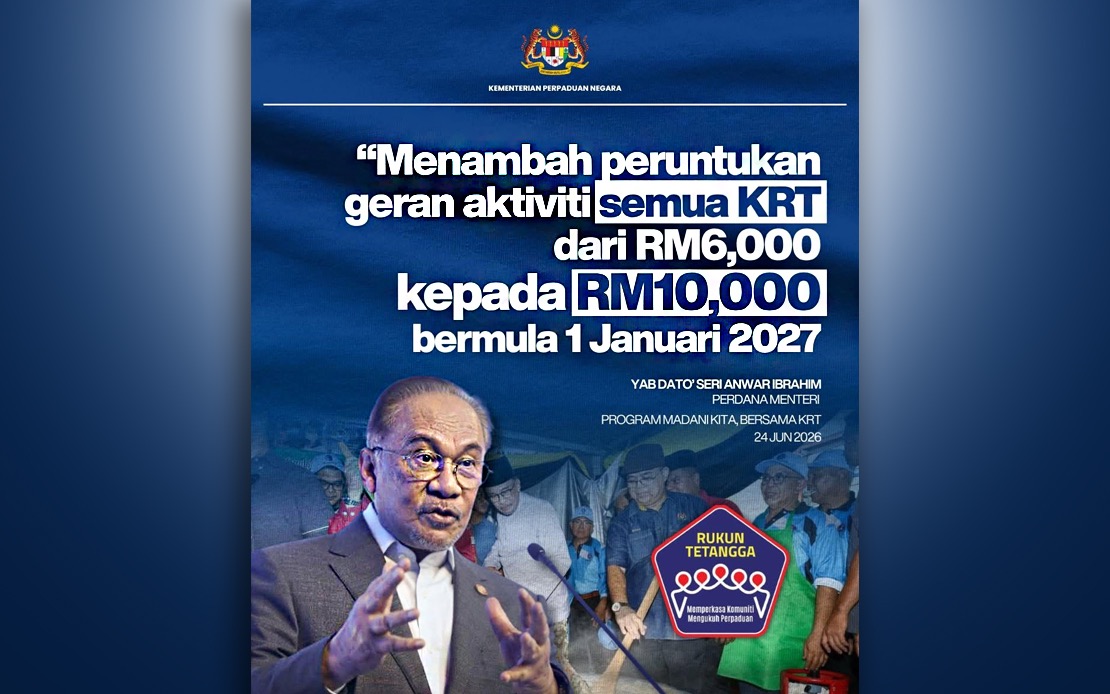
Malaysia's neighbourhood watch movement is set for a significant operational boost following a substantial increase in government funding announced during the MADANI KITA programme in Dataran Segamat, Johor. Prime Minister Datuk Seri Anwar Ibrahim revealed that the annual grant for KRT—Kawasan Rukun Tetangga or neighbourhood watch areas—would rise from RM6,000 to RM10,000, with disbursements commencing on January 1, 2027. This move affects all 8,615 KRT groups operating nationwide, representing a 67 percent increase in annual allocations to these community-based organisations.
National Unity Minister Datuk Aaron Ago Dagang characterised the funding increase as tangible evidence of government commitment towards strengthening grassroots institutions that have served Malaysian society for over five decades. The decision reflects recognition of KRT's foundational importance in maintaining social cohesion across diverse neighbourhoods. According to Aaron, the enhanced financial support aligns with the MADANI Government's broader agenda of empowering community-driven initiatives that underpin national development and social stability. The additional resources are intended to translate policy commitments into meaningful, visible improvements at the neighbourhood level where most Malaysians experience community life directly.
The scale of KRT's operational reach underscores the significance of this funding decision. Under the Ministry of National Unity's purview, approximately 250,000 KRT members actively engage in community work, collectively serving interests of over 12 million Malaysians. Throughout the past year alone, these volunteer-led groups have organised more than 100,000 community activities, demonstrating sustained commitment to local engagement despite resource constraints. The funding increase recognises this impressive track record and aims to remove financial barriers that have previously limited programme scope and frequency.
With enhanced budgets, KRT groups are expected to substantially expand their programming across multiple social domains. The ministry anticipates that increased funding will enable neighbourhood watch associations to implement more ambitious initiatives spanning unity-building exercises, community development projects, welfare support programmes, educational activities, neighbourhood security initiatives, volunteerism drives, and local economic empowerment schemes. Rather than funding simply maintaining existing services, the additional RM4,000 per group annually should enable KRT to develop innovative responses to neighbourhood challenges and opportunities that members have identified but previously lacked resources to address.
For Malaysian policymakers, the KRT funding increase represents a deliberate strategic choice to invest in social infrastructure rather than administrative expansion. Neighbourhood watch groups occupy a unique position in Malaysia's community ecosystem—they are volunteer-led, locally accountable, and deeply embedded within residential areas. Unlike government agencies operating from district or state offices, KRT groups have direct daily interaction with residents, making them particularly effective channels for delivering community-centred programmes and gathering grassroots feedback on implementation challenges. This proximity to ordinary Malaysians renders them invaluable assets for translating government development initiatives into practical community outcomes.
Aaron emphasised that strengthening neighbourly relations represents the authentic foundation of national unity in a pluralistic democracy such as Malaysia. He stressed that harmonious relationships transcending racial, religious, and cultural boundaries constitute Malaysia's genuine competitive advantage as a diverse nation. In this framing, KRT groups function not merely as security-focused organisations but as platforms for building mutual trust and solidarity among residents from different backgrounds. The funding increase signals government recognition that these everyday relationships—formed through regular neighbourhood interaction—matter profoundly for national cohesion.
The timing of this announcement carries particular significance within Malaysia's broader development context. As urbanisation and economic modernisation reshape neighbourhoods, traditional community bonds risk erosion through reduced face-to-face interaction and increased social fragmentation. KRT groups, with their emphasis on regular meetings and collaborative activities, serve as deliberate countermeasures against these fragmenting trends. By providing enhanced financial resources, the government acknowledges that maintaining tight-knit communities requires active investment and sustained effort, not simply goodwill.
For KRT members and neighbourhood leaders, the funding increase presents both opportunities and management responsibilities. The additional RM4,000 annually—representing roughly RM333 monthly per group—enables meaningful programme expansion but requires careful planning to maximise impact. Government oversight will likely focus on ensuring funds support the stated priority areas: unity activities, community development, welfare, education, security, volunteerism, and economic empowerment. KRT groups that develop clear spending plans aligned with these priorities and document programme outcomes will likely access any subsequent funding increases, while those with weaker governance may face scrutiny.
The announcement also reflects government assessment that KRT requires revitalisation to remain relevant to contemporary neighbourhood challenges. As Malaysia grapples with diverse community issues—from social safety concerns to livelihood pressures—neighbourhood watch groups equipped with adequate resources can become frontline institutions for addressing these challenges collaboratively. The funding increase essentially invests in community resilience, enabling residents to tackle problems collectively rather than waiting for government intervention. This approach distributes responsibility for social well-being more broadly across society.
Regionally, Malaysia's investment in neighbourhood watch funding provides an instructive model for other Southeast Asian nations seeking to strengthen community-level governance and social cohesion. Many neighbours struggle with balancing rapid urbanisation against social fragmentation, and neighbourhood-based voluntary organisations offer proven mechanisms for maintaining community solidarity. The Malaysian government's willingness to substantially fund KRT operations demonstrates recognition that grassroots institutions require adequate resources to function effectively and compete for citizens' limited time and attention.
Looking ahead, the real test of this initiative's success will emerge through implementation monitoring and programme quality assessment. While the funding increase itself constitutes positive policy direction, whether KRT groups utilise additional resources productively depends on capacity, leadership quality, and local contextual factors varying across the country's 8,615 groups. Some established, well-managed groups may immediately scale successful programmes, while others may require capacity-building support to effectively absorb larger budgets. The Ministry of National Unity will need to provide adequate guidance and oversight mechanisms to ensure funding advances its intended community-strengthening objectives across diverse neighbourhoods.

