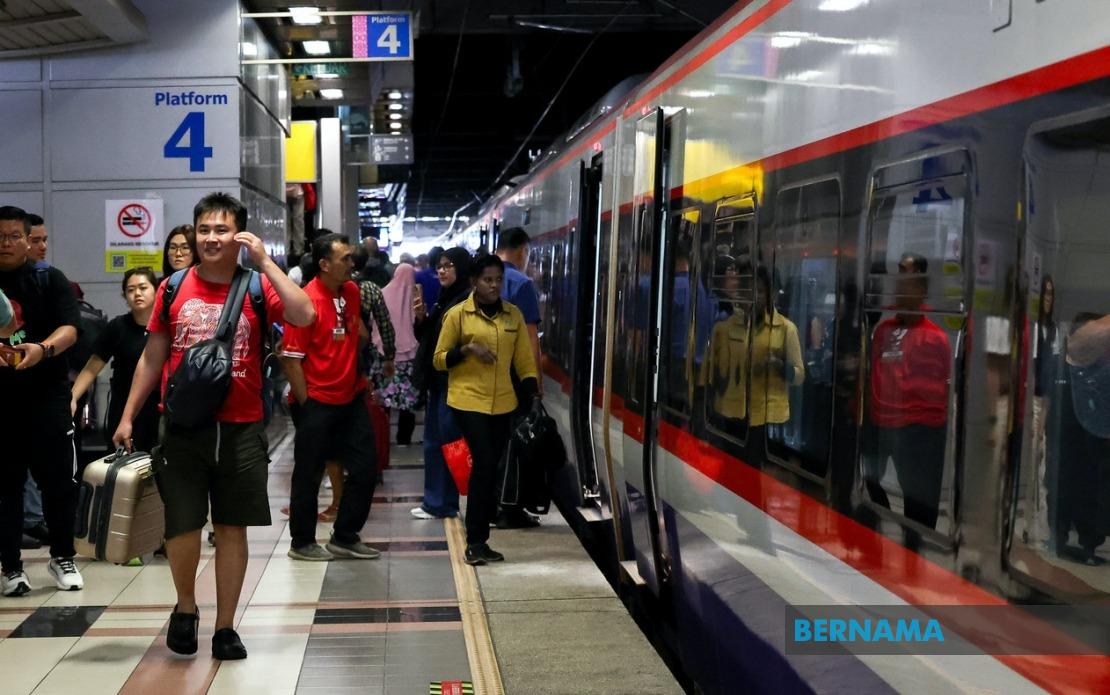
Keretapi Tanah Melayu Berhad (KTMB) has responded to surging demand for rail transport by deploying an additional 7,464 seats on its Electric Train Service network serving the southern peninsula this weekend, coinciding with the Johor state election. The expanded capacity represents the second tranche of supplementary services unveiled within three weeks, reflecting the significant movement of voters returning to their constituencies for the poll.
The railway operator will introduce eight new train services across two critical routes linking the capital to Johor Bahru and the southern interior. Four additional trains will run the KL Sentral to JB Sentral corridor in both directions, whilst a parallel four-service increase addresses the JB Sentral to Gemas route. This dual-route strategy reflects the geography of voter distribution across Johor, where residents in the greater Klang Valley and intermediate towns must traverse considerable distances to cast their ballots.
Operating from July 10 to 12, the three-day service expansion will inject 2,488 available seats daily into the network. This phased approach suggests KTMB has calibrated its capacity additions to match projected electoral movement patterns, avoiding over-supply whilst ensuring adequate access for those unable to secure seats during the initial June 19 promotional window. The complete sell-out of those earlier additional tickets validates the operator's assessment that substantial latent demand exists among voters prioritising rail over road transport.
To incentivise passenger uptake and reduce highway congestion during a period of heightened mobility, KTMB is offering a blanket 20 per cent discount on all additional ETS fares across both routes during the three-day window. This pricing intervention represents a considered policy response, as it simultaneously achieves multiple objectives: alleviating pressure on the rail network's revenue during promotional periods, encouraging mode shift away from private vehicles, and reducing the financial burden on voters who must travel considerable distances to participate in democratic processes.
Ticket availability reflects KTMB's staggered commercial strategy. Sales for the JB Sentral to Gemas service opened at 3.00 pm on July 7, whilst the KL Sentral to JB Sentral route opened the following morning at 9.00 am on July 8. This sequenced approach may aim to manage transaction volumes across KTMB's digital infrastructure whilst giving passengers adequate notice to plan their journeys. The operator has emphasised cashless transactions, promoting bookings through its KITS Style mobile application, the official website, and kiosk systems at participating stations.
For Malaysian observers monitoring transport policy, this initiative underscores the government's recognition that electoral participation requires enabling infrastructure. Unlike voters in compact urban constituencies, many Johor residents face journey times exceeding three hours via conventional rail routes. By expanding capacity and reducing fares, KTMB removes financial and logistical barriers that might otherwise suppress turnout among economically disadvantaged demographics. The election context thus transforms a routine commercial decision into an implicit statement about facilitating democratic access.
The rapid depletion of the initial June 19 ticket allocation suggests that previous estimates of demand may have been conservative. KTMB's willingness to deploy additional capacity within weeks, coupled with promotional pricing, indicates management confidence in passenger volume and perhaps reflects feedback from the rail operator's customer service channels regarding unmet bookings. This responsiveness matters strategically: poorly managed transport logistics during election periods can generate political grievances that extend well beyond the immediate electoral contest.
Passengers utilising these services must observe timing protocols that reflect crowded-platform conditions during peak electoral movement. KTMB advises arrival at least 30 minutes before departure, noting that platform access closes five minutes prior to train departure. These strictures, whilst standard operating procedure during high-demand periods, deserve explicit communication to voters unfamiliar with rail travel or those accustomed to more flexible departure windows on highway routes.
The southern ETS network's capacity expansion carries implications for Southeast Asian transport policy discourse. As the region's economies grow increasingly urbanised and geographically dispersed, facilitating internal mobility during major civic events demonstrates how integrated transport planning can serve democratic participation. For Malaysian policymakers, the Johor election rail initiative offers a template applicable to future electoral exercises in geographically sprawling states such as Sabah and Sarawak, where distance constitutes a formidable voting participation barrier.
KTMB's communication strategy emphasises multiple engagement channels: the Call Centre at 03-9779 1200 serves passengers requiring verbal guidance, whilst official social media platforms provide real-time updates on service status and booking availability. This multi-channel approach reflects modern customer service expectations and proves particularly valuable for older voters or those with limited digital literacy. The operator's decision to publicise these contact details prominently suggests institutional awareness that failed communication during high-demand periods generates disproportionate customer frustration.
The broader context involves Malaysia's national development goals around rail network modernisation and mode shift from private vehicles toward public transport. Election-driven capacity expansions, whilst temporary, generate valuable operational data regarding demand elasticity and passenger preferences. KTMB can leverage this information to inform permanent service enhancements on southern routes, potentially justifying capital investment in additional rolling stock if demand projections prove sustainable beyond the electoral period.

