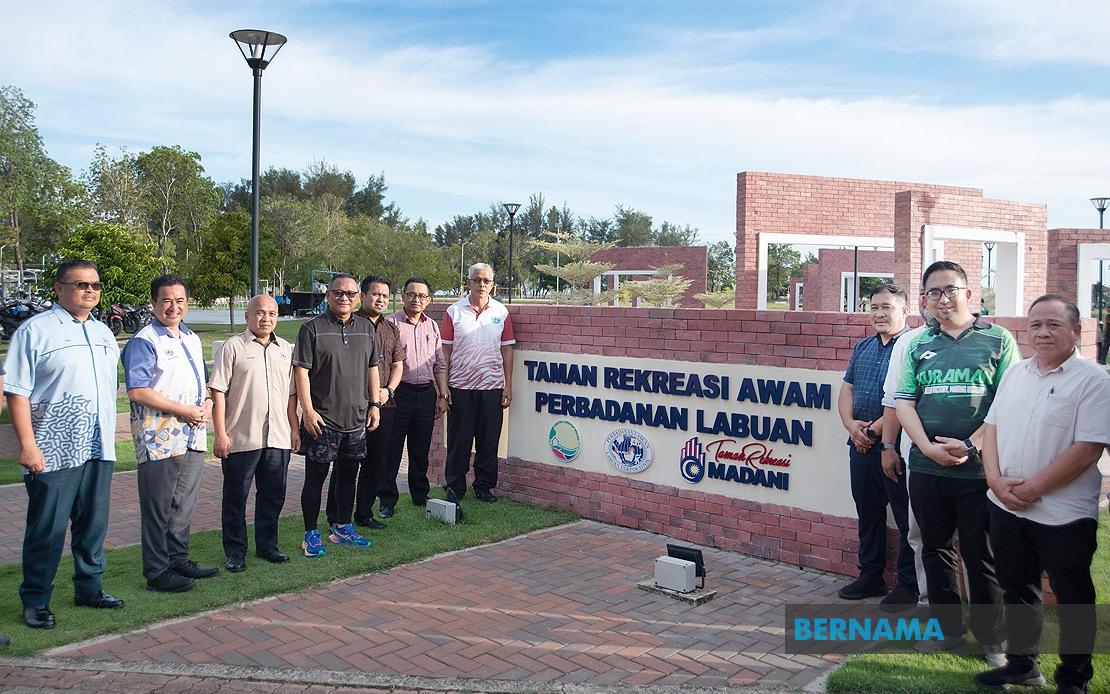
Labuan has marked a significant step forward in community wellness by officially opening its upgraded Public Recreation Park at Tanjung Purun, a central downtown location that has been revitalized through a RM495,382 investment under the Madani Recreation Park initiative. The transformation represents a deliberate effort to provide residents with accessible, quality spaces for physical activity and social gathering, addressing long-standing gaps in the federal territory's recreational infrastructure.
Rithuan Ismail, chief executive officer of Labuan Corporation, emphasized during the opening ceremony that the project embodies a broader vision for improving public health and community cohesion across the territory. The initiative reflects recognition that modern urban development must prioritize inclusive spaces where residents spanning different age groups and fitness levels can engage in meaningful recreational activity. Rather than serving narrow demographics, the park is designed as a social hub that encourages families, fitness-focused individuals, and casual visitors to share common ground.
The site selection process involved careful consideration of multiple factors that ultimately made Tanjung Purun an ideal location. The downtown position ensures convenient accessibility for residents without private transportation, while the generous land size accommodates diverse recreational functions. Importantly, the absence of complex land ownership disputes expedited development, a consideration that frequently complicates infrastructure projects in Malaysia's urban centres. The strategic placement within the town's heart maximizes the likelihood of regular usage across different community segments.
Before its upgrade, the location operated as the LDA Field, a public asset that had deteriorated into underutilization despite its prominent position. Inadequate lighting created safety concerns that discouraged evening visitors, while aging casuarina trees posed hazards requiring removal. The limited range of recreational facilities meant the space failed to attract residents seeking structured exercise opportunities. This pattern—valuable public land lying dormant due to deferred maintenance and poor amenities—reflects challenges common across Malaysian towns where initial investment assumptions prove insufficient without sustained management.
The National Landscape Department, operating under the Ministry of Housing and Local Government, funded the 2024 project, signalling commitment at federal level to upgrading recreational infrastructure beyond major urban centres. This funding approach demonstrates recognition that smaller cities and federal territories require deliberate investment to achieve livability standards comparable to larger metropolitan areas. For Labuan specifically, the initiative counters any sense of development marginalization while strengthening the territory's appeal to residents and potential investors seeking quality-of-life considerations.
The completed park now incorporates multiple functional elements designed to accommodate varied recreational preferences. An 800-metre jogging track serves distance runners and casual walkers, while outdoor fitness gym equipment provides resistance training options without requiring expensive memberships. Concrete benches scattered throughout create informal gathering spaces where residents can rest, socialize, or supervise children. A welcoming garden component adds aesthetic value that transforms the space from purely functional to genuinely inviting, encouraging lingering visits rather than hurried transitions through the area.
Park usage patterns emerging since opening suggest particular popularity during evening hours, when cooler temperatures and reduced work commitments increase community participation in outdoor activities. This timing alignment is significant for Labuan's tropical climate, where midday heat discourages sustained physical exertion. The facility's ability to function as a hub during these peak periods enhances social capital by creating regular contact points among residents who might otherwise interact only within workplace or family contexts.
Future enhancements scheduled for completion by year-end will expand recreational diversity through three open courts designed for pickleball and sepak takraw. These additions acknowledge both established Malaysian recreational traditions and emerging sports preferences that appeal to younger demographics. Pickleball's growing popularity across Southeast Asia introduces a low-impact activity accessible to older residents while sepak takraw maintains connection to cultural sporting heritage. This balanced approach to activity programming demonstrates thoughtful planning rather than assumption that any recreational facilities automatically generate community engagement.
Labuan Corporation leadership has explicitly called upon residents to participate in facility stewardship, recognizing that even well-designed infrastructure deteriorates without community investment in maintenance and respectful usage. This custodial approach represents sophisticated understanding that public spaces succeed through social norms supporting proper conduct rather than surveillance or enforcement alone. When residents internalize responsibility for common assets, utilization typically increases and vandalism decreases as community members feel genuine ownership rather than treating facilities as distant government property.
The park's development carries implications extending beyond immediate recreational benefits. Visible investment in public amenities strengthens residents' confidence in institutional commitment to quality-of-life improvement, which influences decisions regarding settlement, business location, and long-term residence. For younger professionals and families considering relocation to Labuan, such facilities feature prominently in livability assessments. The project also generates modest local economic activity through construction employment and subsequent increased foot traffic in surrounding commercial areas.
Within the broader Southeast Asian context, Labuan's investment reflects regional trends emphasizing wellness infrastructure and urban greening as economic and social development tools. Cities across the region increasingly recognize that recreational facilities represent investments in human capital and community resilience rather than discretionary amenities. Labuan's RM495,382 commitment, while modest in absolute terms, demonstrates financial discipline in allocating resources to projects with clear community benefit and sustainable operational models.
The park exemplifies how strategic planning and appropriate funding can transform underutilized urban land into thriving community assets. As Labuan continues expanding ancillary facilities, the trajectory suggests potential for the recreation park to become the territory's defining civic space—a place where residents across economic and social strata regularly intersect, strengthening the collective sense of belonging to a shared community. Success will ultimately depend on sustained maintenance investment and residents' willingness to embrace the spaces as genuinely theirs.

