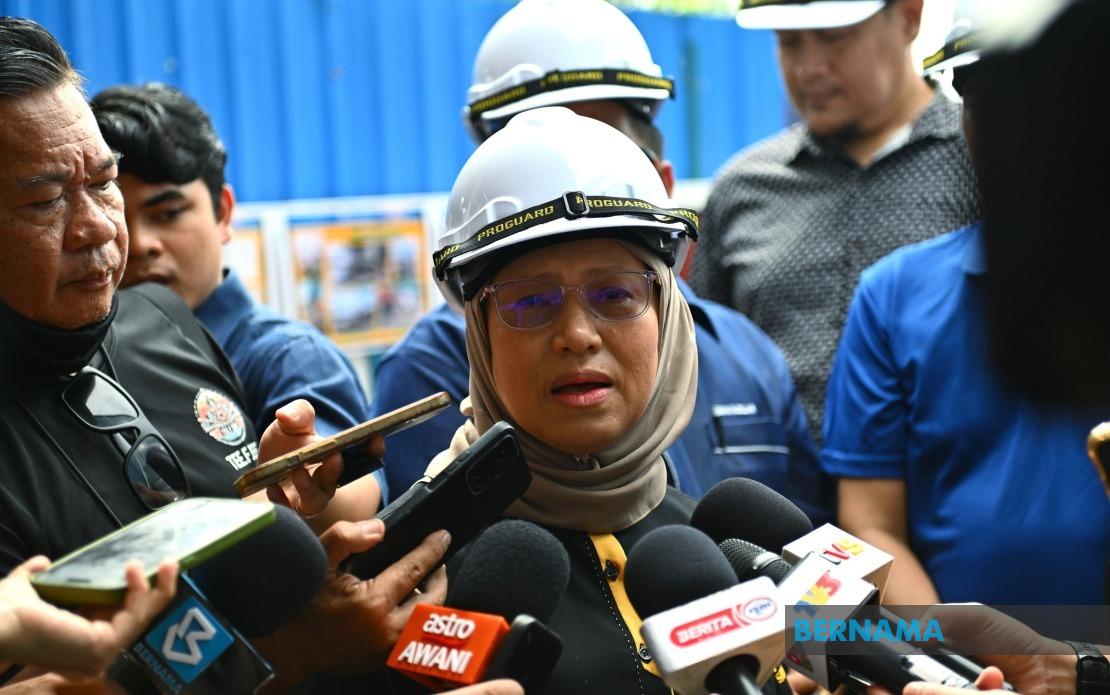
The Social Welfare Department has ordered a Langkawi kindergarten to cease operations immediately pending completion of a police investigation into serious allegations of child neglect and mistreatment. Women, Family and Community Development Minister Datuk Seri Nancy Shukri announced the directive, emphasising that the suspension will remain in effect until authorities have thoroughly examined all claims arising from reports filed by a former educator at the facility.
Although the Education Ministry holds primary regulatory responsibility for the kindergarten sector, the Social Welfare Department has asserted its authority in child protection matters and is actively participating in the investigative process alongside law enforcement and local education officials. Nancy Shukri outlined that her department's child protection officers are working collaboratively to gather evidence, examine documentary materials, and compile reports necessary for the ongoing inquiry. The case falls under Section 31(1) of the Child Act 2001, a provision specifically designed to address harm or risk of harm to minors under adult supervision.
The allegations emerged from a complaint lodged by a former kindergarten staff member who reported troubling conditions at the premises. According to Langkawi district police chief ACP Khairul Azhar Nuruddin, the accusations include children being required to rest on bare floors without mattresses and being confined to a toilet, practices that fundamentally contradict established standards for early childhood care and development. These claims have triggered immediate scrutiny of operational practices at the facility, with authorities prioritising the verification of facts through examination of closed-circuit television recordings and statements from individuals with direct knowledge of conditions at the kindergarten.
The revelation has implications for how Malaysia's regulatory framework operates across different levels of government. While the Education Ministry formally oversees kindergarten licensing and compliance, the involvement of the Social Welfare Department signals recognition that child safety matters transcend purely educational oversight and require integrated coordination between agencies with distinct mandates. This collaborative approach reflects growing acknowledgment that protecting children demands comprehensive examination beyond curriculum and teaching methods to encompass the physical environment, caregiver conduct, and daily practices within childcare institutions.
Nancy Shukri conveyed a clear message to kindergarten operators nationwide regarding expectations for child welfare standards. The kindergarten in question has been formally cautioned about its obligations concerning child care, safety, and general welfare, with explicit reminders of regulatory requirements that operators must satisfy. The minister indicated that should the investigation uncover evidence of legal violations, the department and relevant authorities will pursue appropriate enforcement action, underscoring official determination to hold facilities accountable when standards fall short.
For parents who have entrusted their children to this facility, authorities have issued guidance to cooperate fully with police directives and ensure their children's safety during the investigation period. This advisory carries particular weight given the sensitive nature of allegations involving confinement and unsupervised rest conditions that deviate significantly from accepted childcare practices. The interim closure provides an opportunity for families to make alternative arrangements while simultaneously allowing investigators unimpeded access to the premises and records.
The Langkawi incident highlights recurring vulnerabilities within the early childhood education sector across Malaysia and Southeast Asia more broadly. Kindergartens often operate with limited oversight compared to primary schools, and proprietors may lack formal training in child development and safeguarding principles. Furthermore, the reliance on individual staff members to report concerning practices, as demonstrated by the former teacher's complaint, underscores gaps in institutional accountability mechanisms and suggests that systemic monitoring could be strengthened through more frequent, unannounced inspections and standardised welfare assessments.
Investigators are methodically establishing whether claims substantiate into provable violations requiring formal charges or whether contextual factors might explain apparent departures from ideal conditions. The examination of CCTV footage will be particularly valuable in corroborating or challenging specific allegations, while interviews with current and former staff, parents, and children attending the facility will provide contextual detail. The police have committed to completing their inquiry comprehensively rather than hastily, recognising that child protection cases demand careful evidentiary work.
This enforcement action carries broader messaging for the early childhood education industry in Malaysia. Operators cannot assume that regulatory bodies function with limited capacity or that complaints will be deprioritised when weighed against business continuity concerns. The decisive suspension of operations, announced publicly by a cabinet minister, demonstrates that government takes allegations of child neglect with maximum seriousness and will not permit facilities with credible questions about child safety to continue functioning during investigations.
The incident also raises questions about parental due diligence when selecting childcare facilities. While regulatory agencies bear primary responsibility for oversight, parents increasingly must conduct their own assessments of premises conditions, staff qualifications, operational transparency, and receptiveness to unannounced visits. The absence of red flags that prompted a staff member to report concerning practices suggests that internal safeguarding mechanisms may have been inadequate or that employees felt empowered to escalate concerns only upon departing the institution.
Moving forward, the resolution of this investigation may yield recommendations for strengthened regulatory frameworks. Authorities might implement more rigorous training requirements for kindergarten operators, establish clearer welfare standards with specific physical environment specifications, and create more accessible mechanisms for staff and parents to report concerns confidentially without fear of retaliation. The case also underscores the importance of regular welfare inspections and unannounced facility visits rather than compliance verification concentrated around formal licensing cycles.
Regional childcare regulators across Southeast Asia will likely monitor how Malaysia handles this matter, as the region generally faces similar challenges regarding oversight of private and semi-private early childhood institutions. The Langkawi case demonstrates that governments possess tools to act decisively when credible allegations emerge, and that child protection considerations can legitimately override business interests when children's immediate safety and wellbeing are implicated in investigations.

