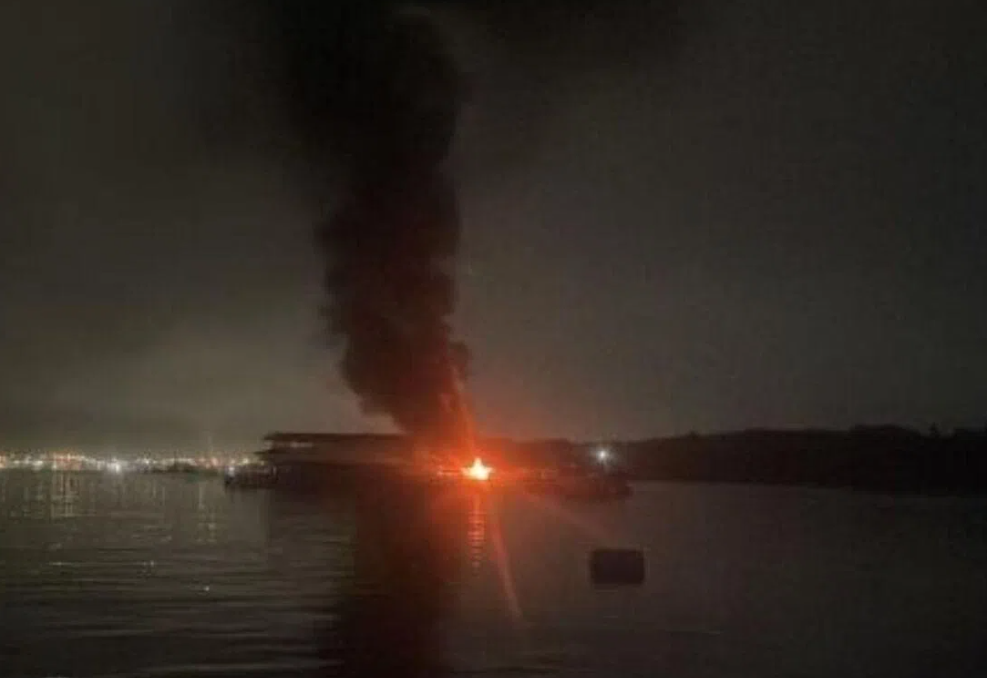
A lightning strike has left Singapore's aquaculture sector grappling with fresh questions about operational safety and disaster preparedness after destroying multiple floating fish farms positioned near Pulau Ubin. The incident, which unfolded on June 24 when firefighters responded to emergency calls at approximately 8.10pm, exposed vulnerabilities in how these farms manage weather-related risks and maintain protective infrastructure in vulnerable offshore locations.
The blaze commenced at one farm situated off the Lorong Halus jetty, close to the waters separating Pasir Ris from Pulau Ubin and Pulau Ketam. The fire subsequently spread to at least two neighbouring farms before firefighting teams managed to extinguish it after several hours of intense effort. While the Singapore Civil Defence Force has not officially confirmed the exact cause, preliminary investigations point to a lightning strike that struck the farm's solar panel installation—a critical component in powering modern aquaculture operations. Chinese-language media Lianhe Zaobao reported this assessment based on available evidence and operator statements.
The incident proved costly for local fish farmers. One operator estimated losses exceeding S$120,000, a substantial blow considering the already-thin profit margins inherent in Singapore's aquaculture sector. More troublingly, the farm owner disclosed an inability to pursue insurance claims for the destruction, highlighting a significant gap in financial protection mechanisms for aquaculture enterprises. This revelation underscores how farms operating in Singapore's dynamic maritime environment often operate with inadequate coverage against natural disasters—a structural vulnerability that could threaten the viability of smaller operations following major incidents.
The destroyed assets painted a vivid picture of aquaculture's operational complexity. The blaze claimed fish feed stocks, diesel generators essential for backup power, the solar panel array itself, a fishing vessel, and multiple fish traps used in daily harvesting operations. Fishing nets also sustained damage, and the farm owner reported that approximately half of the farm's entire fish population escaped into surrounding waters during the chaos. This combination of equipment loss and livestock escape represents a cascading disaster that extends beyond immediate financial accounting into broader environmental and regulatory implications for Singapore's fisheries.
The farm owner's account revealed a critical operational lesson. He noted that previous lightning damage to solar panels had been successfully contained because workers happened to be present and could respond immediately to prevent escalation. This time, the farm's offshore location combined with the absence of staff during the evening hours meant the fire advanced unchecked before emergency services could mobilise maritime resources. The observation highlights how Singapore's aquaculture sector, operating at considerable distances from shore, remains dependent on rapid human intervention when automated systems fail.
Response efforts required coordinated deployment of marine assets unusual in typical firefighting operations. The Singapore Civil Defence Force mobilised vessels from the Maritime and Port Authority of Singapore alongside the Airport Emergency Service, reflecting the operational complexity of maritime rescue in confined waters. Beyond official resources, neighbouring fish farm operators stepped in voluntarily to assist containment efforts, underscoring the mutual dependencies that characterise Singapore's aquaculture community and its reliance on collaborative crisis response.
For Malaysian observers and regional aquaculture stakeholders, this incident carries instructive implications. Singapore's farming operations, though constrained by limited territorial waters and high operational costs, employ advanced technology and infrastructure that should theoretically provide superior protection compared to larger but less capitalised operations elsewhere in Southeast Asia. That even technologically sophisticated facilities remain vulnerable to natural disasters and inadequately insured against such events raises fundamental questions about how aquaculture operations throughout the region approach risk management and financial planning.
The incident also raises environmental stewardship questions relevant across the region. With half a farm's fish stock escaping into nearby waters, the ecological impact of such disasters extends beyond individual operators' losses. Escaped farmed fish can interbreed with wild populations, alter local ecosystem dynamics, and introduce disease pressures into natural fisheries. Singapore's densely managed marine environment means such externalities receive closer regulatory scrutiny than they might in less developed jurisdictions, yet the incident demonstrates that prevention remains inadequately resourced or prioritised.
Looking forward, the fire demands attention to Singapore's broader aquaculture policy framework. While the Singapore Food Agency oversees sectoral development and regulation, the incident raises questions about whether current guidelines adequately address electrical safety protocols for solar-powered farms in lightning-prone tropical waters. The sector's inability to secure comprehensive insurance for weather-related disasters suggests either underestimated risk profiles in existing products or limited demand due to prohibitive premiums—either scenario representing a systemic weakness.
For regional aquaculture operators, the Pulau Ubin incident serves as a cautionary tale about infrastructure resilience and financial preparedness. As Southeast Asian nations expand aquaculture production to meet food security objectives, ensuring that farms—whether in Singapore, Malaysia, Thailand, or Vietnam—maintain adequate insurance, redundant safety systems, and trained emergency response capabilities becomes increasingly essential. The incident demonstrates that technological advancement alone cannot eliminate vulnerability to natural hazards; comprehensive risk management strategies must encompass financial, operational, and regulatory dimensions working in concert.

