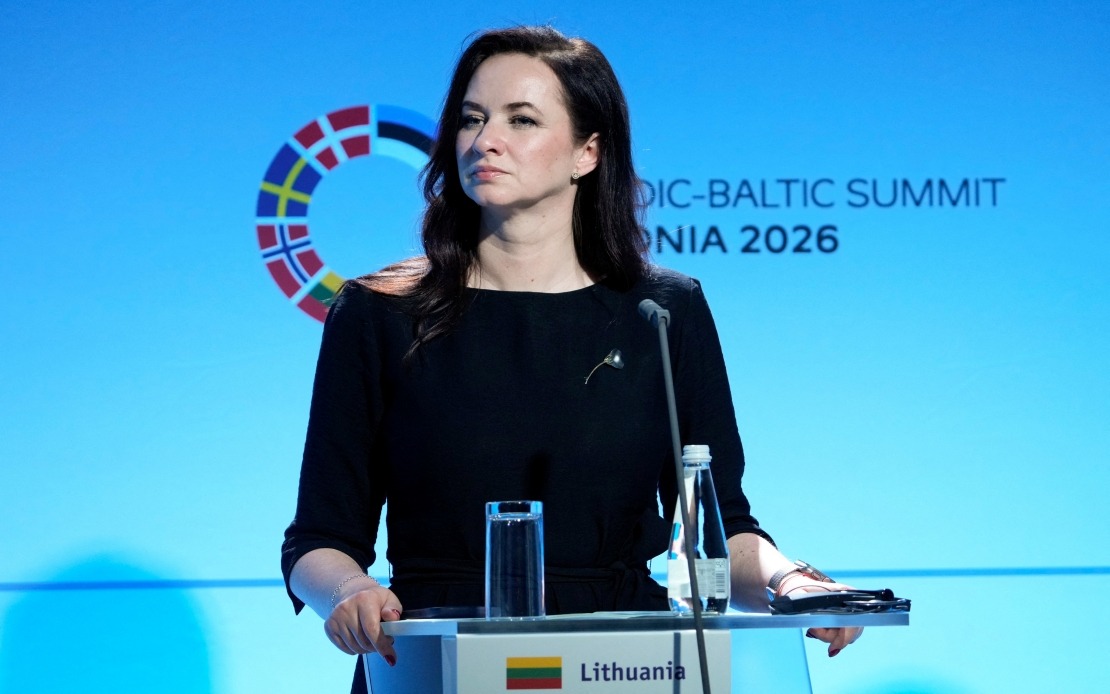
Lithuanian Prime Minister Inga Ruginiene announced her government's resignation on Tuesday, setting in motion a constitutional process that will reshape the Baltic nation's leadership and governing coalition. The announcement comes amid shifting political dynamics within the ruling parties, less than a year after the Social Democrats first took office following the 2024 parliamentary elections.
Under Lithuania's constitutional framework, President Gitanas Nauseda now has 15 days to propose a candidate for the office of prime minister. The nominated individual must then obtain the confidence of the Seimas, the country's parliamentary chamber, before assuming the post. This deliberate timeline reflects the formal procedures that guide government formation in the small Baltic state, which has navigated multiple coalition arrangements in recent months.
Mindaugas Sinkevicius, who chairs the Lithuanian Social Democratic Party, is widely anticipated to receive the presidential nomination. Political observers and domestic media outlets have identified him as the frontrunner for the position, reflecting the party's dominant position within the current political landscape. Should he secure parliamentary approval, the timeline accelerates from there, with Sinkevicius granted 15 days to assemble his Cabinet and develop a comprehensive policy platform outlining his administration's agenda.
Once Sinkevicius submits his proposed Cabinet composition to parliament, he faces an additional 15-day window for the legislature to review and approve his ministerial selections. This phased approach ensures parliamentary oversight at multiple stages, preventing any single actor from monopolising the formation process. The procedural complexity underscores how coalition governments require sustained consensus-building across political parties.
The incoming government will represent the third coalition arrangement that the Social Democrats have led since voters delivered their verdict in the late 2024 elections. This pattern of successive coalitions signals underlying fragility within the political alliances that emerged from the ballot box, suggesting that governing majorities have proven difficult to maintain. Each reshuffle requires renewed negotiations, fresh power-sharing agreements, and adjustments to ministerial portfolios.
The outgoing government, headed by Ruginiene, took office in August following the resignation of her predecessor Gintautas Paluckas. That relatively brief tenure indicates the challenges facing coalition governments in maintaining unity across parties with potentially divergent policy priorities. The frequent changes in leadership create uncertainty within government institutions and complicate the implementation of long-term policy objectives.
President Nauseda formally accepted Ruginiene's resignation and directed the existing Cabinet to continue functioning in a caretaker status until the new government completes its formation and assumes office. This transitional arrangement ensures governmental continuity during the interregnum period, allowing essential services to continue and preventing administrative paralysis. The caretaker government, while constrained in initiating major new policies, maintains responsibility for routine administration and urgent matters requiring executive action.
During their final meeting on Tuesday, the outgoing Cabinet unanimously voted to approve the resignation resolution. Ruginiene remarked that despite confronting substantial difficulties, her government had accumulated accomplishments worthy of acknowledgment. This assessment reflects a common pattern wherein outgoing administrations attempt to secure their legacy by emphasising achievements rather than dwelling on the circumstances prompting their departure.
For Malaysian observers, the Lithuanian situation illustrates how coalition governments across diverse democracies must manage internal tensions and shifting political coalitions. While Malaysia's parliamentary system operates under different constitutional provisions, both nations grapple with the perennial challenge of maintaining governing coalitions when constituent parties possess distinct interests. The frequency of Lithuanian government reshuffles within such a brief timeframe offers a cautionary example of coalitional instability, highlighting the importance of robust agreements that can weather political disagreements.
The implications for Lithuania extend beyond personnel changes, as successive governments create uncertainty regarding policy continuity and implementation timelines. International partners must adapt to new ministerial counterparts, and domestic policy agendas may shift with each administration. The coming weeks will reveal whether the incoming Social Democratic-led coalition can achieve greater stability than its predecessors, or whether further instability awaits.

