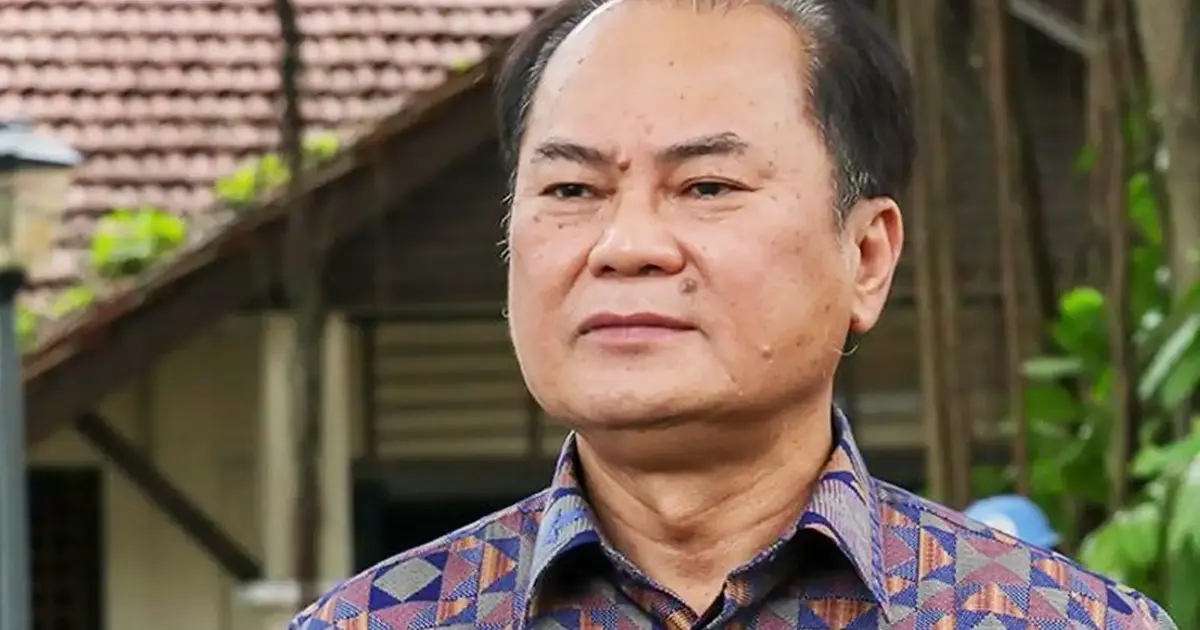
Political observers are sharpening their forecasts for Malaysia's electoral landscape, with former DAP leader Liu Tze-shin predicting the impending disintegration of the Barisan Nasional and Perikatan Nasional alliance that currently anchors the ruling coalition. Liu's assessment pivots on a fundamental tension within the partnership: both Umno and PAS draw strength from nearly identical voter demographics and geographical strongholds, creating inherent friction that will eventually force a reckoning.
The dynamics Liu identifies reflect Malaysia's complex political arithmetic. Umno, despite recent electoral setbacks, remains a formidable machine across the Malay-Muslim heartland, particularly in rural and semi-urban constituencies. PAS, having consolidated its position as the predominant Islamic party following its decisive Kelantan and Terengganu victories in 2022, now commands substantial influence over a portion of Umno's traditional support base. This overlap creates a zero-sum competition where gains for one inevitably translate to losses for the other, making cooperative electoral agreements structurally unstable over the medium term.
Liu's thesis suggests that both parties increasingly believe they possess sufficient organisational capacity and grassroots momentum to contest independently and expand their territorial reach. This confidence stems partly from recent electoral performances: PAS demonstrated capacity to mobilise voters effectively during the 2022 general election, while Umno retained considerable appeal despite internal fractures. When coalition partners perceive themselves as strengthened rather than weakened, incentives to maintain electoral pacts diminish sharply. The current arrangement, which sees BN and PN contest separately in many constituencies while maintaining a broader parliamentary alignment, may thus represent a transitional state rather than a stable equilibrium.
The implications for Malaysia's electoral system are substantial. A dissolution of the BN-PN understanding would transform the general election landscape into what Liu characterises as a "free for all"—a genuinely multipolar contest without the structural certainties that coalition architecture provides. Such fragmentation would likely benefit opposition forces, particularly those seeking to rebuild credibility after setbacks in recent years. Malaysian voters would face choices across a more atomised political field, with reduced predictability regarding seat distributions and coalition formation possibilities in parliament.
Regional observers also note that PAS and Umno maintain significantly different ideological trajectories and institutional bases. PAS operates within an Islamic revivalist framework and has steadily moved toward more pronounced positions on religious and constitutional matters. Umno, conversely, represents a more pluralistic and accommodative approach to Malaysia's multiethnic society, despite its Malay-Muslim identity. These divergences, while manageable within a parliamentary coalition, become flashpoints when both parties compete directly for voter affection and legislative mandates. Umno's modernising impulses and PAS's stricter religious orientation appeal to overlapping but distinct voter segments, allowing for differentiation once competitive pressures intensify.
The timeline Liu implicitly suggests points toward General Election 16, Malaysia's next mandatory electoral contest. Between now and that point, several pressure valves will determine whether the BN-PN framework holds or fractures. Party conventions, leadership transitions, policy pronouncements, and internal dissent management will all generate signals about coalition durability. If grassroots Umno and PAS members increasingly view coalition constraints as limiting their parties' growth potential, pressure on leadership to exit the arrangement will mount substantially.
Malaysian political commentary has long grappled with coalition volatility. The 2018 general election dismantled a coalition that had governed for six decades. The subsequent 2020-2022 interregnum witnessed multiple configurations and realignments. The BN-PN coalition, formally established following the 2022 election, represents an attempt to engineer stability through institutional design. Yet Liu's analysis suggests that even carefully structured coalitions cannot overcome underlying competitive pressures when member parties share similar voter bases and harbour comparable organisational capabilities.
For DAP and other opposition-aligned parties, a fracturing BN-PN alliance presents both opportunities and challenges. A free-for-all electoral environment could fragment Malay-Muslim political representation, potentially benefiting non-communal parties and those with cross-ethnic appeal. Simultaneously, it could strengthen majoritarian Malay-Muslim political mobilisation if Umno and PAS compete through increasingly competitive ethnic and religious rhetoric. The calculation becomes far more complex than under scenarios of stable coalition governance.
International observers monitoring Malaysian political stability also watch this dynamic closely. Coalition fragmentation typically increases electoral uncertainty, complicates post-election coalition formation, and can produce protracted negotiations regarding government formation. Malaysia's economic and geopolitical partners have developed comfort with relatively predictable political structures; pronounced volatility introduces elements of unpredictability that ripple through investment decisions and regional diplomatic calculations.
Liu's prognosis ultimately reflects rational actor assumptions: parties act in their perceived self-interest, coalitions remain only as strong as the incentives maintaining them, and when competitive advantages appear achievable through independent action rather than coordinated constraint, rational political entrepreneurs will pursue fragmentation. Whether this analysis proves prescient depends on decisions yet to be made within Umno and PAS leadership structures, on grassroots sentiment regarding coalition constraints, and on the broader political economy of Malaysian electoral competition as it evolves toward General Election 16.

