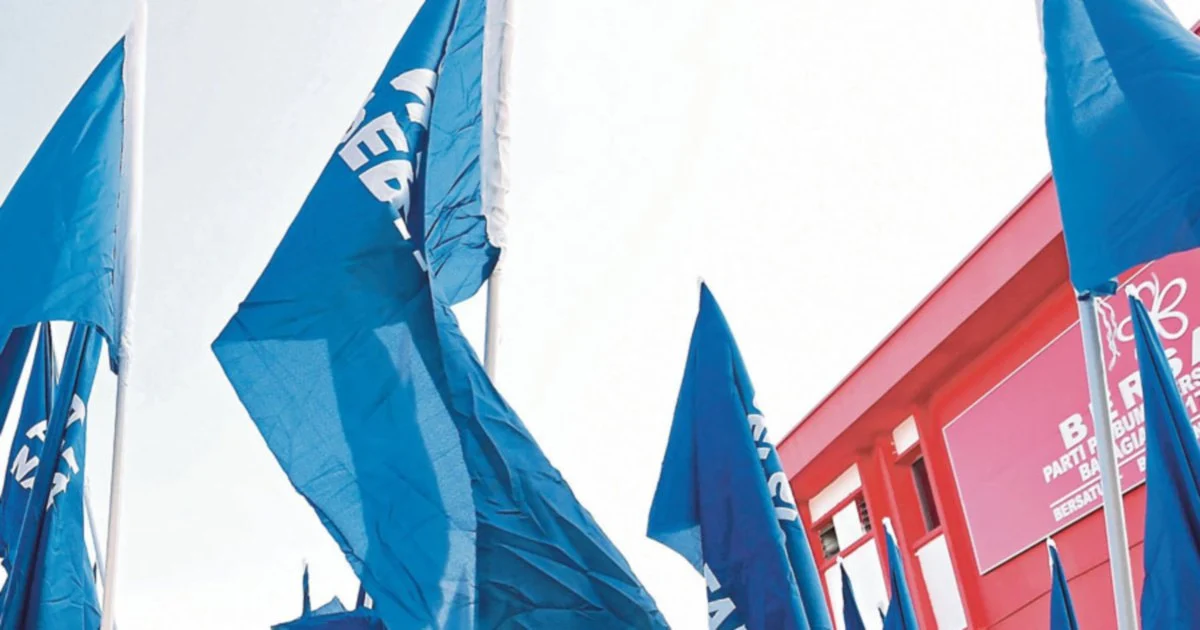
Political control of the Perikatan Nasional coalition logo could become a decisive obstacle for Bersatu in the coming electoral cycle, with the party's candidates facing potential exclusion from using the symbol unless they obtain explicit authorisation from coalition chairman Datuk Seri Dr Ahmad Samsuri Mokhtar.
The dispute highlights the fragile nature of Malaysia's multi-party political coalitions, where formal rules around shared branding can become weapons in internal power struggles. When parties contest elections jointly under a single logo, the mechanism for approving individual candidates typically rests with coalition leadership, creating leverage points that weaker coalition members must navigate carefully.
For Bersatu, which has experienced significant internal upheaval since its formation and subsequent political realignments, this requirement poses a tangible threat to its electoral competitiveness. The party's ability to field candidates under the PN banner—which carries the coalition's accumulated political machinery and voter recognition—is substantially more advantageous than contesting independently under the Bersatu logo alone. Loss of this avenue would effectively diminish the party's electoral reach across constituencies where it lacks independent organisational strength.
Coalition dynamics in Malaysian politics frequently involve such power imbalances. Larger or more established partners often control crucial institutional mechanisms, including logo authorisation, candidate vetting, and nomination processes. This structural reality means that smaller coalition members operate within constraints that can be tightened or loosened depending on the chairman's discretion and the broader coalition's internal politics. Ahmad Samsuri Mokhtar's position as PN chairman therefore grants him considerable influence over Bersatu's electoral prospects.
The situation reflects deeper tensions within Perikatan Nasional regarding resource distribution and decision-making authority. Coalition partners must balance their individual party interests against the collective interests of the alliance, but when those interests diverge sharply, the formal mechanisms of control become flashpoints. The logo authorisation process, ostensibly a technical administrative matter, becomes laden with political significance when used strategically.
For Malaysian voters and observers, this development underscores a persistent challenge in the nation's electoral ecosystem: the volatility of coalition partnerships and the potential for internal disputes to disrupt campaign operations close to polling day. Such uncertainty can complicate electoral planning for all parties involved and may ultimately confuse voters attempting to understand coalition structures and candidate affiliations.
Bersatu's predicament also illustrates the risks faced by parties that lack the organisational capacity to campaign effectively on their own steam. Since its establishment, Bersatu has struggled to build grassroots machinery comparable to longer-established parties, making coalition partnership essential for electoral viability. The party has also experienced internal instability, with leadership transitions and member defections weakening its independent standing. These vulnerabilities increase its dependence on coalition partners' willingness to include it in joint electoral arrangements.
The broader implications extend to the stability of Perikatan Nasional as a coherent political force. If coalition tensions escalate to the point where Logo authorisation becomes a contested issue, confidence in the partnership's durability will erode. Analysts and political observers will scrutinise whether Ahmad Samsuri Mokhtar's approach signals coalition consolidation or deterioration, and whether Bersatu retains sufficient influence within PN structures to protect its electoral interests.
From a regional Southeast Asian perspective, Malaysia's coalition politics remains distinctive in its complexity and the frequency with which multi-party alliances shift and realign. The mechanisms through which such coalitions govern themselves—including logo control and candidate authorisation—merit close attention, as they reveal how power actually functions within ostensibly united political structures. The PN-Bersatu situation exemplifies a pattern seen across the region where formal institutional rules mask substantive power asymmetries.
Looking ahead, resolution of this logo dispute will likely depend on negotiations between Bersatu leadership and Ahmad Samsuri Mokhtar's office. The party may seek clarification on authorisation criteria, advocate for more transparent approval processes, or attempt to broker broader coalition agreements that guarantee its electoral participation. Alternatively, Bersatu could prepare contingency strategies for contesting independently if coalition arrangements prove untenable, though this would substantially diminish its competitive position.
The timeline leading to the next general election will be crucial in determining whether this dispute escalates into a coalition-fracturing crisis or remains manageable through behind-the-scenes negotiation. Bersatu's standing within PN, the degree to which Ahmad Samsuri Mokhtar prioritises coalition cohesion over asserting chairman prerogatives, and the willingness of other coalition partners to mediate will all influence the eventual outcome.
Ultimately, this controversy serves as a reminder that Malaysia's electoral landscape hinges not only on voter preferences and policy platforms but also on the often-opaque internal dynamics of coalition governance. Logo control, whilst seemingly administrative, carries real consequences for which candidates can contest, under what banner they campaign, and how effectively they can mobilise voter support. The resolution of the PN-Bersatu dispute will provide insight into the coalition's future trajectory and the degree of influence that smaller partners can retain within increasingly formalised alliance structures.

