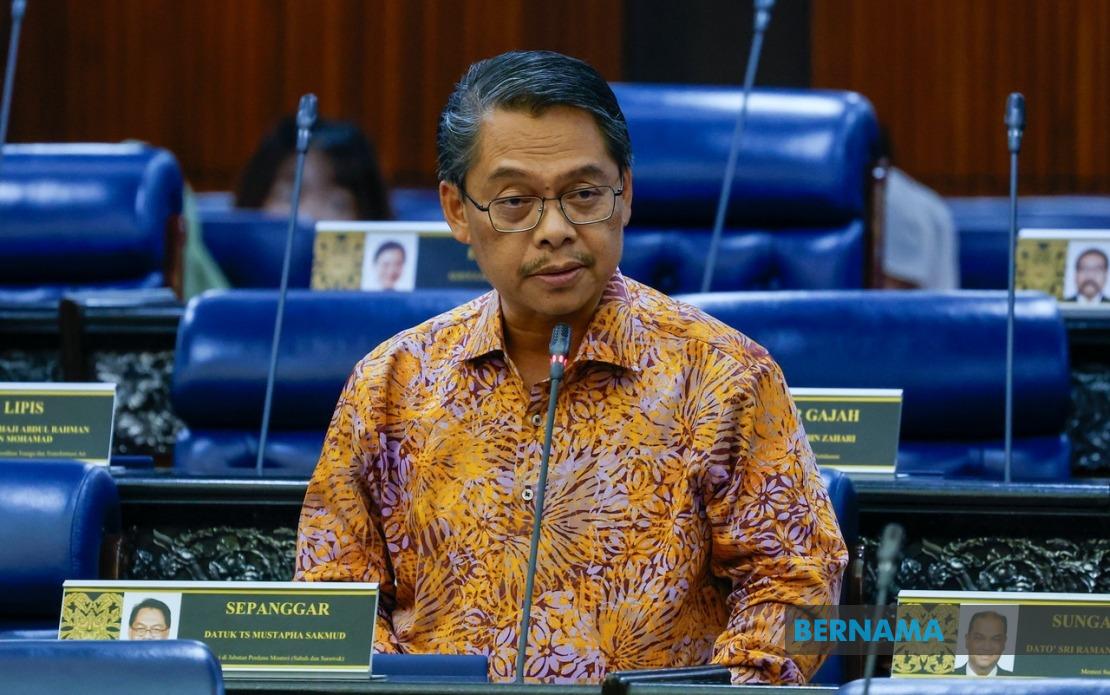
The Malaysia Agreement 1963 negotiation process has reached a midway checkpoint, with the federal government reporting concrete progress on nearly half of the outstanding bilateral issues between Kuala Lumpur and the two East Malaysian states. Minister in the Prime Minister's Department (Sabah and Sarawak Affairs) Datuk Mustapha Sakmud disclosed during parliamentary proceedings that thirteen matters out of the twenty-nine under discussion have achieved full resolution. The revelation offers the first detailed public accounting of the marathon diplomatic efforts since the formal negotiation platform was established to address long-standing grievances between Sabah, Sarawak, and the federal government under the foundational 1963 constitutional agreement.
Beyond the thirteen fully resolved issues, an additional five matters have progressed to what officials term partial or interim resolution status, marking incremental movement on some of Malaysia's most politically sensitive dossiers. These interim settlements emerged from decisions reached during the MA63 Technical Committee meeting held on March 2, suggesting that even seemingly intractable disputes can yield to sustained negotiation when backed by political will at senior levels. The existence of these interim categories indicates a sophisticated negotiation architecture where compromise positions and phased implementations are being explored rather than demanding immediate, comprehensive settlements across all fronts. This approach reflects pragmatic recognition that not all grievances accumulated over decades can be addressed simultaneously without destabilising the federation.
Among the interim matters identified by Mustapha are initiatives centered on broadening the pool of state public service positions available to Sabahan and Sarawakian candidates under Article 112 of the Federal Constitution. This particular issue strikes at the heart of economic opportunity and democratic representation in the peninsula's two largest states by area. Parallel to civil service expansion, the interim category encompasses unresolved aspects of health and education delivery, sectors where East Malaysian states have long argued they receive inadequate federal allocation relative to their populations and developmental needs. The fourth interim matter involves the Borneonisation of the Federal public service in Sabah and Sarawak, a concept referring to ensuring that federal government positions within these states are staffed predominantly by local personnel rather than peninsular transfers.
The remaining eleven outstanding issues continue to occupy the attention of the Sabah and Sarawak Affairs Division (BHESS), which functions as the formal secretariat for these negotiations. The division maintains close coordination with stakeholders across both state governments and relevant federal ministries, suggesting that the negotiation process extends far beyond high-level political exchanges to encompass bureaucratic machinery at multiple levels. This institutional arrangement ensures that technical expertise and ground-level implementation realities inform the discussions rather than allowing negotiations to remain abstract exercises in constitutional interpretation. The breadth of involvement indicates recognition that successful implementation of any MA63 resolution depends on buy-in from agencies that must ultimately execute agreed policies.
The most contentious issue to emerge during parliamentary questioning concerns the perennial demand from East Malaysian political circles to increase Sabah and Sarawak's representation in the Dewan Rakyat. Opposition parliamentarian Isnaraissah Munirah Majilis from Warisan-Kota Belud raised the specific request for an increase that would grant the two states a 35 percent quota of parliamentary seats, a target reflecting their combined population and landmass proportion relative to the federation. This demand carries profound implications for peninsular-East Malaysian political balance, as increasing East Malaysian representation would proportionally diminish Peninsular Malaysia's dominance over legislative outcomes. Such realignment could reshape coalition mathematics and alter the strategic calculus of peninsular-based political parties seeking parliamentary majorities.
Musapha's explanation of why this matter remains unresolved addresses the genuine constitutional and procedural constraints governing electoral boundary adjustments. He clarified that only the Election Commission possesses the authority to undertake redelineation exercises, and only after the completion of an eight-year cycle has elapsed from the last comprehensive redistricting. This procedural safeguard, embedded in Malaysia's electoral framework, ostensibly prevents perpetual manipulation of boundaries but also creates a structural lag that prevents rapid adjustment to demographic shifts or policy demands. The Election Commission's independence from political direction, while essential to democratic integrity, means that even federal government goodwill cannot unilaterally expedite boundary changes.
Further complicating the parliamentary seats issue are the constitutional amendments that would necessarily accompany any meaningful increase in East Malaysian representation. Article 46 of the Federal Constitution governs the composition of the Dewan Rakyat, and modifications require a two-thirds supermajority vote in the lower house. This extraordinarily high threshold was deliberately established by the constitution's framers to prevent casual alteration of the federation's representative structure, but it also means that such changes demand consensus across deep political divides. In Malaysia's current polarised political environment, assembling two-thirds support for any constitutional amendment has proven elusive except on rare occasions of overwhelming national consensus. Obtaining such agreement on an issue that fundamentally alters power distribution between regions remains a formidable challenge.
The MA63 negotiation process itself represents a significant shift in federal-state relations, as formal, structured discussions of these grievances were largely absent during earlier decades following the 1963 agreement. The establishment of dedicated technical committees and secretariat mechanisms acknowledges that East Malaysian states possess legitimate claims requiring systematic engagement rather than episodic political accommodation. This institutionalisation of negotiations suggests a maturing of federal architecture, though skeptics might argue it reflects problems that should have been addressed far earlier. The fact that thirteen matters have found resolution indicates that many grievances do not require constitutional upheaval but rather administrative adjustment, better funding allocation, or clarification of existing provisions.
For Malaysian analysts and regional observers, the MA63 negotiations carry significance extending beyond bilateral federal-state relations. They influence perceptions of whether federal structures can accommodate regional aspirations and whether the original foundational agreements establishing Malaysia remain living documents capable of evolution or have become historical relics frozen in 1963 interpretations. The resolution of health and education matters, in particular, has immediate bearing on public service quality in Sabah and Sarawak, affecting millions of citizens directly. Successful handling of these issues could strengthen federation cohesion, while continued gridlock risks nurturing separatist sentiment or perpetual political grievance that destabilises the broader national project.
The interim category of resolutions deserves closer examination as a potentially significant innovation in Malaysian negotiation practice. Rather than demanding complete victory or accepting total defeat on contentious issues, interim arrangements allow negotiations to register partial progress while leaving future revision possible. This might involve pilot programmes in Borneonisation that later expand if successful, or provisional increases in public service quotas subject to review. Such flexibility acknowledges that some problems require experimentation before permanent solutions can be designed. However, interim arrangements also risk becoming permanent stalemates if political will later dissipates, leaving unresolved issues frozen in provisional states indefinitely.
Moving forward, the MA63 negotiation process faces critical junctures as participants tackle the remaining eleven unresolved matters. The minister's report to parliament signals commitment to transparency and progress tracking, though parliamentary questioning also revealed gaps in resolution on the highest-profile issue of parliamentary representation. As Malaysia navigates broader discussions of constitutional review and institutional reform, the MA63 negotiations will inevitably intersect with these larger conversations about federalism, representation, and power distribution. The success or failure of these negotiations could set important precedents for how the federation addresses regional grievances and whether structural adjustments remain possible within the existing constitutional framework.

