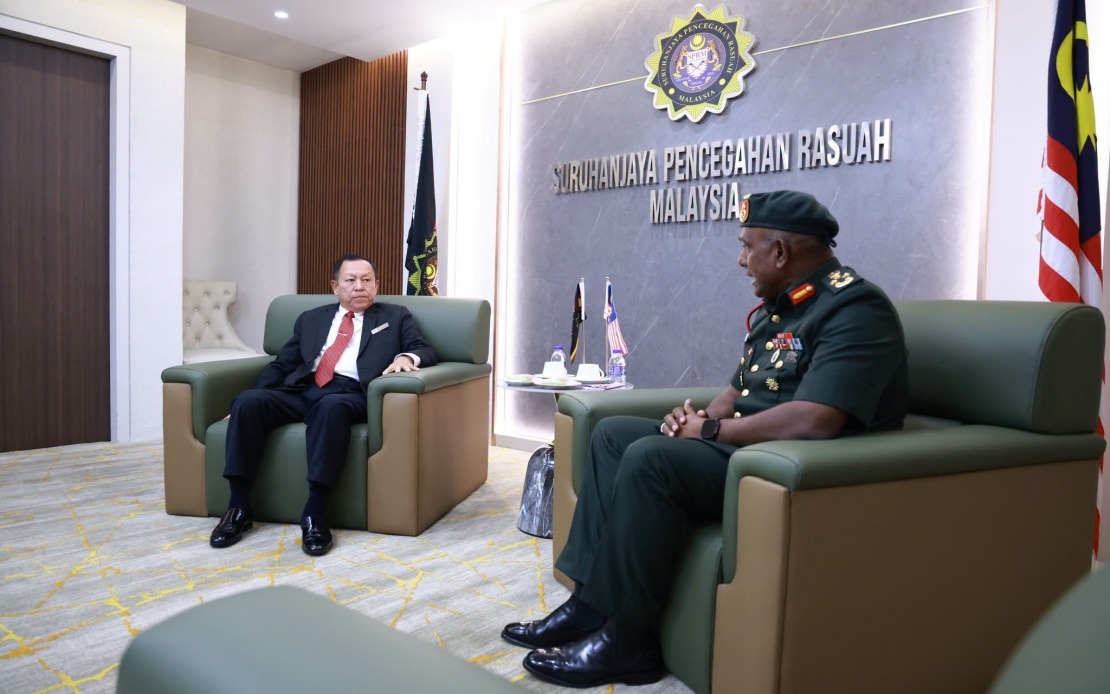
The Malaysian Anti-Corruption Commission and the country's Armed Forces have moved to reinforce their institutional partnership, marking a significant step in coordinating the nation's defence against graft and malfeasance. The commitment was underscored during a meeting in Putrajaya between MACC leadership and senior military intelligence officials, signalling a broadening of coordination mechanisms that extend beyond traditional law enforcement boundaries into the country's security apparatus.
MACC Chief Commissioner Datuk Seri Abd Halim Aman highlighted the commission's appreciation for its established working relationship with the military, emphasising that deeper collaboration will prove instrumental in tackling corruption with greater effectiveness. He framed the enhanced cooperation as essential to national interests, suggesting that anti-corruption work increasingly requires the kind of intelligence-gathering capabilities and security infrastructure that the Armed Forces can provide. The message underscores a recognition that combating systemic corruption demands coordination across multiple government agencies rather than reliance on any single institution.
The occasion for this public reaffirmation was the formal courtesy call by Malaysian Defence Intelligence Organisation director-general Lt Gen Datuk Fazal Abdul Rahman, whose appointment took effect in May. Such ceremonial visits between senior officials typically serve to cement working relationships and establish frameworks for ongoing dialogue. For Malaysia's anti-corruption drive, the presence of defence intelligence at the MACC headquarters symbolises how seriously the military establishment views its role in supporting the broader governance reform agenda that has gained prominence in recent years.
Intelligence sharing emerged as a cornerstone of the renewed partnership. The military's sophisticated surveillance networks, communications monitoring capabilities, and access to defence personnel records could prove valuable in uncovering corruption schemes that touch upon defence procurement, security operations, or military infrastructure projects. Conversely, the MACC's investigative expertise and legal authority to compel testimony and seize assets complement the Armed Forces' information-gathering functions. This complementarity suggests that future investigations may benefit from real-time intelligence exchange rather than post-facto cooperation.
Governance enhancement, the second pillar of the agreement, reflects a preventive rather than purely prosecutorial approach to corruption control. By working together on institutional standards, training programmes, and codes of conduct within the military establishment, both organisations can address corruption at its roots before misconduct crystallises into criminal activity. The Armed Forces, as a hierarchical institution with its own internal discipline mechanisms, offers fertile ground for governance reforms that could serve as models for other government agencies.
Lt Gen Fazal's comments emphasised the Armed Forces' commitment to maintaining professional standards and upholding discipline across all operational domains. His statement that close cooperation with the MACC supports "the national integrity and good governance agenda" reflects how anti-corruption has become woven into Malaysia's broader institutional narrative. The military's explicit adoption of this language suggests acceptance that transparency and accountability are not external impositions but integral to professional soldiering and institutional credibility.
The presence of additional officials, including MACC's Intelligence Division senior director Datuk Saiful Ezral Arifin and the MAF Security and Counter Intelligence Directorate director Lt Col Muhamad Zainol Md Yusof, indicates that the cooperation extends beyond symbolic gestures to working-level engagement. These officials would likely manage information-sharing protocols, establish secure communication channels, and coordinate joint investigations or intelligence assessments. The involvement of counter-intelligence specialists suggests the cooperation may encompass not only corruption detection but also counter-espionage and internal security concerns that overlap with corruption investigations.
For Malaysia's regional standing, this institutional alignment matters considerably. Southeast Asian nations have faced persistent challenges in combating corruption within defence establishments, where procurement opacity, foreign arms transfers, and classified operations create conditions enabling large-scale theft and embezzlement. By demonstrating that military and civilian anti-corruption agencies can function as genuine partners rather than rivals or adversaries, Malaysia projects an image of institutional maturity and commitment to transparency that influences regional perceptions of governance capacity.
The timing of this partnership reinforcement also merits consideration within Malaysia's broader anti-corruption trajectory. After several high-profile investigations and prosecutions involving political figures and business elites, the expansion of anti-corruption focus to the military suggests a comprehensive approach rather than selective enforcement. This universalisation of anti-corruption standards across security, political, and commercial spheres signals institutional change at a structural level, though sustained implementation will ultimately determine whether the cooperation translates into tangible improvements in governance and reduction in corrupt practices.
Looking forward, the success of this partnership will depend on whether agencies can overcome traditional bureaucratic silos and competing institutional interests. Information security protocols must be robust enough to protect legitimate defence secrets while remaining permeable enough to enable intelligence flow. The MACC must develop sufficient technical expertise to assess military-related corruption cases, which often involve specialised knowledge of defence systems and procurement procedures. These operational challenges will test whether the goodwill expressed at headquarters level translates into effective day-to-day coordination among field officers and investigators.

