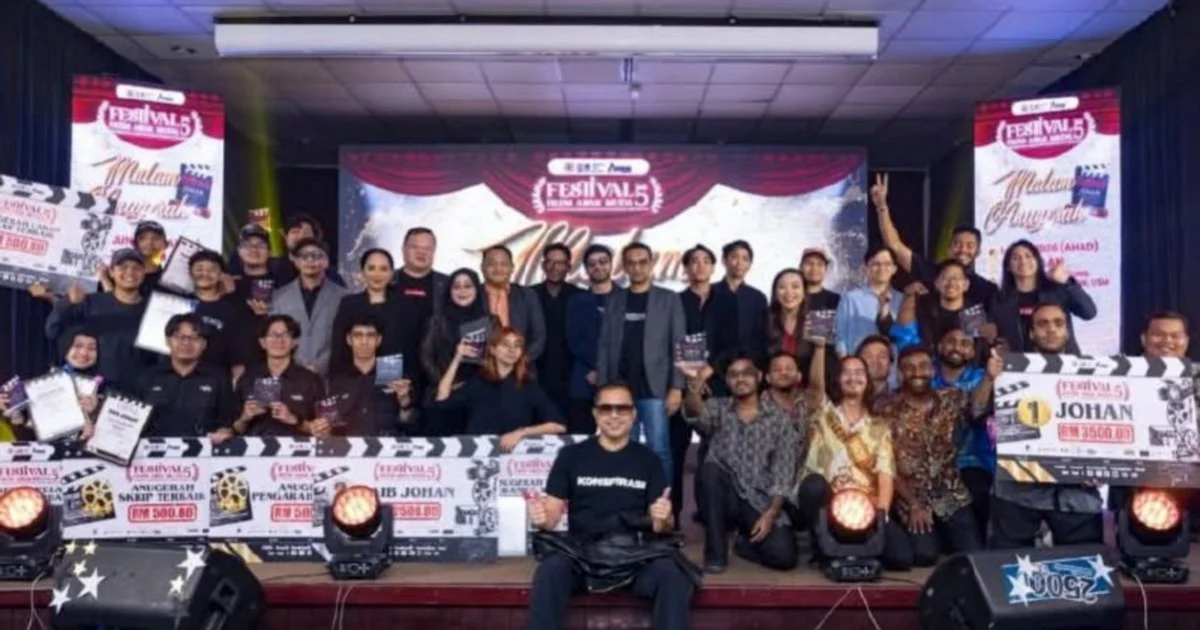
The Malaysian Anti-Corruption Commission (MACC) is deepening its commitment to fostering a culture of integrity among Malaysia's youth by collaborating on the 5th Youth Film Festival (FFAM) at Universiti Sains Malaysia (USM) in Penang. This initiative represents a shift in how the anti-corruption watchdog approaches its public education mission, moving beyond traditional awareness campaigns to engage younger demographics through the medium of film—a format that resonates powerfully with digital-native audiences across the nation.
The strategic partnership underscores a growing recognition within Malaysian governance circles that anti-corruption messaging must evolve to match how young people consume information and form opinions. Rather than relying solely on pamphlets, formal seminars, or regulatory statements, the MACC recognises that storytelling through cinema offers an emotionally engaging pathway to communicate the dangers of corrupt practices and the importance of ethical conduct in both public and private life. This approach aligns with contemporary best practices globally, where anti-corruption bodies increasingly tap into cultural and creative industries to amplify their reach.
For Malaysia specifically, the timing of this initiative carries particular significance. As the nation works to rebuild public trust in institutions following high-profile corruption cases in recent years, engaging the youth—who will inherit and shape Malaysia's governance structures—becomes strategically crucial. The film festival platform at USM provides an ideal venue to reach students and young professionals who might otherwise dismiss anti-corruption messaging as distant bureaucratic concern rather than personally relevant and urgent issue.
The 5th Youth Film Festival represents more than merely screening documentary content about corruption cases. The collaborative effort suggests a broader educational programme designed to inspire young filmmakers and screenwriters to explore themes of integrity, accountability, and the societal costs of malpractice through their own creative work. By positioning anti-corruption as a compelling narrative subject rather than a dry policy matter, the MACC effectively transforms potentially tedious content into material that young audiences will voluntarily engage with and discuss among peers.
USM's location in Penang makes this collaboration particularly strategically sound. The northern Malaysian state has historically been an education hub and a centre for intellectual discourse, with a sizable student population from across the country. The university's prominence in media and film studies provides institutional expertise that can elevate the quality and impact of the festival, ensuring that the anti-corruption messaging reaches audiences through professionally crafted storytelling rather than awkward, heavy-handed propaganda.
The creative arts approach also offers MACC an opportunity to address corruption from multiple angles and contexts. Films can explore corruption's manifestations across different sectors—education, healthcare, business, government services—allowing viewers to recognise how malpractice affects their daily lives. This contextualised approach proves far more effective than abstract discussions of institutional corruption, as it helps young people connect anti-corruption principles to tangible, relatable scenarios they may encounter in their future careers.
From a regional perspective, Malaysia's initiative reflects broader Southeast Asian efforts to combat corruption through public engagement. Thailand, Indonesia, and the Philippines have similarly invested in creative campaigns targeting young audiences, recognising that generational shifts in attitude toward corruption require investment in long-term cultural change. The MACC's move positions Malaysia among progressive anti-corruption bodies willing to experiment with unconventional engagement strategies.
The partnership also carries implications for the film industry itself in Malaysia. By positioning the Youth Film Festival as a vehicle for discussing serious governance issues, the MACC signals that Malaysian cinema can tackle substantive topics alongside entertainment content. This potentially opens doors for documentarians and narrative filmmakers to explore governance themes with institutional support, enriching the nation's cinematic landscape while serving the broader anti-corruption agenda.
However, the success of such initiatives ultimately depends on execution and follow-through. The festival must strike a careful balance between compelling storytelling and clear messaging—films that are too didactic risk being dismissed by youth audiences as propaganda, while those that are too oblique may fail to reinforce anti-corruption principles effectively. The MACC's collaboration with USM's creative professionals suggests thoughtful approach to this challenge, leveraging academic expertise in both film production and social messaging.
Looking forward, this initiative establishes a template for how regulatory bodies can adapt their communication strategies to reach increasingly media-savvy younger generations. If successful, the 5th Youth Film Festival could catalyse similar partnerships between government agencies and educational institutions across Malaysia, creating a more pervasive cultural conversation around integrity and accountability. For youth navigating early career decisions and moral choices, exposure to well-crafted anti-corruption narratives during formative years may prove influential in shaping professional conduct throughout their lifespans.
The festival also implicitly acknowledges that combating corruption requires sustained, multi-layered effort. One-off campaigns rarely generate lasting behavioural change, but repeated exposure to anti-corruption themes through trusted creative mediums—particularly among young audiences still forming their values—contributes to gradual cultural transformation. By investing in youth engagement through film, the MACC demonstrates that it understands corruption prevention is fundamentally a generational project requiring patience, innovation, and commitment to meeting audiences where they actually are.