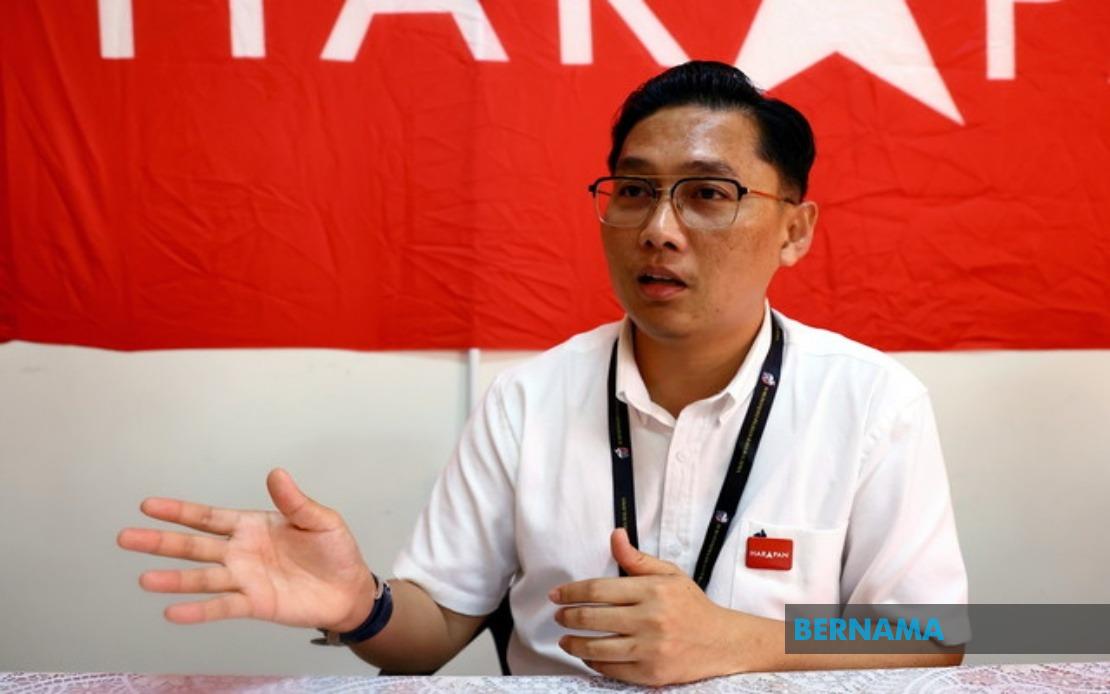
Nur Hafiz Roslan, Pakatan Harapan's candidate for the Machap state assembly seat, enters the July 11 Johor state election with confidence despite facing one of the state's most formidable political opponents. The legal practitioner of 18 years expressed unwavering resolve in his direct contest against incumbent Johor Menteri Besar Datuk Onn Hafiz Ghazi, brushing aside conventional wisdom that Machap represents an impregnable Barisan Nasional fortress.
The demographic and electoral realities of Machap appear daunting at first glance. In the previous 2022 state election, Onn Hafiz secured victory with a commanding majority of 6,543 votes, reinforcing perceptions of the constituency as reliably pro-establishment. Yet Nur Hafiz's optimism rests on historical precedent rather than wishful thinking. He draws parallels to previous Johor leaders who defied expectations, citing former Menteri Besars Tan Sri Abdul Ghani Othman and Datuk Seri Khaled Nordin as examples of once-dominant political figures who experienced electoral defeats. This perspective reflects a broader pattern in Malaysian politics where no seat is truly uncontestable, particularly when electoral dynamics shift or voter sentiment crystallises around new issues.
For opposition parties operating in traditionally hostile territory, Machap represents both a symbolic and practical battlefield. The straight contest between Nur Hafiz and Onn Hafiz eliminates the complication of three-way splits that sometimes fracture anti-establishment votes. This binary choice may inadvertently create conditions where dissatisfaction with incumbent performance, rather than entrenched loyalty, becomes the determining factor. Nur Hafiz's strategic messaging acknowledges this possibility whilst maintaining measured expectations, framing his candidacy as an opportunity for voters to consider an alternative rather than a guaranteed upset.
Beyond electoral mechanics, Nur Hafiz's platform articulates a deliberate pivot away from identity-based mobilisation that has long dominated Malaysian electoral contests. His rejection of what he terms outdated "3R sentiments"—race, religion, and royalty—signals frustration with a political discourse he views as increasingly disconnected from voters' material concerns. This framing aligns with a broader generational shift within opposition politics, where younger leaders emphasise bread-and-butter issues over the communal anxiety narratives that shaped twentieth-century Malaysian politics. Whether such messaging resonates in a predominantly Malay-Muslim constituency like Machap, where communal politics retain considerable traction, remains an open question that will be answered at the ballot box.
Nur Hafiz's emphasis on "mature politics" prioritising policy solutions over perception management reflects strategic positioning common among opposition candidates in competitive races. By criticising politics based on "fear among Malays, Chinese and Indians," he attempts to reframe the election around governance effectiveness and constituent service rather than identity protection. This rhetorical strategy seeks to depolarise the contest, potentially opening space for swing voters uncomfortable with confrontational partisan messaging. In Johor, where electoral competition has intensified since the 2018 political upheaval, such framings increasingly influence voter calculations, particularly among urban and younger demographics.
The Machap campaign unfolds within Johor's peculiar political landscape, where the Menteri Besar position carries exceptional symbolic weight. Onn Hafiz, as the sitting chief minister, commands advantages beyond typical incumbency—including control over state resources, media access, and the gravitational pull of executive authority. Nur Hafiz's response has been to stress the PH machinery's organisational readiness and internal cohesion since the nomination stage, suggesting that opposition unity itself represents a competitive advantage against potential BN fragmentation. For Malaysian observers, the health of either coalition's ground organisation often proves more consequential than leadership appeal or policy positioning.
The Machap contest carries implications extending beyond a single state seat. Johor, as Malaysia's largest state and historically BN's southeastern bastion, remains critical to federal coalition mathematics. Any significant opposition breakthroughs in the state—even in traditionally secure BN territory—signal shifting voter preferences that reverberate nationally. A Nur Hafiz victory, whilst not inevitable, would represent the exact type of unexpected upset that has periodically reshaped Malaysian electoral outcomes, as occurred during the 2018 general election. Conversely, a comfortable BN retention would reinforce perceptions of southern Johor's locked-in support, influencing opposition resource allocation across the peninsula.
Nur Hafiz's background as a legal professional with nearly two decades of practice positions him as part of a broader cohort of opposition candidates drawn from professional rather than traditional party machinery backgrounds. This profile has become increasingly common within Pakatan Harapan since 2018, reflecting efforts to present governance alternatives rooted in technical expertise rather than factional advancement. Whether constituencies like Machap reward such candidates depends partly on whether voters prioritise demonstrated professional competence over party brand loyalty and established networks. The July 11 election will provide one data point in this ongoing pattern.
The campaign environment heading toward polling day on July 11, with early voting on July 7, will test whether Nur Hafiz's philosophical positions on depolarised politics gain traction amid traditional partisan mobilisation. Johor's political establishment has invested considerable effort in framing the election around stability and continuity, whereas opposition campaigns emphasise change and responsive governance. Within this dialectic, constituencies like Machap—defined by BN dominance yet containing urban elements potentially receptive to opposition messaging—become microcosms of broader national political competition. Nur Hafiz's confidence, whether borne out or disappointed, will ultimately depend on whether enough Machap voters embrace his vision of mature, solutions-focused politics over inherited partisan alignment.

