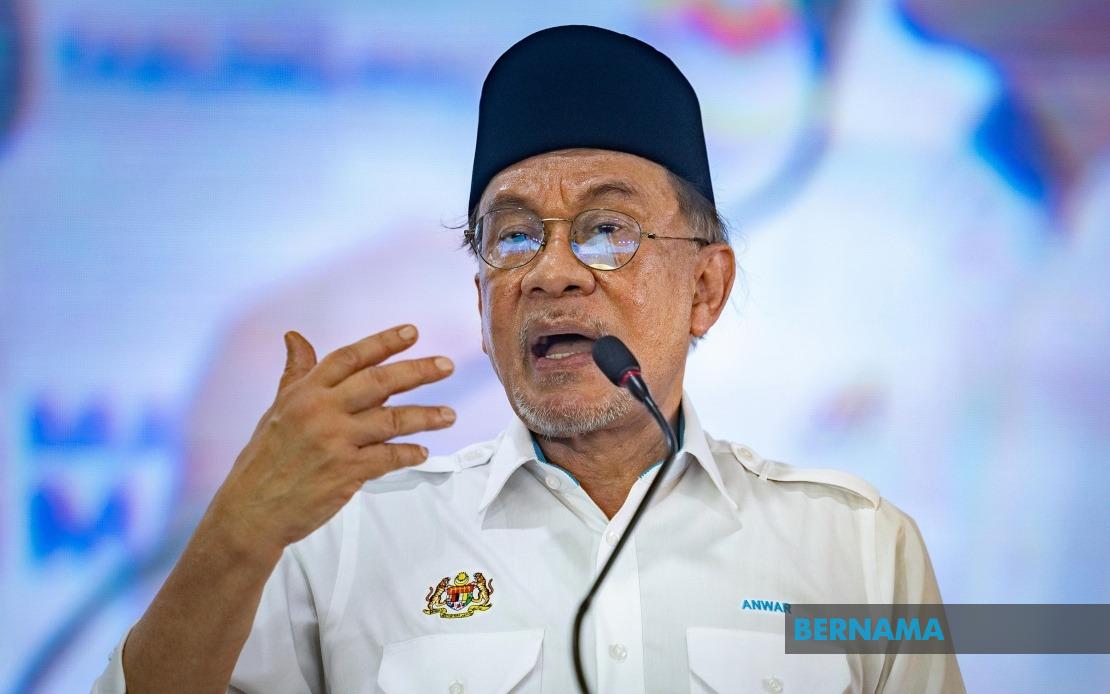
Prime Minister Datuk Seri Anwar Ibrahim has pledged sustained government investment in transforming religious and pondok educational institutions across Malaysia, signalling a strategic pivot towards bridging the digital divide in traditional Islamic learning. Speaking at the 2026 Perak Pondok and Religious Schools Gathering in Ipoh on July 19, he underscored the administration's determination to enhance these establishments while preserving their foundational role in nurturing Islamic scholarship.
The Prime Minister acknowledged a historical challenge that has constrained the sector's development. As Malaysia experienced rapid economic and technological transformation over recent decades, many pondok schools—which historically served as the nation's primary repositories of Islamic knowledge—struggled to adapt their curricula beyond classical religious texts. This pedagogical stagnation, while preserving valuable traditions, inadvertently positioned these institutions at the margins of contemporary education, unable to equip students with competencies demanded by modern labour markets.
Anwar's remarks centred on a reconciliation between preservation and progress. He expressed admiration for religious educators and pondok leadership who have maintained rigorous grounding in Islamic jurisprudence and classical texts whilst simultaneously demonstrating openness to emerging disciplines. The Prime Minister specifically highlighted computer technology and artificial intelligence as fields where pondok institutions must develop capacity, recognising that future-ready Islamic education cannot exist in isolation from the digital economy.
The government's partnership with Malaysia Digital Economy Corporation (MDEC) and the Implementation Coordination Unit (ICU) within the Prime Minister's Department represents a structural commitment to this modernisation agenda. These agencies are tasked with facilitating technology transfer and curriculum integration projects, effectively positioning pondok schools within Malaysia's broader digital economy framework. This bureaucratic architecture suggests the initiative extends beyond rhetorical support to tangible resource allocation.
Anwar specifically referenced his conversation with Sheikh Wazir Che Awang Al-Makki, a respected Kelantan-based Islamic scholar, indicating that this effort enjoys endorsement from influential figures within the traditional Islamic education establishment. Such legitimacy is crucial; any perception that modernisation threatens Islamic authenticity could provoke resistance from conservative quarters. The Prime Minister's careful invocation of religious leadership suggests careful consensus-building within the sector itself.
The timing of this initiative carries significance for Malaysia's education ecosystem. As the nation pursues higher-income economy status and digital transformation, the traditional education sector—encompassing pondok schools and Islamic religious institutions—represents a substantial but frequently overlooked human resource base. Estimates suggest tens of thousands of students attend such institutions, many from lower-income backgrounds. Excluding this cohort from technology-driven opportunity represents both an equity concern and an economic inefficiency.
For Southeast Asian observers, Malaysia's approach reflects a broader regional pattern. Indonesia, Brunei, and Thailand similarly grapple with integrating traditional Islamic or Buddhist education with contemporary skill demands. Malaysia's explicit policy direction—combining state support with technological infrastructure—offers a potential model for peer nations seeking similar reconciliation.
The regional economic context further amplifies the initiative's importance. As artificial intelligence and automation reshape labour markets across Southeast Asia, workers lacking foundational digital literacy face employment vulnerability. Pondok school graduates, traditionally concentrated in Islamic studies, face particular risk of labour market dislocation. By embedding technology training within existing institutional structures rather than creating parallel systems, the government potentially increases adoption rates and relevance.
Anwar's conditional language—promising enhancement provided the government remains healthy economically—reveals underlying fiscal considerations. Upgrading pondok school infrastructure, providing teacher training in emerging technologies, and acquiring necessary equipment entail substantial capital expenditure. The Prime Minister's invocation of economic stability suggests budget constraints may limit programme ambition, though the MADANI framework itself carries political weight sufficient to sustain commitment across electoral cycles.
The broader policy implication extends to Malaysia's social cohesion agenda. Religious and pondok schools serve predominantly Malay-Muslim communities, many in rural and economically disadvantaged regions. Targeted investment in their modernisation addresses educational inequality whilst demonstrating inclusive governance responsive to diverse constituencies. This dual function—equity and political legitimacy—underpins the initiative's durability.
Minister in the Prime Minister's Department (Religious Affairs) Dr Zulkifli Hasan's attendance alongside Perak Menteri Besar Datuk Seri Saarani Mohamad and Chief Secretary Tan Sri Shamsul Azri Abu Bakar reflects whole-of-government commitment. The inclusion of federal, state, and administrative apparatus signals that implementation will receive coordinated support across government layers, reducing risks of siloed or ineffectual execution.
Moving forward, success will depend on translating commitment into measurable outcomes. Curriculum revisions integrating AI and digital literacy, teacher professional development programmes, infrastructure investment in computer labs, and industry partnerships linking pondok graduates to employment opportunities will determine whether this initiative genuinely transforms these institutions. The coming years will reveal whether this represents enduring policy or time-limited rhetorical flourish.

