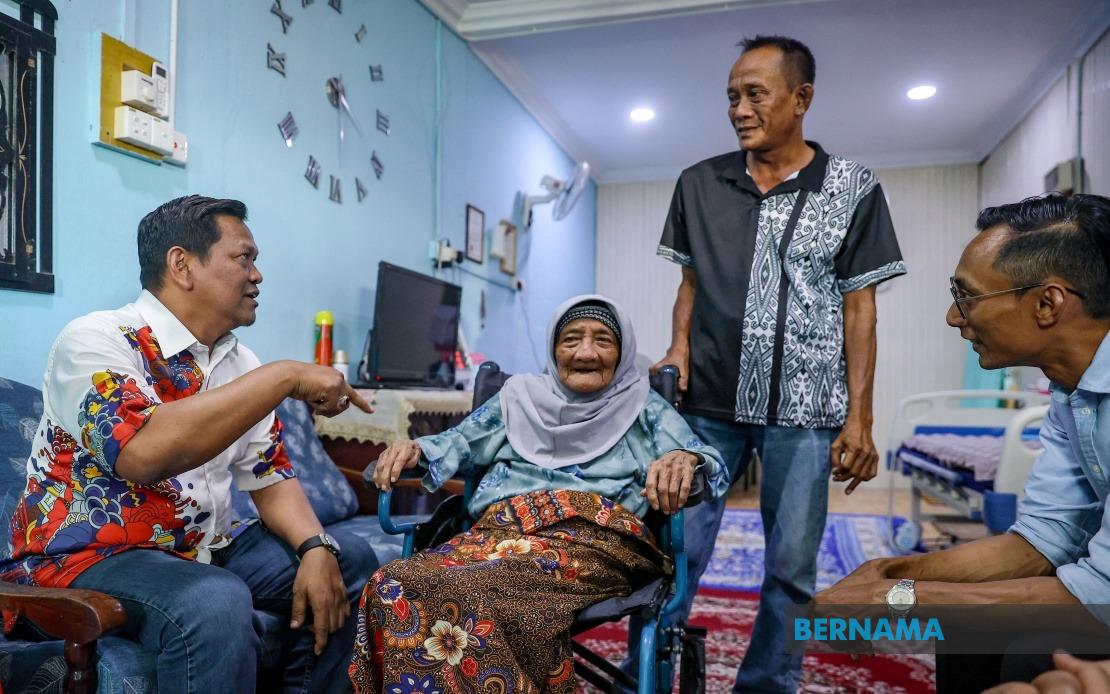
The MADANI Government has reaffirmed its dedication to the Ziarah Kasih programme, a direct assistance initiative targeting Malaysians in vulnerable circumstances. During recent activities in Mersing, the government demonstrated its commitment to this welfare effort, which forms part of a broader strategy to bolster ties between the state and citizens struggling with poverty and illness. The programme exemplifies the administration's stated focus on prioritising community well-being as central to the Malaysia MADANI vision.
Abdullah Izhar Mohamed Yusof, political secretary to the Communications Minister, outlined the government's approach during the Jiwa@Komuniti MADANI Sembang Santai World Cup Edition programme held in Endau. He explained that beneficiaries are identified systematically through collaboration between the Department of Information and Komuniti MADANI, ensuring assistance reaches those most in need. This structured identification process reflects an attempt to move beyond ad hoc charity towards targeted welfare delivery, though questions remain about the scale and sustainability of such efforts across Malaysia's diverse regions.
The initiative carries particular significance for elderly Malaysians facing compounding health and economic crises. During the Mersing visit, Abdullah Izhar personally distributed contributions and healthcare equipment to residents, a hands-on approach that underscores the government's messaging around direct engagement with communities. However, the symbolic nature of such visits raises broader questions about the depth and consistency of support available to Malaysia's growing population of frail elderly citizens, many of whom lack adequate formal social safety nets.
Among those assisted was Hamdan Abd Latif, a 71-year-old resident rendered bedridden by multiple health afflictions. Hamdan's circumstances illustrate the compounding vulnerabilities facing older Malaysians: a workplace injury in 2011 triggered a cascade of medical complications including a brain tumour requiring surgery, followed later by a stroke. Despite initial recovery from the tumour, his overall health deteriorated progressively, leaving him permanently dependent on care. His wife, Meriam Abd Wahab, aged 66, has become his full-time caregiver, sacrificing her own income-generating activities to provide support.
Meriam's situation reflects a common pattern across Southeast Asia whereby unpaid domestic caregiving, typically performed by women, substitutes for formal aged-care infrastructure. She previously supplemented the household income through sewing work but abandoned this employment to care for her husband following his stroke. The financial strain of Hamdan's medical history, combined with the loss of her earnings, has created acute household vulnerability. For families like theirs, government assistance programmes such as Ziarah Kasih provide crucial but modest relief from daily financial pressures.
Another beneficiary, Zainon Ibrahim, represents an increasingly common scenario in Malaysian households: a nonagenarian living with adult children who have sacrificed their own careers to provide care. At 91 years old, Zainon is cared for by her son Jamaluddin Ismail, 64, who relinquished his employment roughly two years ago. Jamaluddin, a former supervisor, made this decision with support from his siblings, though the division of care responsibilities within extended families remains uneven and often places disproportionate burden on one primary caregiver. His acknowledgement that the government assistance helps meet some of his mother's daily needs suggests that support levels, while appreciated, remain insufficient to fully address household requirements.
The Malaysia MADANI framework positioning itself as people-centred creates expectations that social provision extends beyond occasional visits and goods distribution. Ziarah Kasih, as currently implemented, appears to function as a supplementary welfare mechanism rather than a comprehensive system addressing chronic poverty and health-related dependency. This distinction matters significantly for understanding the scope of government responsibility in aging societies with limited formal welfare infrastructure.
Regional context highlights the challenges facing Malaysia and other upper-middle-income Southeast Asian nations grappling with rapid population aging. Unlike wealthier developed economies with established pension systems and aged-care facilities, countries like Malaysia continue developing social safety nets. The Ziarah Kasih programme signals political recognition of these gaps, yet its scale and reach remain unclear. Whether such initiatives can be scaled meaningfully across peninsular Malaysia, Sabah, and Sarawak without substantial budget increases remains an open question.
The programme's regular implementation, as emphasised by Abdullah Izhar, suggests official commitment to consistency rather than sporadic intervention. However, translating this commitment into sustainable, adequately-funded welfare delivery requires institutional capacity and budgetary allocation extending beyond what visible in current announcements. For Malaysian policymakers and observers, the pertinent issue involves whether Ziarah Kasih represents a foundational step toward comprehensive aged-care and poverty-alleviation systems, or remains primarily a public relations tool demonstrating political engagement without transforming underlying economic vulnerabilities.
Cases like Hamdan's and Zainon's underscore the interconnection between employment injury, health crises, aging, and poverty across Malaysian society. Systematic support for vulnerable populations demands coordinated approaches spanning healthcare access, income support, caregiver assistance, and long-term care infrastructure. While Ziarah Kasih acknowledges these needs through direct engagement, its limitations warrant serious examination as Malaysia confronts demographic shifts that will intensify demand for social support services throughout the coming decades.

