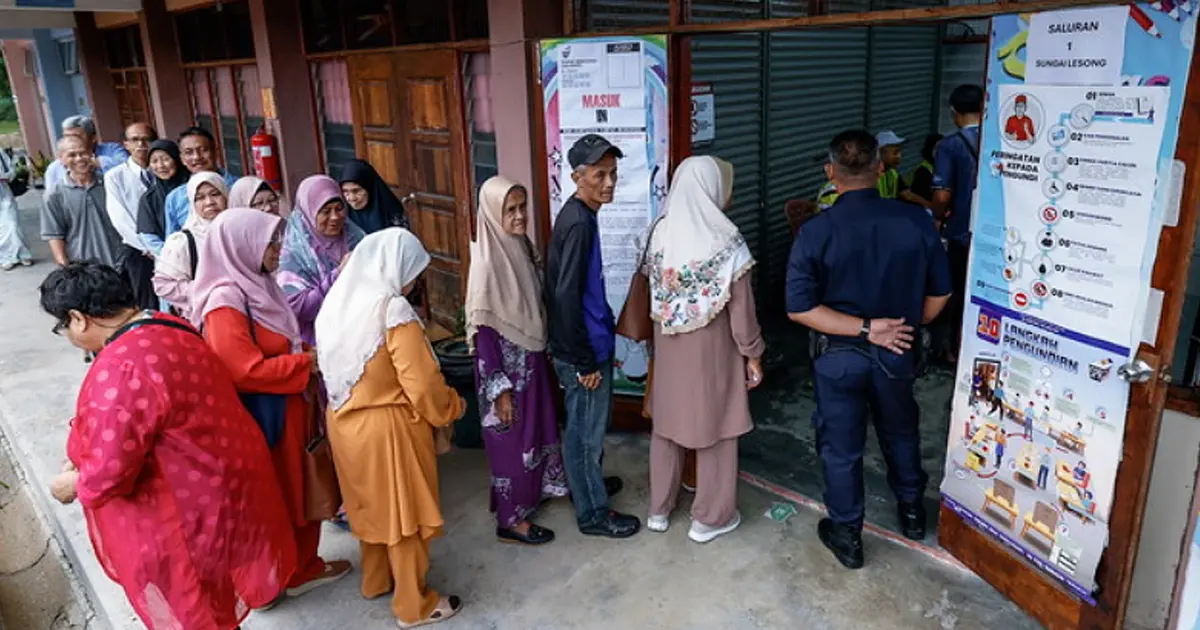
The perpetual cycle of discussing 3R issues—religion, race, and royalty—risks leaving Malaysia's Malay electorate emotionally exhausted, according to Awang Azman Pawi, a political analyst at Universiti Malaya. The warning comes as these themes continue to dominate political discourse across the peninsula, raising questions about whether such messaging strategies ultimately serve or undermine the parties wielding them.
Awang Azman's observation touches on a fundamental challenge facing Malaysian politics: the tension between identity-based appeals and bread-and-butter governance. While 3R narratives have historically mobilised voters and shaped political allegiances, their constant invocation without substantive resolution or action creates a fatigue that could reshape electoral behaviour. The analyst suggests that repetitive emphasis on these sensitive topics, without corresponding solutions or forward momentum, leaves voters emotionally drained rather than energised or convinced.
This dynamic has particular relevance in contemporary Malaysia, where economic pressures have intensified. The rising cost of living—encompassing everything from food and fuel to housing and transportation—now competes directly with traditional political narratives for voter attention and concern. Ordinary Malaysians navigating inflation and stagnant wages may find themselves less responsive to rhetoric centred on cultural or religious matters when their immediate preoccupation is household budgeting and financial security. The disconnect between elite political messaging and ground-level concerns creates space for voter disengagement or volatility.
According to Awang Azman's analysis, political parties will ultimately be evaluated not by the fervour with which they champion 3R issues, but by their demonstrated ability to govern effectively and address concrete problems affecting daily life. This represents a significant pivot from traditional Malaysian politics, where symbolic and identity-based positioning often superseded performance metrics in voter calculation. The shift reflects broader maturation of the electorate and changing priority structures, particularly among younger and urban constituencies more focused on economic outcomes.
The cost-of-living crisis has become the defining challenge for successive Malaysian governments and opposition coalitions alike. Whether administered by Barisan Nasional, Pakatan Harapan, or Perikatan Nasional variants, each administration has struggled to meaningfully reduce the financial burden on household budgets. When parties heavily invest political capital in 3R narratives while simultaneously failing to deliver measurable relief on everyday expenses, credibility erosion accelerates. Voters observe the disconnect and respond accordingly, often shifting support or withdrawing enthusiasm.
The concept of emotional fatigue introduced by Awang Azman warrants deeper examination in the Malaysian context. Emotional exhaustion from repeated 3R discourse operates on multiple levels: first, it suggests that voters have heard these arguments countless times without resolution; second, it implies that constant mobilisation around these issues without tangible outcomes becomes counterproductive; and third, it suggests a public increasingly seeking substance over symbolism. The analyst's framing suggests that parties continuing down this path risk squandering a valuable political resource—voter attention and emotional investment—without corresponding electoral returns.
Maryland politics has long grappled with the challenge of balancing identity concerns with economic governance. In neighbouring Singapore, the government's focus on meritocracy and economic performance, while managing cultural diversity carefully, demonstrated an alternative model to 3R-dominated politics. While Malaysia's constitutional and social framework differs substantially, the underlying principle—that voters reward effective governance addressing their material needs—holds universal application. Awang Azman's warning suggests Malaysian parties ignore this principle at their electoral peril.
The implications extend beyond individual party fortunes to the health of democratic discourse itself. When political competition centres excessively on 3R issues without substantive policy differentiation or resolution mechanisms, political space narrows. Complex governance challenges—infrastructure development, education reform, healthcare access, skills training, industrialisation—recede from central campaign messaging, leaving voters poorly informed about parties' actual policy platforms. This compression of policy debate into identity-based narratives ultimately weakens the quality of democratic choice available to voters.
For Malay voters specifically, Awang Azman's analysis suggests a more discerning political consciousness emerging. Rather than being mechanically responsive to 3R messaging, significant portions of this electorate appear increasingly focused on evaluating how parties actually govern when holding office. This shift places premium value on demonstrable competence, corruption control, institutional integrity, and economic management. Parties unable or unwilling to compete on these dimensions while simultaneously emphasising 3R concerns find themselves positioned poorly for electoral success.
Looking forward, the challenge facing Malaysian political parties involves recalibrating their engagement with voters around both identity and performance dimensions. Continuing to emphasise 3R issues without parallel commitment to solving cost-of-living pressures risks exactly the emotional fatigue Awang Azman identifies. Conversely, ignoring these issues entirely in pursuit of technocratic messaging would fail to acknowledge their genuine importance in Malaysian society. The parties achieving sustainable electoral success will likely be those managing to address both dimensions—respecting and acknowledging legitimate concerns around religion, race, and institutions while simultaneously demonstrating serious commitment to the economic welfare and material security of ordinary Malaysians.

