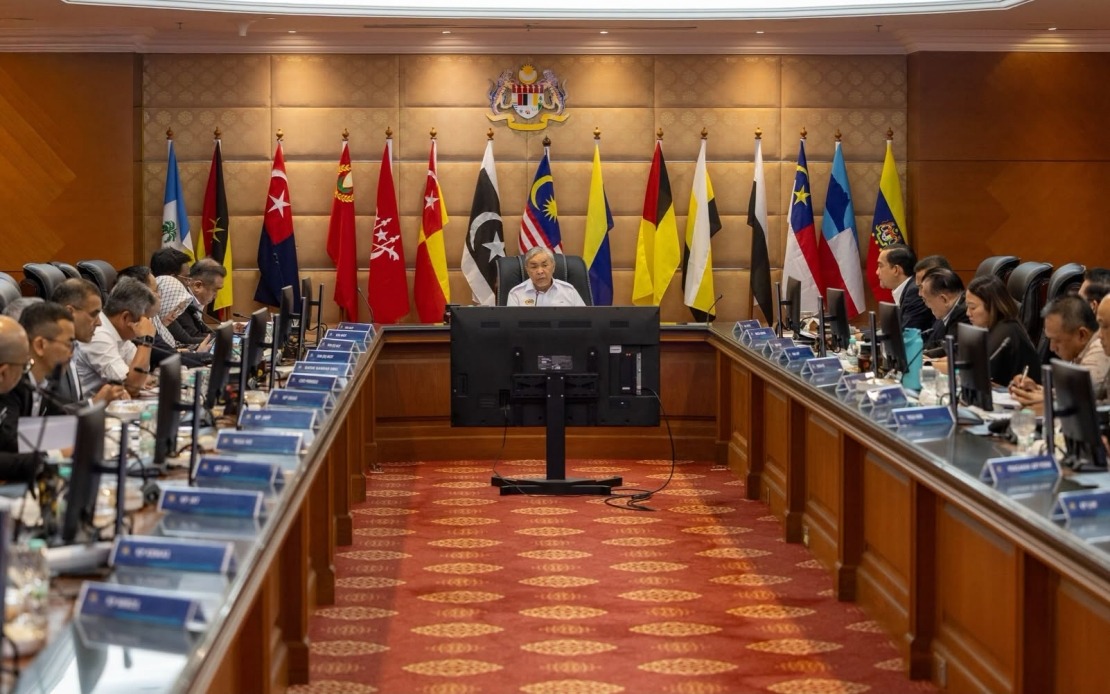
Malaysia's government is pursuing an ambitious target to slash road accident fatalities in half over the next six years, with Deputy Prime Minister Datuk Seri Dr Ahmad Zahid Hamidi announcing the sweeping initiative following a Cabinet Committee meeting on road safety and traffic congestion in Putrajaya on August 17. The commitment reflects growing alarm over the nation's persistent road safety crisis, which claimed 6,537 lives in the preceding year—a grim average of 18 deaths every single day on Malaysian roads.
The Cabinet Committee, chaired by Ahmad Zahid, has identified strengthening coordination among government ministries and agencies as central to achieving this 50 per cent reduction target by 2030. The strategy hinges on aligning policy frameworks, pooling resources more efficiently, and establishing clear accountability mechanisms across departments. Rather than implementing isolated interventions, the government aims to create a coherent, integrated approach where each initiative can be rigorously measured for its impact on reducing both fatalities and serious injuries.
Malaysia's road safety challenge is characterised by a stark statistical disparity that underscores the urgency of the government's new commitment. While motorcycles represent only 14 per cent of vehicles involved in road accidents, riders and pillion passengers on two-wheelers account for approximately 66 per cent of all road deaths. This means roughly two out of every three Malaysians killed in traffic incidents are motorcycle users—a proportion that Ahmad Zahid highlighted as particularly alarming and demanding immediate, targeted intervention.
The concentration of motorcycle fatalities reflects multiple interconnected factors that have long confounded Malaysian road safety policymakers. The prevalence of motorcycling as an affordable and convenient mode of transport throughout the country, combined with enforcement challenges, varied compliance with safety regulations, and vulnerability of riders to severe injury in collisions, has created a persistent public health crisis specific to two-wheeler users. The disparity between motorcycle involvement and fatality rates suggests that riders face disproportionate risks compared to occupants of four-wheeled vehicles, pointing to gaps in both protective infrastructure and behavioural compliance.
For Malaysian readers and regional observers, this announcement carries significant implications. Road safety remains a leading cause of injury and premature death across Southeast Asia, with Malaysia's situation reflecting broader patterns of rapid motorisation outpacing infrastructure and regulatory capacity. The government's explicit focus on motorcycle fatalities signals recognition that a one-size-fits-all approach cannot address the region's transport challenges. Malaysia's experience will likely inform policy discussions across ASEAN, particularly in nations with similarly high motorcycle dependency.
The 2030 target places Malaysia within a recognised global framework for road safety ambitions. The World Health Organization's Decade of Action for Road Safety frames such targets around specific, measurable reduction goals, and Ahmad Zahid's announcement aligns with international best practices for setting achievable yet transformative safety objectives. However, achieving 50 per cent reduction within six years demands not merely aspirational commitment but substantial resource allocation, legislative reform, and sustained enforcement.
Implementing this target will require addressing multiple intervention points simultaneously. These likely include enhanced rider training and licensing standards, expanded helmet usage compliance campaigns, improved road infrastructure design particularly in high-accident corridors, stricter penalties for traffic violations, and better emergency response and trauma care systems. The coordination emphasis suggests the government recognises that fragmented efforts by individual agencies have historically failed to produce sustained progress.
The previous year's toll of 6,537 fatalities places Malaysia among Southeast Asia's more challenging road safety environments, though comparable to other middle-income nations experiencing rapid motorisation. The 18 daily deaths figure, stated starkly, underscores the scale of what amounts to a sustained public health emergency. For context, this annual toll exceeds the combined fatalities from many other causes that receive significant policy and media attention, yet road safety often remains underfunded relative to its actual impact on population health.
Ahmad Zahid's emphasis on measurable outcomes suggests the government intends to implement evaluation mechanisms that go beyond simple accident statistics. Data-driven approaches can identify which interventions produce genuine reductions, enabling efficient resource allocation and preventing investment in ineffective programmes. This evidence-based orientation represents a potential shift in Malaysian road safety policy, moving beyond reactive enforcement toward proactive, scientifically informed strategy.
The cabinet committee structure itself reflects administrative recognition that road safety transcends any single ministry's mandate. Transport, police, health, and urban planning authorities all bear responsibility for different aspects of the challenge, and successful coordination remains notoriously difficult across government silos. The explicit committee mechanism suggests increased political priority and potentially enhanced budget access for road safety initiatives across these agencies.
Malaysian stakeholders including insurance companies, healthcare providers, non-governmental organisations focused on public safety, and motorcycle advocacy groups will be watching closely to see how this announcement translates into concrete policy changes and funding commitments. The credibility of the 2030 target depends on early visible progress within the first two to three years, establishing momentum and demonstrating political commitment beyond rhetorical ambition.
For ordinary Malaysians, particularly those reliant on motorcycles for daily transport, the success of this initiative could mean the difference between routine commuting and life-altering injury or death. As one of the developing world's more motorised societies, Malaysia confronts a critical juncture where either intensive intervention reduces road trauma or continuing current patterns perpetuates losses at preventable levels.

