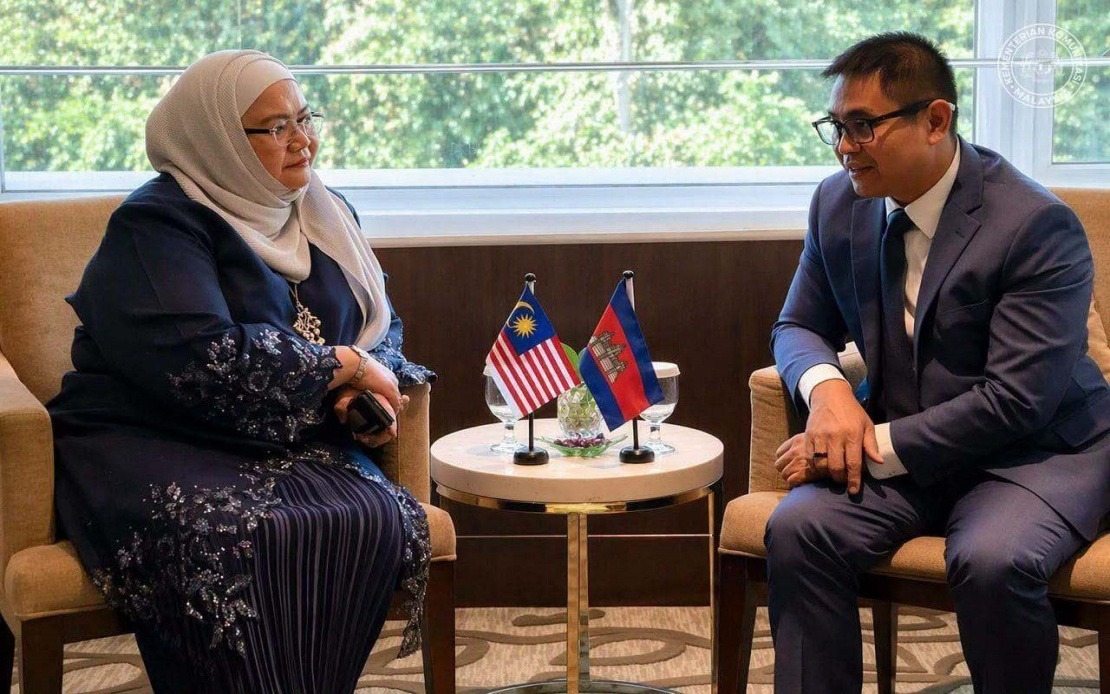
Malaysia and Cambodia have taken concrete steps to operationalise their recently signed Memorandum of Understanding on Information and Media Development Cooperation, with both countries convening a bilateral meeting to chart the implementation pathway for enhanced media and communications collaboration. The discussion took place on the sidelines of the 23rd ASEAN Senior Officials Responsible for Information (SOMRI) Meeting in Bandar Seri Begawan, Brunei, underscoring how regional forums serve as critical platforms for bilateral engagement on strategic sectoral issues.
The Malaysian delegation was led by Datuk Bahria Mohd Tamil, Deputy Secretary-General responsible for Strategic Communications and Creative Industry at the Ministry of Communications, while Cambodia fielded its own high-level representative in Prak Thaveak Amida, Secretary of State of the Ministry of Information. The composition of both delegations reflects the importance both governments attach to strengthening ties in the information sector, a domain increasingly central to statecraft and societal cohesion in the digital age.
The underlying MoU itself was formally signed on 20 June between Communications Minister Datuk Fahmi Fadzil and Amida, who represented Cambodian Information Minister Neth Pheaktra on an ad referendum basis. This arrangement—where a delegate signs on behalf of a minister pending formal ratification—is a standard diplomatic practice that permits substantive negotiations to proceed while preserving the ceremonial authority of senior cabinet figures. The timing of the agreement's conclusion at Malaysia's National Journalists' Day celebration in Penang earlier in June underscored the symbolic weight placed on media cooperation between the two nations.
Central to the bilateral meeting's agenda were discussions spanning multiple dimensions of media and information cooperation. Both delegations exchanged perspectives on information exchange mechanisms, media development initiatives, and the critical challenge of digital transformation—a concern that resonates deeply across Southeast Asia as platforms, technologies, and distribution channels evolve at accelerating pace. The region's media landscape has undergone profound shifts in recent years, with traditional print and broadcast outlets competing against digital-native competitors and facing pressure to monetise content in an increasingly crowded marketplace.
Information integrity emerged as another key focus area, reflecting mounting international concern over disinformation, misinformation, and coordinated inauthentic behaviour online. Both Malaysia and Cambodia have grappled with the challenges posed by false narratives spreading across social media, particularly during electoral cycles and periods of political sensitivity. By elevating this issue in bilateral discussions, both governments signal recognition that media ecosystems require coordinated defence mechanisms and that capacity-building in fact-checking, media literacy, and platform governance constitutes essential infrastructure for democratic institutions.
The ministry's statement emphasised Malaysia's commitment to deepening strategic cooperation with Cambodia through collaborative initiatives designed to advance the information and media sectors. This framing suggests the partnership extends beyond simple technical exchange to encompass substantive policy collaboration and potentially joint projects that could benefit media practitioners, news organisations, and the broader information environment in both countries. Malaysia's stronger media infrastructure and regulatory experience could offer valuable lessons for Cambodia's ongoing media development efforts, while Cambodia's perspectives on regional media challenges and opportunities contribute to a more comprehensive Southeast Asian understanding of sectoral dynamics.
The bilateral engagement also reflects the broader ASEAN context in which both nations operate. As members of the ten-nation bloc, Malaysia and Cambodia participate in collective discussions through forums like SOMRI, which brings together senior information officials to coordinate regional approaches to media policy, freedom of information, digital governance, and the balance between openness and security. Bilateral meetings on the margins of such gatherings permit deeper, more tailored discussions than multilateral settings typically allow, enabling countries to craft customised cooperation frameworks reflecting their specific circumstances and priorities.
For Malaysian stakeholders in media and communications, the MoU opens possibilities for professional exchange, training programmes, and collaborative research with Cambodian counterparts. News organisations might explore partnership opportunities, while academic institutions and media development organisations could pursue joint initiatives. The emphasis on digital transformation suggests potential collaboration on technological adoption, content management systems, and digital distribution strategies—areas where Malaysian expertise could prove particularly valuable.
The challenge facing both governments now lies in translating the MoU from symbolic commitment into tangible outcomes. Implementation frameworks, resource allocation, and clear metrics for success will determine whether this cooperation generates meaningful impact or remains largely ceremonial. Regular reviews, working group meetings, and specific project timelines will be essential to maintaining momentum and demonstrating to respective publics and media communities that the agreement yields practical benefits.
The timing of this cooperation also carries significance given the broader geopolitical context of Southeast Asia. Strengthening bilateral ties in information and media spheres contributes to regional stability and mutual understanding precisely when misinformation and competing narratives threaten social cohesion across multiple countries. By institutionalising cooperation through formal agreements and regular high-level engagement, Malaysia and Cambodia signal their commitment to building resilient, trustworthy information ecosystems capable of withstanding external manipulation and internal polarisation.

