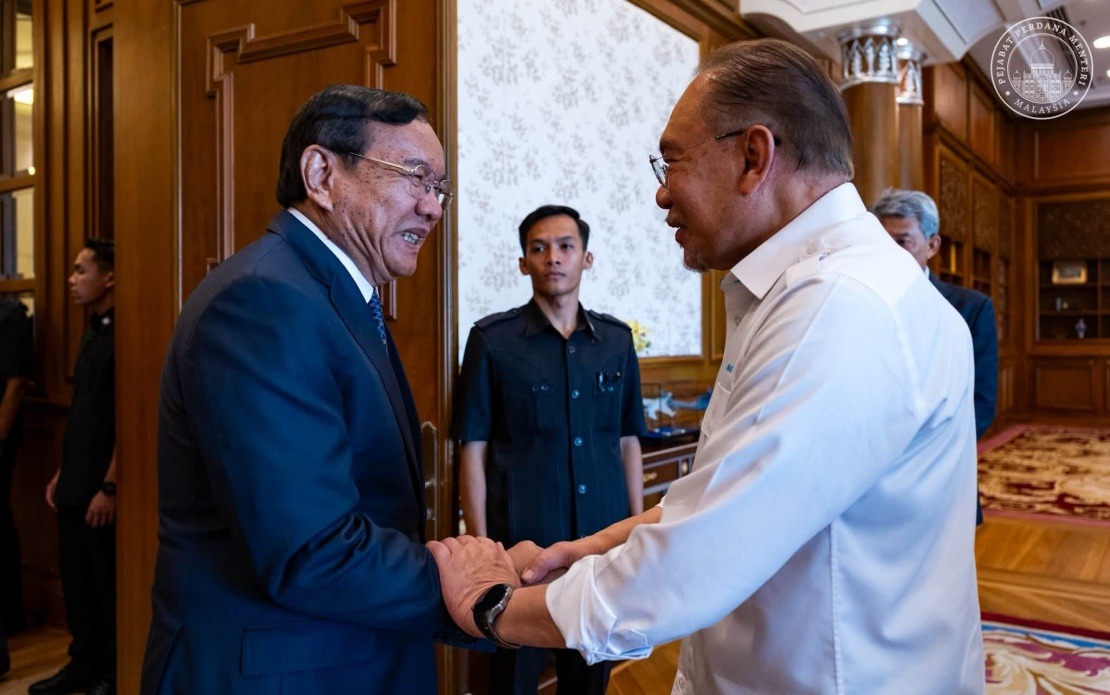
Malaysia and Cambodia are moving to deepen their bilateral relationship across multiple strategic sectors, with Prime Minister Datuk Seri Anwar Ibrahim outlining an ambitious agenda during discussions with Cambodian Deputy Prime Minister and Minister of Foreign Affairs and International Cooperation Prak Sokhonn. The two nations have identified priority areas ranging from emerging technologies and the digital economy to traditional sectors like the halal industry, signalling a comprehensive approach to strengthening ties between the neighbouring ASEAN members.
The announcement comes as Prak Sokhonn begins a two-day official visit to Malaysia, marking a significant diplomatic engagement that underscores the importance both governments place on their relationship. Beyond the ceremonial aspects of a high-level visit, the discussions reflect practical efforts to translate political goodwill into concrete collaboration that could benefit businesses, workers and citizens on both sides of the border.
Digital economy and artificial intelligence emerge as central pillars in the renewed partnership framework. For Malaysia, which has positioned itself as a regional hub for technology and innovation, collaboration with Cambodia offers opportunities to extend digital services and expertise throughout the Mekong region while supporting Cambodia's own technological development. This focus aligns with broader ASEAN ambitions to narrow the digital divide and create competitive advantages in the global knowledge economy.
The halal industry represents another significant domain for cooperation, reflecting Malaysia's established position as a global halal certification and manufacturing hub. Cambodia, as a Muslim-majority nation within Southeast Asia, stands to benefit from Malaysia's expertise in developing halal supply chains, certification standards and market access. This cooperation could unlock economic opportunities for Cambodian enterprises seeking to tap into the trillion-dollar global halal market while deepening economic interdependence between the two countries.
Food security has assumed heightened urgency across Southeast Asia amid climate challenges, supply chain disruptions and growing populations. Malaysian-Cambodian collaboration in this area could encompass agricultural technology transfer, sustainable farming practices and regional food trade arrangements. Given Cambodia's agricultural base and Malaysia's advanced food processing capabilities, such partnerships could enhance resilience for both nations while contributing to regional food stability.
Human capital development initiatives suggest both countries recognise that long-term prosperity depends on investing in their people. Educational exchanges, vocational training programmes and professional development opportunities can create lasting networks that extend bilateral cooperation beyond government-to-government relationships. These people-to-people connections often prove most enduring in strengthening regional bonds.
Cross-border crime prevention addresses a practical security concern affecting both nations. Human trafficking, drug smuggling, illegal wildlife trade and organised crime represent persistent challenges throughout Southeast Asia. Enhanced intelligence sharing, joint law enforcement operations and coordinated border management protocols can protect citizens on both sides while supporting the broader regional security architecture that underpins stability and economic development.
The timing of this engagement holds particular significance as Malaysia and Cambodia approach the 70th anniversary of their diplomatic relations in 2027. Rather than treating this milestone as merely ceremonial, both governments appear intent on using the lead-up to establish new frameworks and achievements that demonstrate the partnership's contemporary relevance. This forward-looking approach suggests confidence in the relationship's trajectory.
The Third Malaysia-Cambodia Joint Commission for Bilateral Cooperation meeting scheduled for August 4 provides the formal mechanism for implementing these strategic commitments. Such joint commissions serve essential functions in translating political declarations into actionable programmes with designated responsibilities, timelines and accountability measures. The fact that high-level bilateral visits now routinely coincide with these commission meetings reflects institutional maturation in Malaysia-Cambodia relations.
As ASEAN members, Malaysia and Cambodia share institutional responsibilities that extend beyond bilateral concerns. Both nations play roles in advancing the ASEAN Community Vision 2045, an ambitious framework aiming to create a single market, enhance economic integration and address transnational challenges collectively. Strengthening Malaysia-Cambodia ties contributes to this broader regional project by demonstrating how bilateral partnerships can serve as building blocks for deeper ASEAN integration.
For Malaysian policymakers, the Cambodia partnership forms part of a wider Southeast Asian strategy emphasising cooperation with all neighbours. As Malaysia navigates complex regional dynamics involving major powers, strengthening bonds with fellow ASEAN members reinforces regional solidarity and collective capacity to address shared challenges. Similarly, Cambodia benefits from association with Malaysia's relatively advanced economic and technological capabilities.
The breadth of sectors identified for cooperation suggests neither government views the relationship as confined to traditional diplomatic courtesies or narrow economic interests. Instead, the partnership encompasses domains spanning technological innovation, religious commerce, agricultural production, workforce development and law enforcement. This multifaceted approach increases the number of touchpoints between the two societies and creates diverse stakeholder constituencies invested in successful implementation.
Moving forward, the success of these initiatives will depend on translating announcements into sustained institutional collaboration. Government agencies, private sector enterprises and civil society organisations must operationalise the frameworks established at ministerial level. Malaysian businesses seeking regional expansion opportunities, particularly in technology and halal sectors, should monitor developments in Cambodia closely as cooperation mechanisms take shape. The partnership's evolution will offer insights into how ASEAN nations are positioning themselves for the region's economic future.

