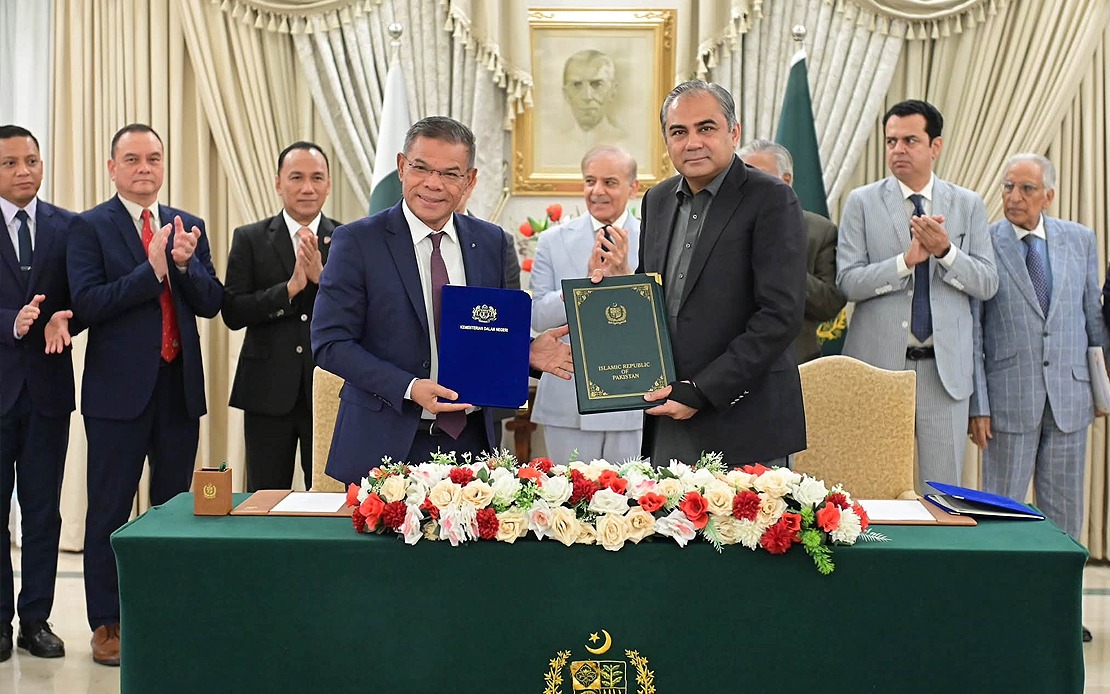
Malaysia and Pakistan have formalised a significant step in bilateral cooperation by signing the International Transfer of Prisoners (ITOP) Treaty, a legal instrument designed to facilitate the repatriation of nationals serving sentences in each other's correctional systems. The agreement was executed at Pakistan's Prime Minister's Office in Islamabad, with Malaysia's Home Minister Datuk Seri Saifuddin Nasution Ismail and Pakistan's Interior and Narcotics Control Minister Syed Mohsin Raza Naqvi affixing their signatures. Pakistani Prime Minister Muhammad Shehbaz Sharif witnessed the ceremony, underscoring the diplomatic importance both governments attach to the arrangement.
The treaty represents the culmination of extended negotiations spanning five rounds of discussions since September 2025, involving multiple Malaysian agencies working in concert to shape the framework. The Home Ministry coordinated efforts with the Foreign Ministry, Attorney General's Chambers, Malaysian Prisons Department, and Royal Malaysia Police, reflecting the multifaceted nature of prisoner transfer arrangements. Malaysia's Cabinet had already granted approval for the treaty in May, paving the way for the formal signing. This institutional preparation demonstrates that both nations approached the negotiations methodically, ensuring all legal and security dimensions were thoroughly examined before finalisation.
The core provisions of the ITOP establish a reciprocal mechanism whereby Malaysian nationals imprisoned in Pakistan may be transferred back to Malaysia to complete the remainder of their sentences within the domestic penal system. Conversely, Pakistani citizens serving time in Malaysian prisons gain access to the same repatriation pathway. This bidirectional framework ensures equitable treatment and removes any appearance of one-sided advantage, a crucial element in fostering trust between neighbouring states with significant population exchanges and shared security concerns.
Beyond the logistical mechanics of prisoner movement, the treaty incorporates provisions addressing rehabilitation and reintegration objectives. Both governments recognise that incarcerated individuals may rehabilitate more effectively within cultural and social environments familiar to them. By enabling prisoners to serve their sentences in their home countries, the arrangement acknowledges that proximity to family networks, linguistic familiarity, and culturally appropriate rehabilitation programming enhance prospects for successful reintegration upon release. This humanitarian dimension elevates the treaty beyond mere administrative convenience to reflect contemporary penological principles that prioritise offender rehabilitation.
For Malaysia, the agreement carries particular significance given the nation's role as a regional economic hub attracting substantial Pakistani labour migration and business presence. Pakistani nationals working or residing in Malaysia occasionally encounter legal difficulties, and the treaty provides a dignified pathway for managing such cases while maintaining consular relations. Similarly, Malaysian citizens abroad benefit from reciprocal arrangements, establishing a precedent that could be replicated with other nations where significant diaspora communities exist.
The treaty adds substantive weight to Malaysia-Pakistan relations, which rest upon shared Islamic heritage, historical trade connections, and strategic regional positioning. Both countries maintain complex relationships with major global powers and face comparable security challenges ranging from transnational crime to counter-terrorism operations. Expanding legal cooperation through prisoner transfer mechanisms strengthens these relationships and creates additional channels for intelligence and security information exchange between law enforcement and correctional authorities.
From a Southeast Asian perspective, Malaysia's execution of the ITOP treaty demonstrates the region's maturing approach to international criminal justice cooperation. Unlike purely bilateral extradition treaties, prisoner transfer arrangements address a distinct category of individuals—those already convicted and serving sentences—where humanitarian concerns intersect with security interests. The framework established by Malaysia and Pakistan may serve as a template for other Association of Southeast Asian Nations (ASEAN) members seeking to formalise similar arrangements, particularly given the region's significant intra-regional migration patterns.
The timing of the treaty's finalisation also reflects broader shifts in South Asian and Southeast Asian engagement. Pakistan faces persistent internal security challenges requiring strengthened international partnerships, while Malaysia balances its economic integration with geopolitical considerations. The treaty signals both nations' commitment to practical cooperation that yields tangible benefits for citizens while advancing rule of law objectives. Minister Saifuddin Nasution's characterisation of the agreement as a milestone in bilateral relations underscores official recognition of its importance beyond technical correctional matters.
Implementation of the ITOP will require establishing operational protocols between Malaysian and Pakistani prison authorities, including procedures for transfer requests, security assessments, documentation verification, and ongoing case management. Both nations maintain established correctional systems and diplomatic channels through which such practical arrangements can be executed efficiently. The involvement of the Attorney General's Chambers and Foreign Ministry ensures that transfers occur within appropriate legal frameworks and with full adherence to international law and bilateral treaty obligations.
The treaty acquisition also positions Malaysia advantageously in broader dialogues concerning prisoner rights and international humanitarian law. By proactively establishing transfer mechanisms, Malaysia aligns itself with global best practices and demonstrates commitment to principles endorsed by international bodies concerned with correctional reform and human rights. This positioning enhances Malaysia's diplomatic standing while reinforcing its role as a responsible actor in regional security architecture.
Looking forward, the successful conclusion of Malaysia-Pakistan negotiations may accelerate similar discussions with other trading and security partners. The demonstration that comprehensive prisoner transfer frameworks can be negotiated and formalised within reasonable timeframes provides confidence that comparable arrangements with other nations remain feasible. For Malaysian citizens abroad and Pakistani nationals in Malaysia, the treaty offers practical reassurance that their governments prioritise protecting their interests within the constraints of applicable law.

