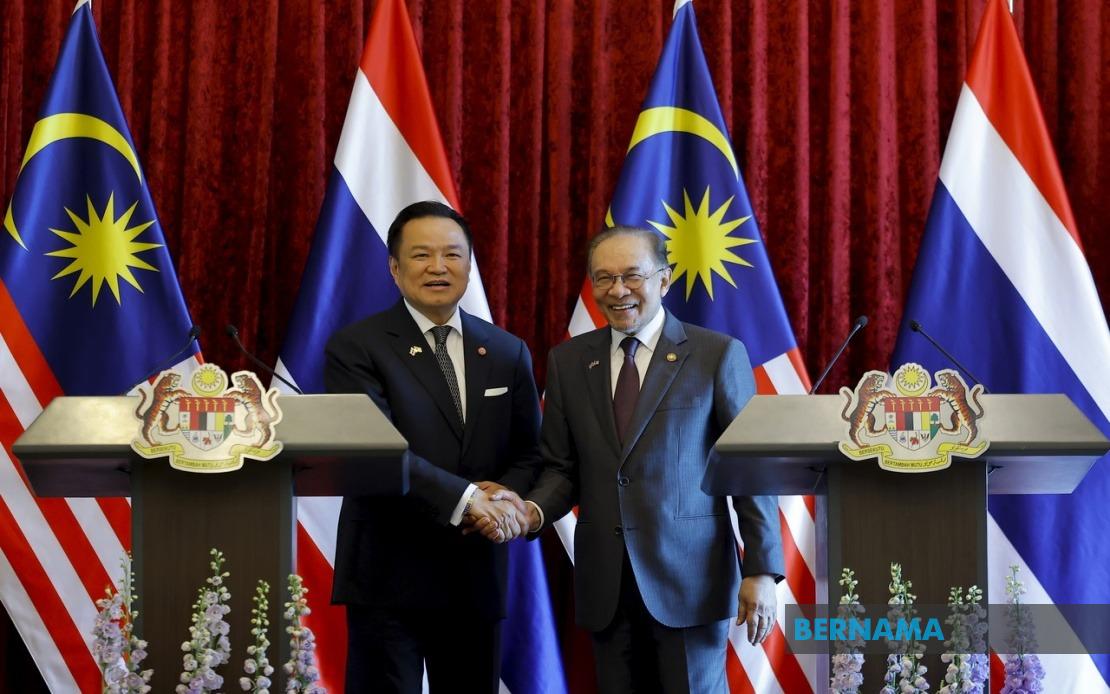
Malaysia and Thailand have launched an ambitious framework to accelerate cross-border development, pledging to establish special economic zones and streamline customs procedures as part of a comprehensive strategy to double bilateral trade to US$30 billion within the next three years. Prime Minister Datuk Seri Anwar Ibrahim and his Thai counterpart Anutin Charnvirakul sealed the commitment during high-level discussions in Putrajaya on July 9, marking a significant step forward in regional economic integration and infrastructure cooperation.
The bilateral meeting between the two leaders produced a substantive agenda encompassing multiple sectors beyond traditional commerce. Both governments acknowledged that Malaysia and Thailand share deep historical, cultural, and economic ties that remain underutilised despite decades of diplomatic relations. The dialogue centred on identifying concrete mechanisms to translate this shared heritage into measurable economic gains, with particular emphasis on resolving longstanding trade barriers and facilitating seamless movement of goods and people across the shared frontier.
Central to the partnership framework is the acceleration of several border connectivity initiatives that have either stalled or progressed slowly in recent years. These projects represent more than symbolic gestures; they address fundamental infrastructure gaps that have constrained trade flows and people-to-people exchange. By prioritising completion timelines and resource allocation, both governments signalled that border development is now a top-tier political priority rather than a routine administrative function.
The establishment of special border economic zones represents a particularly innovative dimension of the agreement. These designated areas would create regulatory environments tailored to cross-border commerce, potentially offering tax incentives, simplified business registration, and faster clearance procedures. Malaysia and Thailand have studied similar models in East Asia, including the success of cross-border zones in Vietnam-China relations, and aim to replicate proven mechanisms within their own context. Such zones could catalyse manufacturing clusters, agricultural processing facilities, and logistics hubs that leverage the comparative advantages of both nations.
Streamlining immigration and customs procedures directly addresses one of the most frequently cited impediments to trade volume and frequency. Current protocols often require extensive documentation and multiple approvals that inflate transaction costs and delay shipments. By harmonising standards and implementing reciprocal recognition of certifications, both nations can reduce bottlenecks that discourage smaller enterprises from engaging in cross-border commerce. Digital integration of customs systems would enable real-time tracking and pre-clearance mechanisms that accelerate cargo movement without compromising security.
Anwar's emphasis on extending the bilateral visit beyond Putrajaya to Bukit Kayu Hitam and Sadao underscores a deliberate political statement. Border communities often feel marginalised in capital-centric policy discussions, yet they constitute the frontline of bilateral engagement and experience both the constraints and opportunities of cross-border proximity most acutely. By conducting official engagements in frontier towns, both leaders demonstrated recognition that sustainable bilateral cooperation requires genuine commitment to regional development, not merely symbolic diplomatic gestures.
The US$30 billion trade target by 2027 represents an ambitious but achievable objective contingent on sustained implementation. Current bilateral trade volumes require significant upward trajectory to meet this goal, suggesting that the special economic zones and infrastructure improvements must deliver measurable competitive advantages. For Malaysian businesses, improved market access to Thailand's manufacturing and agricultural sectors presents significant expansion opportunities, particularly for companies operating in automotive components, food processing, and electronics. Thai enterprises, conversely, stand to benefit from deeper integration into Malaysia's petrochemical and energy sectors.
Thailand's Prime Minister Charnvirakul's personal commitment to strengthening ties reflects broader regional dynamics wherein Southeast Asian nations increasingly recognise that intra-ASEAN cooperation offers greater strategic resilience than reliance on external partnerships. For Malaysia, deepening Thai engagement aligns with broader efforts to position itself as a regional economic hub and logistics centre. The border development framework creates spillover effects that could enhance Malaysia's attractiveness as a gateway for Thai exports destined for markets across Southeast Asia and beyond.
The agreement also carries implications for third-party relations within ASEAN. Enhanced Malaysia-Thailand cooperation demonstrates that bilateral mechanisms can function effectively alongside regional multilateral frameworks, potentially inspiring similar initiatives between other member states. This parallel approach strengthens the broader ASEAN architecture while respecting national sovereignty and bilateral interests. It also signals that despite occasional diplomatic friction, Southeast Asian neighbours prioritise pragmatic economic partnership over historical grievances.
Implementation challenges remain substantial. Both governments must allocate sufficient budgetary resources, coordinate across multiple agencies with competing priorities, and manage competing interests from domestic stakeholders. Infrastructure projects frequently encounter delays due to land acquisition disputes, environmental concerns, and bureaucratic coordination failures. Customs harmonisation requires political will to cede some regulatory autonomy to bilateral mechanisms, a step that sometimes encounters domestic resistance from constituencies fearing foreign competition.
The framework succeeds or fails ultimately on execution quality and political persistence beyond immediate announcements. Historical precedent shows that bilateral agreements often languish without dedicated oversight mechanisms and accountability structures. To avoid this pattern, Malaysia and Thailand should establish joint implementation committees with clear timelines, measurable milestones, and mechanisms for addressing implementation bottlenecks in real time. Private sector engagement is equally crucial; business chambers and industry associations should participate actively in zone development and procedure standardisation discussions.
For Malaysia specifically, this initiative represents an opportunity to leverage geographic proximity and existing infrastructure advantages to capture a larger share of Thai supply chains and export flows. Success requires complementary domestic reforms in port efficiency, digital connectivity, and regulatory clarity that extend beyond bilateral agreements. The border zones concept, if executed thoughtfully, could generate employment in frontier regions and stimulate local entrepreneurship, addressing long-standing economic disparities between border communities and more developed urban centres.

