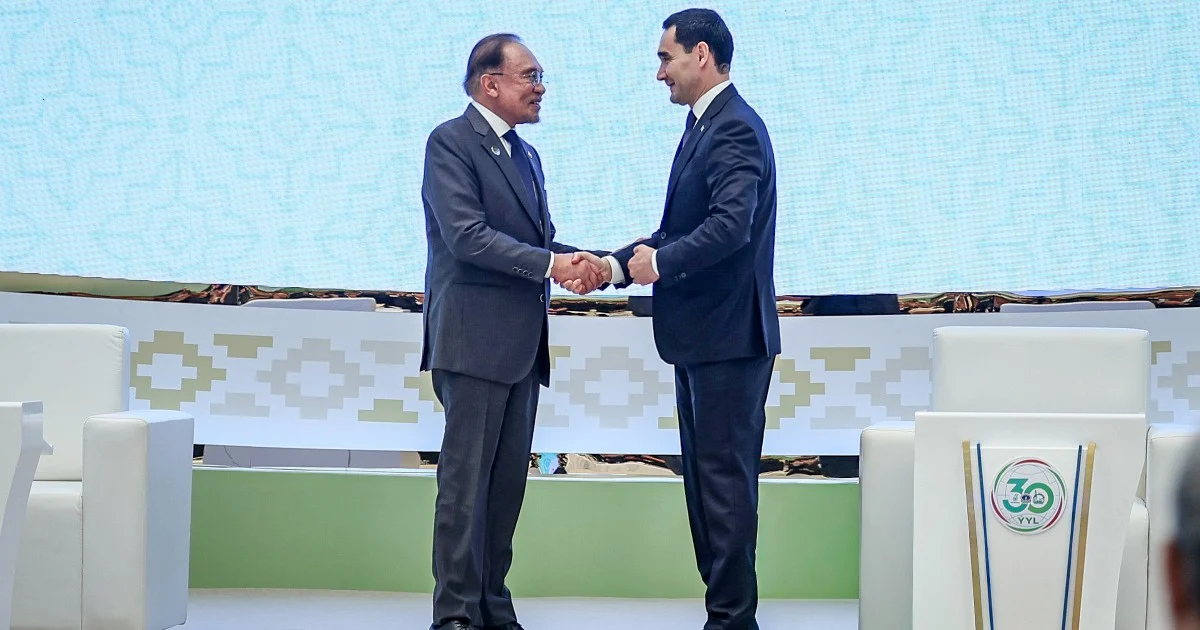
Malaysia and Turkmenistan have committed to substantially deepening their partnership across energy and economic domains, marking a strategic expansion of ties between the two nations. The agreement, forged during Prime Minister Datuk Seri Anwar Ibrahim's official visit to Turkmenistan, signals both countries' intent to leverage complementary strengths in resource management, industrial development, and regional connectivity.
The energy sector forms the cornerstone of this enhanced relationship, reflecting Turkmenistan's established position as a major hydrocarbon producer and Malaysia's growing demand for diversified energy sources. As Southeast Asia's largest energy consumer and a significant player in regional liquefied natural gas markets, Malaysia has strategic interest in exploring energy supply partnerships beyond its traditional suppliers. Turkmenistan's vast natural gas reserves and downstream capabilities present significant opportunities for Malaysian entities seeking to secure long-term energy contracts and engage in joint ventures.
Beyond hydrocarbons, the two nations have identified trade and investment as priority areas for collaboration. Malaysia's expertise in financial services, petrochemicals, and manufacturing can complement Turkmenistan's resource-based economy, while Central Asian markets offer Malaysian businesses new avenues for expansion. The agreement signals openness to facilitating two-way investment flows and creating bilateral business frameworks that reduce operational friction for companies operating across both jurisdictions.
Transportation connectivity emerged as a key pillar in the partnership framework. Enhanced logistics corridors and maritime cooperation could position Malaysia as a gateway for Central Asian exports reaching Southeast Asian and broader Asian markets. Similarly, Malaysian enterprises involved in regional supply chains could benefit from improved access to Turkmenistan and neighbouring Central Asian markets. The emphasis on transportation infrastructure reflects broader regional initiatives to strengthen the Asia-Europe corridor and diversify trade routes beyond traditional pathways.
Educational exchanges feature prominently in the bilateral agenda, with both nations recognising human capital development as essential to long-term economic competitiveness. Malaysian universities and technical institutions could partner with Turkmen counterparts in engineering, energy management, and technology disciplines. Such initiatives typically generate spin-off benefits including student mobility, faculty collaboration, and knowledge transfer that strengthen institutional capacity in both countries.
Technology cooperation represents an emerging frontier in Malaysia-Turkmenistan relations. Malaysia's growing digital economy capabilities and experience with technology-driven transformation could address Turkmenistan's development priorities, while Central Asian innovations in resource management and infrastructure development might benefit Malaysian firms. Collaboration in renewable energy technologies, smart infrastructure systems, and industrial automation could prove mutually beneficial given shared regional development challenges.
Prime Minister Anwar's official visit underscores Malaysia's strategic rebalancing toward Central Asia, a region historically underrepresented in Malaysian foreign policy despite considerable economic potential. The diplomatic engagement reflects Malaysia's broader Indo-Pacific strategy and its commitment to engaging with diverse regional partners. For Turkmenistan, Malaysia represents an important Southeast Asian anchor and potential gateway to ASEAN markets, making the partnership mutually advantageous in geopolitical terms.
The timing of the engagement carries significance given shifting global energy dynamics and supply chain restructuring following recent geopolitical developments. Countries worldwide are diversifying energy sourcing arrangements, and Malaysia's outreach to Turkmenistan aligns with this broader realignment. The agreement also positions Malaysia as an important partner for Central Asian countries seeking to expand their international economic footprint and secure reliable market access.
The partnership framework announced during the visit remains relatively preliminary, with specific project details and implementation mechanisms likely to emerge through subsequent ministerial-level discussions and business delegation exchanges. Successful realisation of the stated cooperation objectives will depend on navigating practical challenges including regulatory harmonisation, currency management, and logistical coordination across the considerable geographical distance separating the nations.
For Malaysian stakeholders, the Turkmenistan engagement opens strategic opportunities in energy security, infrastructure development, and market diversification. Energy companies can explore upstream and midstream opportunities, while trading houses and logistics providers can develop routes connecting Central Asian suppliers with Southeast Asian markets. The framework also signals Malaysia's confidence in managing complex international relationships beyond its immediate region.
Turkmenistan benefits substantially from the arrangement through enhanced access to Southeast Asian markets, potential investment in downstream petroleum projects, and knowledge transfer in financial technology and modern business practices where Malaysian firms have established competence. The partnership could accelerate Turkmenistan's integration into regional value chains and provide diplomatic benefits by broadening its international engagement profile.
Looking ahead, success will require establishing concrete institutional mechanisms for implementing the agreed cooperation areas. Regular high-level visits, joint working groups focused on specific sectors, and business matchmaking forums will be essential for translating political commitments into tangible economic results. Both nations will need to develop clear timelines and performance metrics to ensure the partnership delivers measurable benefits to their respective economies and populations.

