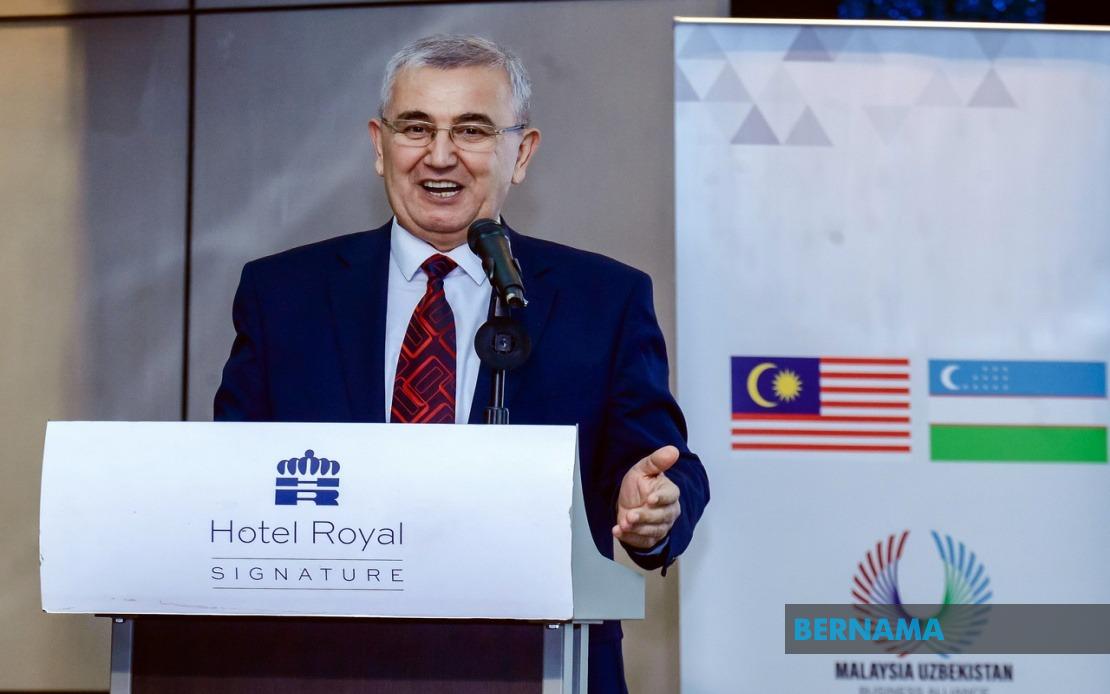
Malaysia and Uzbekistan are strengthening their agricultural collaboration by leveraging complementary expertise across smart farming, aquaculture, and food security technologies. The partnership marks a significant escalation in economic ties between the two nations, with discussions about enhanced cooperation having featured prominently in recent high-level visits by Malaysian Prime Minister Datuk Seri Anwar Ibrahim to Uzbekistan in May 2024 and Uzbekistan's President Shavkat Mirziyoyev's trip to Malaysia in February 2023, according to Uzbekistan Ambassador to Malaysia Dr Karomidin Gadoyev. The latest impetus came from a recent official visit by Malaysia's Agriculture and Food Security Minister Datuk Seri Mohamad Sabu to Uzbekistan, which Gadoyev described as opening a fresh chapter in bilateral agricultural relations.
The strategic foundation for this partnership rests on a clear division of comparative advantages. Malaysia brings considerable strength in paddy cultivation, aquaculture, fisheries management, smart farming systems, and agricultural research and development infrastructure. Uzbekistan, by contrast, contributes its technical knowledge in energy-efficient irrigation technologies, horticultural production, and agri-food manufacturing and processing capabilities. This complementary positioning creates natural synergies where each nation can benefit from the other's accumulated expertise and operational experience. Rather than competing in identical agricultural domains, the two countries have identified distinct areas where knowledge transfer and technology adoption can generate mutual gains.
Food security concerns and the application of digital technologies have emerged as overarching priorities driving the partnership. Both Malaysia and Uzbekistan recognise that artificial intelligence and smart agricultural systems can substantially enhance productivity and strengthen resilience against global food supply disruptions. Gadoyev emphasised that Uzbekistan intends to systematically integrate Malaysian experience and expertise in deploying these advanced technologies throughout its agricultural sector. This technological integration represents not merely an incremental improvement but a fundamental shift toward data-driven, precision agriculture approaches that can optimise resource use and increase output efficiency.
Practical collaboration is already taking tangible shape through multiple channels. The Malaysian Agricultural Research and Development Institute (MARDI) is working collaboratively with Uzbekistani counterparts to investigate agricultural innovations and develop context-specific solutions. Additionally, Malaysian company Miracule has opened Uzbekistan's first agricultural drone showroom, signalling the beginning of broader mechanisation efforts. Gadoyev outlined plans to significantly expand drone usage across Uzbek agricultural fields and eventually establish local assembly operations for advanced agricultural drones within the country, creating both technological capability and employment opportunities.
Aquaculture has been identified as a particularly promising collaboration area, driven by Uzbekistan's structural circumstances. With a growing population exceeding 39 million and geographic status as a doubly landlocked nation, Uzbekistan faces escalating domestic demand for seafood products that domestic marine resources cannot satisfy. Malaysian companies have already begun investigating investment opportunities in shrimp farming and fisheries projects in Uzbekistan. Critically, Malaysian expertise in biofloc technology offers substantial economic advantages, delivering feed cost reductions of up to 30 percent while simultaneously boosting productivity and lowering overall production expenses. This proven technology could significantly enhance Uzbekistan's aquaculture sector's economic viability and competitiveness.
Bilateral trade figures underscore the commercial foundation supporting this partnership. Agri-food trade between Malaysia and Uzbekistan reached more than RM338 million during 2025, with Malaysian palm oil and palm oil-derived products dominating Malaysia's export portfolio to Uzbekistan. Gadoyev articulated an ambitious vision for substantially expanding this trading relationship, envisioning potential doubling or even tripling of agri-food trade volume within the next five to ten years. Malaysia could strategically position Uzbekistan as a regional processing and distribution hub for crude palm oil serving Central Asian markets, while Uzbek enterprises simultaneously develop robust export channels for premium fresh fruits, dried fruits, and processed food products throughout the region.
The partnership carries significant implications for Southeast Asian agricultural trade and food security strategies more broadly. Uzbekistan's geographic position as Central Asia's largest economy and most populous nation makes it a strategically valuable gateway for Malaysian agricultural exports penetrating deeper into continental Asian markets. Establishing processing infrastructure within Uzbekistan for Malaysian palm products creates added-value supply chains while reducing logistics costs for Central Asian distribution. This model of regional hub development aligns with broader Malaysian strategic objectives of diversifying export markets and strengthening presence in high-growth Asian regions beyond traditional Southeast Asian trade relationships.
For Malaysian agricultural companies, Uzbekistan represents an expanding investment frontier with favourable demographic and economic fundamentals. The country's substantial and growing population, combined with rising living standards and increasing consumer purchasing power, generates sustained demand for high-quality agricultural inputs, processed foods, and mechanised farming solutions. Malaysian enterprises possess competitive advantages in several areas where Uzbekistani demand is rising, including advanced farming technologies, aquaculture systems, and agricultural value-added processing expertise. The establishment of commercial operations like Miracule's drone showroom demonstrates how Malaysian firms are beginning to capture these emerging opportunities.
Uzbek agriculture also brings valuable assets to this bilateral arrangement. The country's experience in optimising water usage through efficient irrigation technologies proves increasingly relevant as global water scarcity intensifies and Malaysian agricultural planners confront similar resource constraints. Uzbekistan's horticultural expertise and fruit production capabilities offer Malaysian processors and traders opportunities to source diverse agricultural commodities for regional and international distribution networks. Additionally, processed food products manufactured in Uzbekistan using both local and imported Malaysian raw materials can access Central Asian and beyond markets under advantageous cost structures.
The upcoming Malaysia Agriculture, Horticulture and Agrotourism Exhibition (MAHA) 2026 provides an important institutional platform for advancing these collaborative objectives. Gadoyev welcomed Malaysia's invitation for Uzbekistan to participate as an exhibitor, recognising MAHA as an invaluable opportunity to introduce Uzbekistani agricultural products, premium fresh fruits, and processed foods to Malaysian business communities and consumers. Exhibition participation enables direct networking between companies, facilitates technology demonstrations, and builds commercial relationships that can translate into sustained trade and investment flows. Gadoyev specifically characterised MAHA as a crucial venue for implementing the agricultural cooperation framework both nations have established.
Looking forward, both governments express confidence that Malaysia and Uzbekistan will develop into mutually reinforcing agricultural partners. The combination of Malaysia's technological sophistication and systematic R&D capabilities with Uzbekistan's extensive agricultural experience and vast growing areas creates a compelling foundation for sustained partnership development. Government support through high-level diplomatic engagement and ministerial visits signals the strategic priority accorded to agricultural cooperation, suggesting that trade barriers and regulatory obstacles are likely to receive policy attention. As both nations navigate evolving global food security challenges, their deepening agricultural relationship serves mutual development interests while positioning each country as a more reliable food supply source for regional partners.

