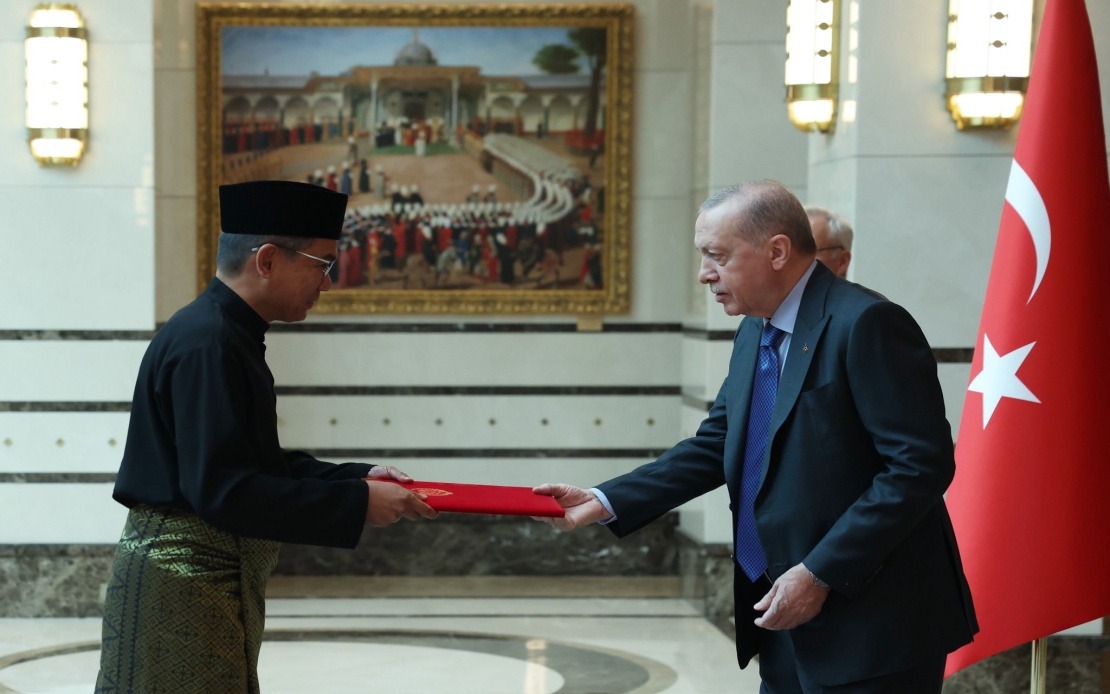
Malaysia has formally endorsed Türkiye's aspiration to become an ASEAN Dialogue Partner, signalling strong regional support for the Turkish nation's deeper engagement with Southeast Asia. The endorsement came during formal diplomatic ceremonies in Ankara on June 17, when newly appointed Malaysian Ambassador Adlan Mohd Shaffieq presented his credentials to Turkish President Recep Tayyip Erdoğan at the Presidential Complex.
The ambassador's statement represents more than ceremonial acknowledgment. It reflects a strategic calculation by Kuala Lumpur that Türkiye has matured into a consequential stakeholder in regional affairs, moving beyond its traditional European and Middle Eastern spheres. Malaysia's support carries particular weight within ASEAN circles, given the bloc's consensus-driven decision-making processes and Malaysia's influential voice in Southeast Asian diplomacy.
During the credential presentation, Ambassador Shaffieq articulated the reasoning behind Malaysia's backing, emphasizing that Türkiye has positioned itself as an increasingly significant partner through multifaceted engagement. The Turkish nation's expanding economic footprint across Southeast Asia, combined with its strategic interests aligned with regional stability and prosperity, makes it a natural fit for elevated partnership status. These factors underscore why Malaysia views Türkiye's inclusion as beneficial rather than peripheral to ASEAN's evolving architecture.
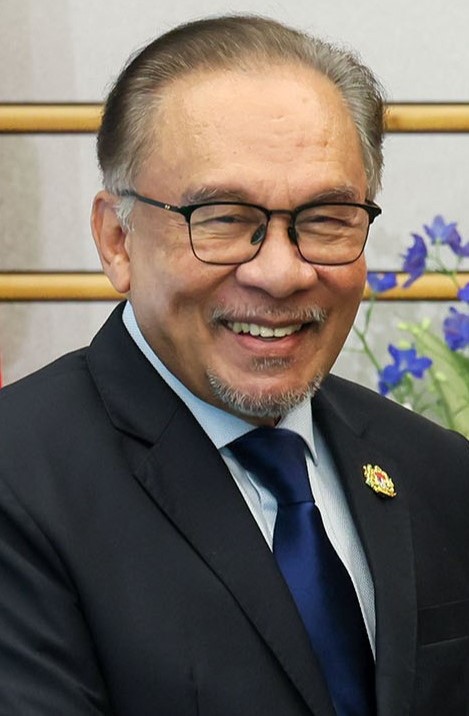
The ambassador conveyed warm personal greetings from His Majesty Sultan Ibrahim, King of Malaysia, and Prime Minister Datuk Seri Anwar Ibrahim to President Erdoğan, underscoring the personal dimension of bilateral relations at the highest levels. This messaging technique signals that Malaysia's support for Türkiye's regional aspirations enjoys backing from the kingdom's political leadership and carries institutional weight rather than representing a mere bureaucratic formality.
Malaysia emphasized the breadth of its partnership with Türkiye, highlighting cooperation spanning education, defence capabilities, and the halal industry. The halal dimension proves particularly significant for both nations, as Malaysia positions itself as a global halal certification hub while Türkiye leverages Islamic-majority credentials for market access and influence. Joint efforts in this sector demonstrate how bilateral ties transcend traditional geopolitical frameworks to encompass commercial and religious dimensions that resonate with stakeholder communities.
The statement stressed that Malaysia and Türkiye have constructed their relationship on foundations of mutual trust and shared commitment to international peace and stability. Rather than viewing partnership as transactional, both nations have cultivated what diplomats characterize as a special relationship reflecting compatible worldviews and complementary strategic interests. This characterization matters for understanding why Malaysia would invest diplomatic capital in supporting Türkiye's regional elevation.
Ambassador Shaffieq identified the personal rapport between President Erdoğan and Prime Minister Anwar as a critical asset capable of unlocking deeper collaboration. Leadership chemistry at this level often translates into tangible policy outcomes, institutional reforms, and expanded people-to-people exchanges. The ambassador's emphasis on leveraging this personal relationship suggests Malaysia intends to capitalize on the current diplomatic momentum to deepen ties across multiple sectors.
For his part, President Erdoğan reciprocated Malaysia's gesture with expressions of confidence regarding future trade trajectories. Notably, Erdoğan articulated an ambitious target of achieving USD 10 billion in bilateral trade volume, demonstrating Turkish ambition to expand economic interdependence substantially. This numerical goal signals that both nations view their relationship as possessing significant growth potential, particularly as regional economic integration accelerates and Southeast Asian markets attract greater Turkish commercial interest.
Türkiye's pursuit of ASEAN Dialogue Partner status reflects its broader strategic recalibration toward Indo-Pacific affairs. As traditional power rivalries shift eastward and supply chain diversification accelerates following global disruptions, nations increasingly seek footholds in Southeast Asia's dynamic markets and strategic crossroads. Dialogue Partner status, while formally consultative rather than decision-making, would grant Türkiye institutionalized access to ASEAN deliberations and enhanced soft power leverage.
Malaysia's support matters significantly because ASEAN operates through consensus, meaning each member essentially holds veto power over admissions and status upgrades. By articulating explicit backing, Malaysia removes at least one potential obstacle while signalling to other member states that Türkiye merits consideration. The timing of this announcement, during a formal diplomatic ceremony, ensures visibility and demonstrates deliberate intent rather than offhand comment.
The implications extend beyond bilateral Malaysia-Türkiye relations into broader regional architecture questions. As ASEAN navigates relationships with multiple major powers and aspiring partners, decisions about dialogue partnerships reflect deeper choices about the bloc's identity, openness, and strategic orientation. Malaysia's endorsement suggests ASEAN should welcome engagement from Middle Eastern and Mediterranean players capable of diversifying partnerships and reducing dependence on traditional Asian powers.
For Malaysian readers and broader Southeast Asian audiences, this development illustrates how regional groupings continue expanding their diplomatic footprints in an increasingly multipolar world. Türkiye's potential elevation would add another significant actor to ASEAN's consultative mechanisms, potentially enriching discussions on trade, defence, and Islamic affairs while introducing different perspectives on regional challenges. The trajectory demonstrates ASEAN's capacity to attract interest from globally significant nations seeking voice in shaping Southeast Asia's future.