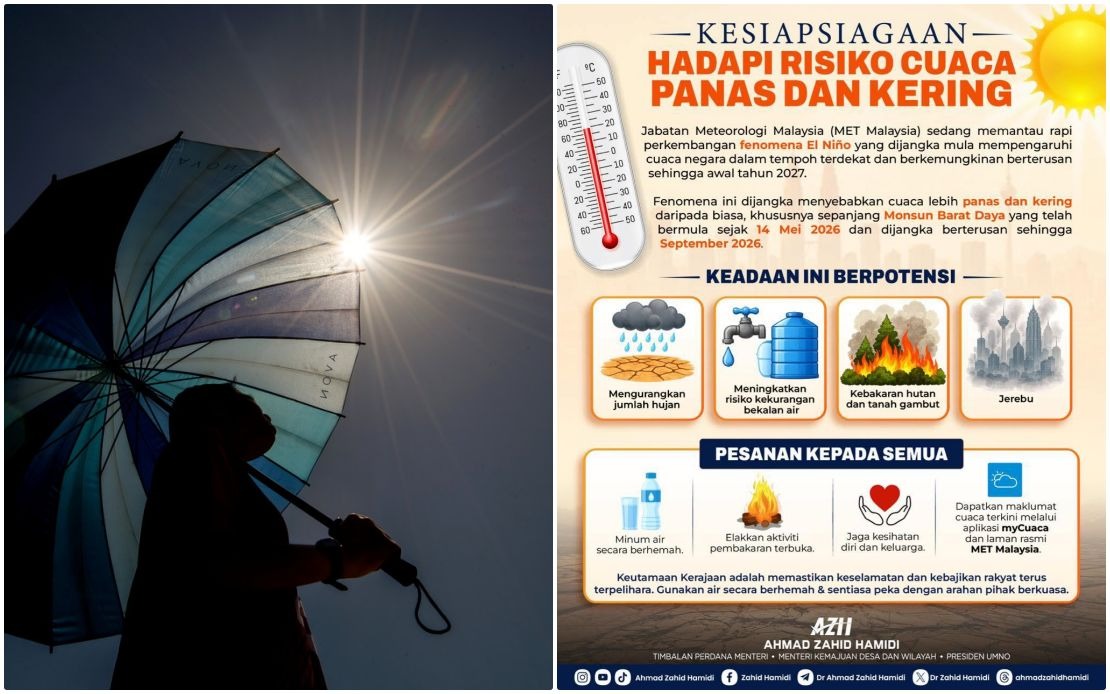
Malaysian authorities have issued a significant warning about deteriorating weather conditions, with Deputy Prime Minister Datuk Seri Dr Ahmad Zahid Hamidi cautioning the public to prepare for an extended spell of heat and drought as the El Niño phenomenon begins its influence on the region. The climate event is anticipated to extend its effects well into early 2027, creating a prolonged period of environmental stress that could affect water availability, agricultural productivity, and public health across the nation.
Ahmad Zahid, who chairs the Central Disaster Management Committee, emphasised that El Niño will amplify the already challenging conditions typically experienced during the Southwest Monsoon season. Rather than the cooling rains monsoons ordinarily bring, the phenomenon is expected to suppress rainfall in multiple regions, further intensifying the hot and dry weather patterns that characterise this period. The Southwest Monsoon commenced on May 14 and is scheduled to continue through September, meaning Malaysia faces a critical window of heightened vulnerability over the coming months.
The implications of this extended dry period extend far beyond mere discomfort. Reduced rainfall threatens to strain water resources across the country, potentially creating shortages that could affect both urban consumption and agricultural irrigation. The Malaysian Meteorological Department's director-general, Dr Mohd Hisham Mohd Anip, highlighted these cascading risks in recent statements, pointing to the interconnected dangers posed by sustained dryness. Water scarcity during Malaysia's tropical dry season creates dangerous conditions for forest and peatland ecosystems, which become increasingly susceptible to ignition and uncontrolled fires.
For Malaysia, a nation where peatlands store vast quantities of carbon and cover significant portions of several states, the fire threat carries particular weight. Peatland fires, once ignited, prove notoriously difficult to extinguish and produce dense, choking smoke that spreads across international borders. The 2015 Southeast Asian haze crisis, driven partly by peatland fires in Indonesia, demonstrated the regional scope of such disasters and their capacity to disrupt daily life, commerce, and public health across the entire region. A recurrence during this El Niño cycle could similarly impact air quality in Malaysia and neighbouring countries.
Acknowledging the multifaceted nature of the challenge, Ahmad Zahid called on Malaysians to adopt a comprehensive approach to mitigating risks. He specifically advised water conservation measures, cautioning against wasteful consumption during a period when supplies may be strained. The deputy prime minister also stressed the necessity of curtailing open burning activities, which become particularly hazardous during dry seasons when vegetation is moisture-depleted and flames spread rapidly. These individual actions, multiplied across millions of households and businesses, can meaningfully reduce fire incidence and preserve critical water reserves.
Public health emerged as another critical concern in official messaging. Sustained heat, combined with potential air quality degradation from haze or fires, poses substantial health risks to vulnerable populations. Elderly citizens, children, individuals with respiratory conditions, and those suffering from chronic illnesses face elevated danger during extended hot spells. Heat-related illnesses, from heat exhaustion to heat stroke, become more common, while poor air quality exacerbates asthma, bronchitis, and cardiovascular conditions. Ahmad Zahid explicitly urged Malaysians, particularly those in vulnerable categories, to prioritise their health and that of their families during this period.
The government has positioned itself as an active monitor and responder to the unfolding situation. Ahmad Zahid stated that authorities will continue tracking conditions closely and implementing appropriate countermeasures to safeguard public welfare. However, the statement also reflected an implicit recognition that successful navigation of this challenge requires a partnership between government and citizenry. Centralised responses, while necessary, cannot substitute for millions of individual decisions to conserve water, avoid burning, and maintain personal health.
To facilitate informed decision-making, officials pointed Malaysians toward the myCuaca mobile application and MetMalaysia's official channels for real-time weather updates and forecasts. This emphasis on information access reflects a contemporary approach to disaster preparedness, where citizens armed with accurate, timely data can make better choices about daily activities and long-term planning. Agricultural communities, water authorities, and emergency services can also utilise this information to coordinate proactive measures rather than reactive crisis management.
The El Niño warning carries particular significance for Malaysia's agricultural sector, where irrigation demands typically spike during dry periods. Farmers cultivating water-intensive crops may need to adjust planting schedules, crop selection, or irrigation methods to align with projected water availability. Industrial facilities and businesses reliant on consistent water supplies similarly face planning challenges. The construction and manufacturing sectors may encounter delays if water rationing becomes necessary, creating economic ripple effects beyond the immediate environmental crisis.
Regionally, Malaysia's experience with El Niño reflects broader Southeast Asian climate vulnerability. Indonesia, Thailand, Vietnam, and the Philippines face analogous challenges, and transnational impacts—particularly regarding haze and shared river systems—demand coordinated responses. Malaysia's preparedness efforts therefore contribute not only to national resilience but also to regional stability and cross-border cooperation on environmental management.
The extended timeline of this El Niño event, stretching into early 2027, means that Malaysia must prepare for sustained pressure on water systems, heightened fire risk, and potential air quality challenges across multiple seasons. This is not a short-term crisis to be managed through temporary measures alone, but rather a structural challenge requiring institutional and behavioural adaptation. Water storage infrastructure, fire prevention capacity, and public health systems may all require reinforcement or optimisation to sustain operations through an extended dry cycle.
Ultimately, Ahmad Zahid's warning and the supporting statements from MetMalaysia represent an attempt to shift public consciousness toward proactive preparation rather than reactive response. The relatively early announcement, months ahead of the most severe anticipated conditions, provides a window for households, businesses, and institutions to implement protective measures. Success will depend on whether this advance notice translates into genuine behaviour change and institutional readiness across Malaysian society.