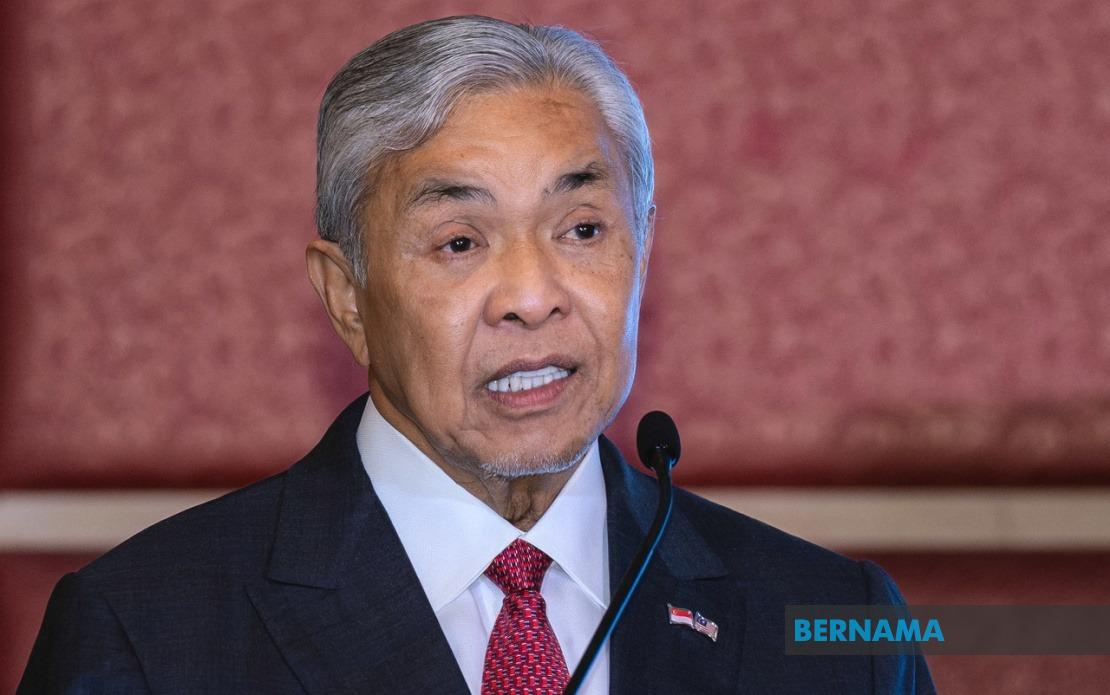
Malaysia is moving toward managing its refugee and asylum seeker populations through a homegrown framework that operates independently of international bodies, according to Deputy Prime Minister Datuk Seri Dr Ahmad Zahid Hamidi. The government has established this new approach through National Security Council Directive No. 23, a comprehensive policy revised in 2023 that provides a structured methodology for handling the country's significant displaced populations. The directive, signed by Prime Minister Datuk Seri Anwar Ibrahim on June 14, 2023, represents a shift toward domestic ownership of refugee policy in Southeast Asia's second-largest economy.
Ahmad Zahid, who oversees Rural and Regional Development in addition to his role as Deputy Prime Minister, explained that the mechanism prioritises coordinated management and strict enforcement while simultaneously addressing the welfare requirements of vulnerable populations. The strategy acknowledges that effective refugee management extends beyond border control and security protocols to encompass provision of basic services and social integration measures. Eligible refugees under the new framework will gain access to healthcare services, educational opportunities, and employment pathways, creating a more comprehensive approach than enforcement-only models that have characterised previous approaches in the region.
The genesis of this policy revision lies partly in parliamentary scrutiny regarding Malaysia's handling of its refugee crisis. Datuk Shamshulkahar Mohd Deli, a Jempol-based parliamentarian from the ruling coalition, had pressed the government on developing a comprehensive refugee policy, particularly given Malaysia's status as host to more than 126,000 officially registered Rohingya refugees. This question highlighted gaps between the government's implementation of the Refugee Registration Document scheme, which created identification protocols for displaced persons, and the absence of a unified national strategy coordinating all relevant agencies and ministries.
Coordination across government ministries represents a cornerstone of the renewed approach. The National Security Council, operating under the Prime Minister's Department, has orchestrated collaboration among various government bodies to define distinct functions and responsibilities for each organisation involved in refugee management. This institutional clarity aims to prevent the overlapping mandates and enforcement inconsistencies that have previously complicated refugee policy implementation. By establishing explicit roles for each agency, the government seeks to streamline decision-making and ensure coherent application of policies across different regions and administrative levels.
A significant challenge the government identifies relates to undermining factors within local communities. Ahmad Zahid pointed to the presence of "enablers among local residents" who profit from refugee populations through rental arrangements or exploit cheap labour sources. These community members, acting from personal financial interest rather than humanitarian concern, inadvertently sustain informal refugee economies that operate outside regulatory frameworks. The Deputy Prime Minister characterised this phenomenon as a fundamental obstacle to effective enforcement, suggesting that community engagement and awareness campaigns must accompany traditional security measures.
Balancing enforcement with social responsibility emerged as a central theme in Ahmad Zahid's parliamentary response. The government recognises that heavy-handed security approaches, while necessary for maintaining public order and national sovereignty, cannot succeed without parallel investments in humanitarian infrastructure. Refugees denied access to formal employment markets inevitably participate in informal economies, while those excluded from healthcare systems become vectors for disease transmission affecting broader public health. This recognition marks a departure from purely restrictive policies toward a more nuanced framework acknowledging that refugee populations pose both security challenges and humanitarian imperatives.
The policy framework also emphasises safeguarding Malaysia's national security and sovereignty throughout the management process. While expanding access to services for eligible refugees, the government maintains strict protocols to prevent security threats and irregular migration patterns. The Refugee Registration Document scheme provides one mechanism for distinguishing between registered refugees entitled to certain services and irregular migrants or security risks requiring enhanced monitoring. This bifurcated approach allows the government to extend controlled benefits to recognised populations while maintaining border integrity and security protocols.
Contextualising Malaysia's position within Southeast Asia, the country faces particular pressures given geographic proximity to conflict zones and established refugee populations from Myanmar, Syria, Palestine, and other regions experiencing protracted instability. Unlike some neighbouring countries that provide minimal services, Malaysia's approach contemplates structured integration of refugee populations into existing social systems. This positions the country as a regional leader in balancing humanitarian obligations with pragmatic security concerns, potentially influencing broader Southeast Asian approaches to refugee management.
Implementation of NSC Directive No. 23 requires sustained coordination between the Prime Minister's Department, the Ministry of Home Affairs, the Ministry of Health, the Ministry of Education, and numerous other agencies. Each ministry must align its programmes and resource allocation with the new directive's specifications. For healthcare provision, this means embedding refugee health protocols within existing medical infrastructure. Educational access requires adjustments to school enrolment procedures. Employment pathways necessitate coordination with labour ministry bodies regulating work permits and occupational standards. These implementation challenges extend beyond policy formulation into the practical realm of government operations and resource allocation.
The government's assertion that it can manage refugee issues independently, without foreign entities directing policy, reflects nationalist sentiment while acknowledging genuine Malaysian capacity to address its own humanitarian and security challenges. The statement implicitly distances Malaysia from international pressure on refugee policies, positioning domestic law and NSC directives as the authoritative framework. However, this independence does not preclude cooperation with international agencies on humanitarian assistance or security intelligence sharing; rather, it reserves final decision-making authority for Malaysian institutions responding to Malaysian circumstances.

