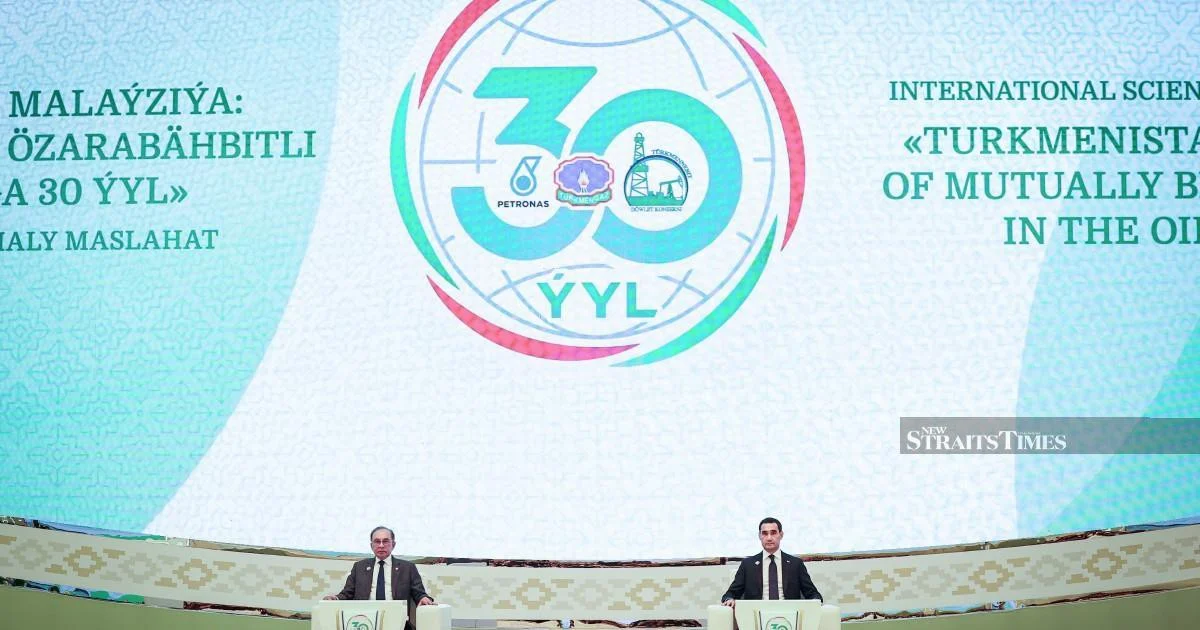
Prime Minister Datuk Seri Anwar Ibrahim's trip through Russia and Turkmenistan last week demonstrated Malaysia's evolving approach to energy security, moving beyond traditional regional partnerships to engage directly with major hydrocarbon producers across Eurasia. The visit marks a strategic pivot in how Kuala Lumpur sources its oil and natural gas, at a time when global energy markets face sustained uncertainty and competition for supplies remains intense among consuming nations.
The diplomatic mission yielded tangible results that extend beyond ceremonial protocol. Malaysia secured preliminary agreements and framework understandings with both nations that could reshape the country's energy portfolio in the coming years. For a nation heavily dependent on hydrocarbon imports to fuel its manufacturing base and power generation, such developments carry substantial economic weight. The diversification of energy sources reduces Malaysia's vulnerability to supply disruptions in established corridors and positions the country as a strategic partner to producers in regions increasingly important to Asian energy security architecture.
Russia, despite being subject to international sanctions related to its Ukraine invasion, remains a consequential actor in global energy markets. The Kremlin has maintained its role as a major exporter of oil and liquefied natural gas, with Asian markets proving crucial to offsetting revenue lost from reduced European engagement. Malaysia's willingness to engage directly with Moscow signals both pragmatic acknowledgment of Russia's enduring importance in commodity markets and a degree of diplomatic independence from Western-led sanctions regimes. The timing of such outreach, particularly from a Muslim-majority Southeast Asian nation, also carries geopolitical significance in how Moscow seeks to maintain influence across diverse global constituencies.
Turkmenistan presents a different but equally compelling dimension to Malaysia's energy strategy. The Central Asian nation sits atop vast natural gas reserves, making it a logical partner for long-term energy cooperation. However, landlocked geography and dependence on pipeline infrastructure through intermediary states have historically limited Turkmenistan's ability to diversify markets. Malaysia's direct engagement potentially opens new frameworks for gas delivery through existing regional transport networks or future infrastructure projects. Such connectivity could benefit multiple Southeast Asian nations sharing similar energy needs and import dependencies.
The significance of these breakthrough agreements becomes clearer when viewed against Malaysia's current energy landscape. Domestic oil and gas production has been declining for over a decade, creating a growing gap between domestic consumption and local supply. Petronas, the national oil company, has shifted increasingly toward exploration and production abroad while managing dwindling onshore reserves at home. The gap left by declining Petronas revenues and production must be filled through imports and new partnerships, making ventures with distant but reliable suppliers strategically essential.
For Malaysian businesses and the broader economy, securing diversified hydrocarbon supplies carries immediate implications. Manufacturing competitiveness depends substantially on reliable, affordable energy inputs. Industries ranging from petrochemicals to electronics assembly require stable feedstock and power sources. Agreements that promise stable long-term supplies at predictable prices insulate Malaysian manufacturers from spot-market volatility that has periodically disrupted operations. In a regional context where competitors across Thailand, Vietnam, and Indonesia face similar energy challenges, Malaysia's proactive diplomacy potentially delivers competitive advantages through supply security.
The geopolitical dimension warrants careful analysis as well. Southeast Asia's broader positioning amid great-power competition between the United States and China creates pressure on individual nations to balance competing interests. Malaysia's Central Asian energy diplomacy suggests a calculated effort to maintain autonomy in sourcing critical resources without becoming overly dependent on any single supplier or aligned bloc. Russia's presence in energy markets, despite Western sanctions, means engagement with Moscow serves Malaysia's interests in maintaining optionality within global supply chains. Similarly, Turkmenistan's position at the intersection of Chinese Belt and Road initiatives and traditional Persian Gulf trade routes makes it a node in multiple competing infrastructure visions for Asia.
The practical mechanics of implementing these agreements will test their genuine value in coming months. Agreements signed during high-level visits sometimes languish in bureaucratic channels without translating into concrete commercial reality. Previous Malaysian ventures into distant hydrocarbon partnerships have yielded mixed results, requiring substantial investment in infrastructure adaptation and logistics coordination. Anwar's government will need to work closely with Petronas and private sector partners to convert diplomatic breakthroughs into functioning commercial relationships that deliver tangible volumes of oil and gas to Malaysian consumers and industries.
Market analysts should monitor how these agreements affect Malaysia's medium-term energy imports and infrastructure planning. If the Turkmenistan engagement matures into supply arrangements, it may necessitate investments in gas receiving facilities and pipeline integration with existing import infrastructure. Russian energy partnerships might involve different logistics, potentially utilizing existing relationships and trading routes already established through regional commerce networks. The breadth and depth of financial commitments Malaysia is prepared to make will ultimately determine whether these diplomatic accomplishments translate into energy security gains.
The visit also signals Anwar's broader foreign policy emphasis on pragmatic economic engagement across geographical regions, unconstrained by traditional Cold War alignments or contemporary geopolitical fault lines. This approach reflects evolving Malaysian thinking about how to navigate a multipolar world where energy security cannot depend solely on traditional allies or neighbouring producers. As global energy markets remain fractured by geopolitical disputes and decarbonization initiatives create long-term uncertainty about traditional hydrocarbon demand, securing diverse supply partnerships represents reasonable strategy for nations attempting to balance development needs with strategic autonomy.
Looking forward, the success of these Russian and Turkmenistan ventures will substantially influence whether Anwar's administration pursues similar energy diplomacy in other regions. Africa, the Middle East, and South America all hold potential hydrocarbon opportunities for Malaysian engagement. However, the execution of current agreements should demonstrate whether Malaysia's diplomatic machinery can convert international agreements into functioning commercial relationships that genuinely enhance national energy security and support long-term economic objectives.

