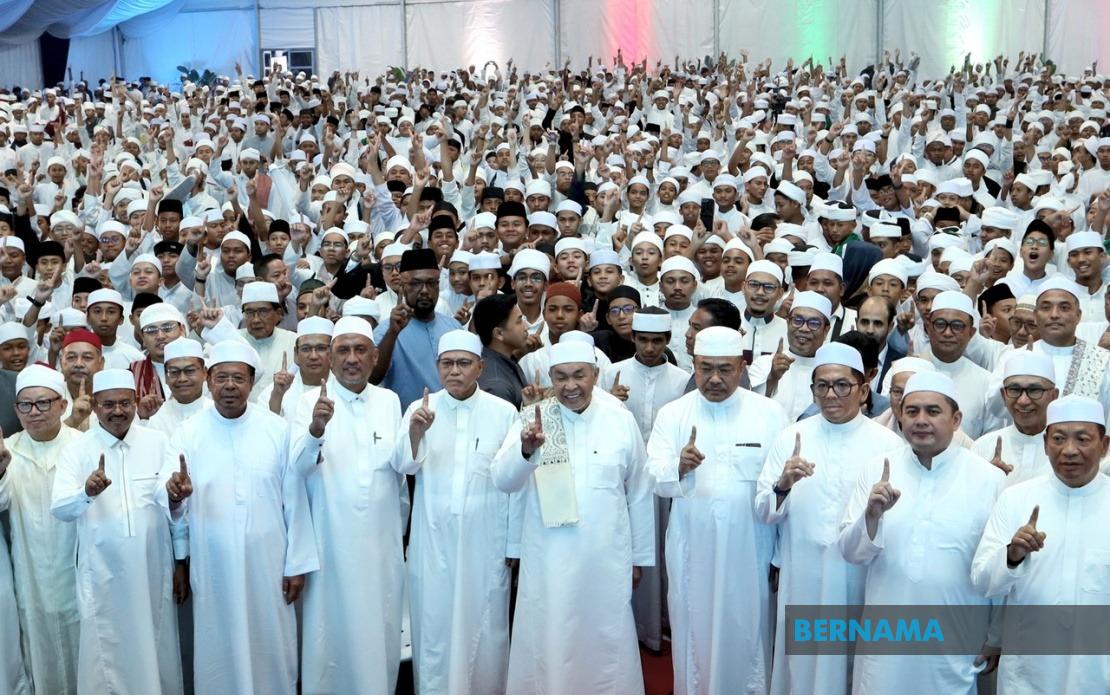
Malaysia has taken a significant step in formalising Islamic education by approving the establishment of the National Tahfiz Council, a governing body tasked with unifying standards across the nation's rapidly expanding network of Quranic memorisation institutions. Deputy Prime Minister Datuk Seri Dr Ahmad Zahid Hamidi announced the Cabinet approval during the Pahang State Huffaz Gathering 2026 in Kuantan on June 18, with the veteran politician appointed as chairman of the new council. The move represents a watershed moment for tahfiz education in Southeast Asia's largest Muslim-majority nation, where such institutions have historically operated with considerable autonomy and varying quality benchmarks.
The establishment of a centralised council addresses long-standing concerns about inconsistency in curriculum design, teacher qualifications, and student assessment across Malaysia's diverse tahfiz sector. Previously, students who completed memorisation of the Quran—known as huffaz—often faced barriers when attempting to transition into mainstream higher education or professional careers, as their qualifications lacked formal recognition within the national education framework. The council's mandate encompasses streamlining educational direction, establishing uniform recognition standards, and creating coherent academic pathways that allow tahfiz graduates to progress seamlessly into universities and vocational institutions. This structural integration signals a fundamental shift in how Malaysia views Islamic education, positioning it not as a parallel system but as a legitimate component of the broader education ecosystem.
Ahmad Zahid articulated an ambitious vision for tahfiz education that extends beyond religious scholarship into professional competencies. He emphasised that the council would facilitate student progression from madrasah institutions through to university qualification, while simultaneously developing practical skills applicable to modern employment. This dual emphasis reflects growing recognition that contemporary huffaz require more than memorisation competence; they need academic credentials, technical expertise, and professional certifications to compete in Malaysia's knowledge-based economy. The framework acknowledges that religious commitment and economic viability are not mutually exclusive objectives, addressing a persistent challenge faced by many tahfiz graduates who struggle to leverage their religious education into meaningful career opportunities.
Pahang has emerged as a demonstration case for integrated tahfiz development within Malaysia. The state's comprehensive approach, initiated under the patronage of Al-Sultan Abdullah Ri'ayatuddin Al-Mustafa Billah Shah, encompasses early childhood programmes such as Tadika Tahfiz Negeri Pahang, which introduces Quranic engagement to young learners. This foundational strategy differs markedly from traditional models that typically began formal tahfiz training in late childhood or adolescence. By creating educational continuity from kindergarten through tertiary education and professional training, Pahang illustrates how tahfiz can function as a sustained developmental pathway rather than a discrete educational stage. The state's success in demonstrating this model across multiple levels provides empirical evidence supporting the national council's expansion ambitions.
The government is simultaneously implementing the National Tahfiz Policy 2.0, which introduces several innovative mechanisms designed to professionalise the sector. The Malaysian Tahfiz Certificate 2.0 establishes standardised credentials, while the Graded Hafazan Certification creates differentiated recognition reflecting varying levels of memorisation and comprehension. Technical and vocational education training (TVET) pathways specifically designed for tahfiz students address the practical skills gap, enabling graduates to pursue trades and technical professions. The Huffaz Financing Scheme removes financial barriers to tahfiz education, a critical consideration given that many families in Malaysia's lower-income communities view such institutions primarily because they provide subsidised boarding and meals alongside religious instruction.
Collaboration between religious institutions and secular government agencies signals institutional maturity in Malaysia's education sector. The memorandum of understanding signed between Yayasan Pahang, the Community Development Department (KEMAS), and Majlis Amanah Rakyat (MARA) represents tangible commitment to integrating tahfiz development with skills training programmes. MARA's involvement is particularly significant, as the agency has historically focused on entrepreneurship and skills development for indigenous Malaysians. This partnership suggests that tahfiz graduates will access vocational training resources, business development support, and entrepreneurial mentorship previously unavailable through traditional Islamic education channels. Such institutional crossover also legitimises tahfiz education within mainstream government development frameworks, rather than confining it to religious ministry portfolios.
The Malaysian Tahfiz Recognition Standard establishes benchmarks against which institutions can be measured, creating accountability mechanisms previously absent from the sector. Standardisation addresses quality concerns that have periodically surfaced regarding pedagogical standards, student welfare, and financial management at some institutions. By establishing transparent criteria, the council can guide institution improvement, facilitate comparative assessment, and build public confidence in tahfiz education quality. This development carries particular importance for middle-class families in urban areas who might otherwise view tahfiz institutions with suspicion, potentially increasing enrolment diversity and broadening the social composition of the huffaz population.
Strategic partnerships with higher learning institutions open unprecedented pathways for tahfiz graduates seeking advanced qualifications. Universities can now develop articulation agreements with tahfiz institutions, enabling students to receive credit for religious studies and transition directly into degree programmes. Skills institutes, meanwhile, can embed practical training within tahfiz curricula, ensuring students graduate with employment-ready competencies. These arrangements transform tahfiz education from a terminal programme into an entry point for multiple advanced pathways, fundamentally altering career trajectories for students who choose this educational route.
The broader regional context adds significance to Malaysia's formal institutionalisation of tahfiz education. Across Southeast Asia, Islamic education remains unevenly integrated into national education systems, with considerable variation in recognition, funding, and regulatory oversight. Malaysia's establishment of a national council creates a governance model that other Muslim-majority nations in the region might adapt, potentially influencing how tahfiz education develops throughout Southeast Asia. Should the Malaysian initiative demonstrate measurable improvements in graduate outcomes, institutional quality, and economic integration, the framework could establish benchmarks influencing education policy across the Islamic world.
The initiative also reflects demographic realities shaping Malaysia's education sector. Rising interest in Islamic education among younger generations has expanded tahfiz institution enrolment significantly over recent decades. Rather than viewing this trend with apprehension, the government has chosen to harness it productively, creating structures ensuring that students pursuing religious education simultaneously develop capabilities enabling broader life participation. This pragmatic approach acknowledges that religious commitment and secular competence are complementary rather than contradictory objectives, a philosophical position increasingly evident across Malaysian education policy.
Implementation challenges will likely emerge as the council operationalises its mandate. Gaining consensus among diverse tahfiz institutions accustomed to operational independence will require careful stakeholder engagement. Resource allocation to support policy implementation across potentially hundreds of institutions nationwide demands sustained government funding commitment. Teacher training programmes must be scaled rapidly to ensure educators can deliver enhanced curricula incorporating vocational elements alongside traditional religious content. Nonetheless, the formal approval and institutional appointment of Ahmad Zahid as chairman suggests high-level government commitment to overcoming these obstacles and seeing the initiative through to substantial implementation.

