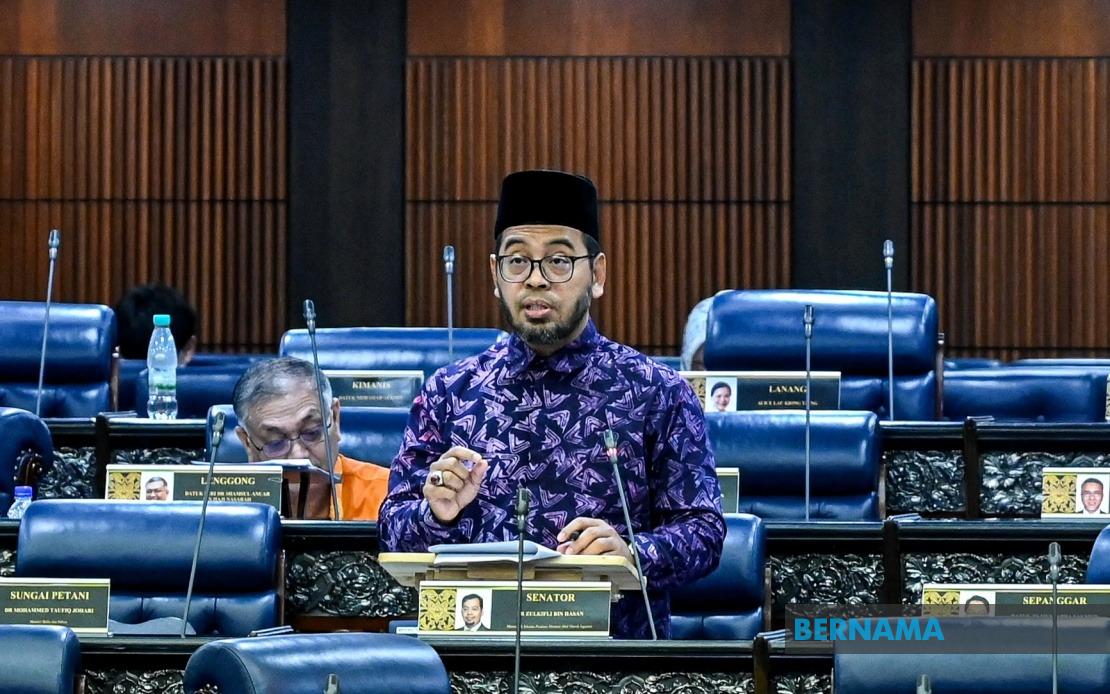
Malaysia is mobilising a comprehensive government-wide strategy to counter the spreading influence of teachings deemed unorthodox within the context of Sunni Islam, as these ideas increasingly migrate from traditional underground networks to the digital realm. Minister in the Prime Minister's Department (Religious Affairs) Dr Zulkifli Hasan outlined this intensified approach during parliamentary proceedings, signalling heightened concern about the evolution of enforcement challenges in the religious sphere across Malaysia's interconnected society.
The shift from physical gatherings to online dissemination represents a fundamental transformation in how unorthodox religious ideas circulate within Malaysia's diverse Muslim population. Unlike earlier decades when such teachings required clandestine meetings and person-to-person transmission, contemporary propagators exploit the borderless nature of digital communication, leveraging messaging applications, social media platforms and encrypted channels to reach potential adherents. This technological adaptation has forced religious authorities to reimagine their monitoring and intervention frameworks, extending oversight beyond mosque committees and community leaders into spaces where algorithmic amplification can accelerate the reach of contested theological positions.
The complexity of modern recruitment tactics adds another dimension to authorities' concerns. Rather than presenting their messages in overtly religious language, proponents of these teachings frequently disguise their content within seemingly benign frameworks—personal development seminars, wellness programmes, charitable undertakings and informal study circles designed to appear indistinguishable from mainstream Islamic education. This rebranding strategy complicates detection efforts, as it allows potentially problematic theological content to circulate under socially acceptable pretexts, making it difficult for law enforcement and religious authorities to intervene before participants internalise alternative interpretations of Islamic doctrine.
Psychological and sociological dimensions feature prominently in how these teachings gain traction among Malaysian audiences. Proponents employ motivational narratives, spiritual frameworks rooted in emotional resonance, and conspiracy-oriented interpretations of global events to construct compelling worldviews. The strategic invocation of influential figures—whether religious scholars, intellectuals or individuals with substantial online followings—further legitimises these alternative perspectives within vulnerable communities. For young Malaysians navigating identity formation in an increasingly complex information environment, such messaging can prove particularly persuasive, particularly when framed as offering deeper spiritual truth or insider knowledge unavailable through mainstream religious institutions.
Government enforcement efforts have yielded tangible actions demonstrating the seriousness with which authorities approach this issue. In May, 288 individuals identified as Ahmadiyya Qadiani followers underwent detention in Sabah, representing one of the largest coordinated enforcement operations in recent years. Separately, authorities raided a Syiah centre in Petaling Jaya, a suburb within Kuala Lumpur's metropolitan area, detaining 226 foreign nationals. These operations reflect the government's determination to identify and apprehend individuals involved in what Malaysian authorities classify as the promotion of teachings contradicting Sunni Islam's foundational principles.
The institutional architecture supporting these enforcement actions extends across multiple government domains, reflecting the whole-of-government philosophy guiding Malaysia's approach. Beyond JAKIM and state-level Islamic religious departments, coordination involves the Royal Malaysia Police, the Malaysian Communications and Multimedia Commission, the National Security Council, municipal authorities, the Immigration Department and the National Registration Department. This horizontal integration enables simultaneous pressure through multiple institutional channels—identifying suspicious digital content, monitoring cross-border movement of religious materials and individuals, and coordinating detention and prosecution procedures. The breadth of this institutional engagement underscores the authorities' perception of religious heterodoxy as a security concern transcending traditional religious administration.
Intervention methodology balances enforcement with rehabilitation, reflecting Malaysia's dual approach to managing religious dissent. Following detention or identification, affected individuals undergo targeted counselling programmes designed to reorient their understanding toward mainstream Sunni positions. Syariah courts may order placement within faith rehabilitation facilities under state Islamic authority supervision. These rehabilitation programmes constitute an alternative pathway to prosecution, predicated on the assumption that individuals holding unorthodox beliefs can be therapeutically re-educated rather than permanently punished. This rehabilitative emphasis suggests authorities view affected individuals less as irredeemable ideological opponents and more as persons temporarily misled who might be redirected toward orthodox understanding through structured intervention.
The National Steering Committee to Address Threats to Faith represents institutional evolution in how Malaysian authorities conceptualise religious governance. Rather than limiting intervention to detected violations of Islamic law, this committee operates preventatively by strengthening young people's engagement with orthodox Islamic understanding from childhood onward. The committee's composition spans education, higher learning, home affairs and youth development portfolios, acknowledging that religious resilience emerges through holistic engagement with Malaysian institutions rather than solely through enforcement activities. This preventative architecture recognises that combating unorthodox teachings requires active cultivation of theological confidence among younger generations rather than exclusive reliance on reactive policing.
Specialised programmes constitute the practical manifestation of this preventative philosophy. IPHAM (Institut Pemantapan dan Perkaderan Akidah Malaysia) focuses on doctrinal consolidation and leadership development within Malaysia's Islamic ecosystem. The My Insaniah Programme and Rakan Masjid Programme, developed in partnership with the Ministry of Youth and Sports, embed religious education within broader youth development frameworks. Perhaps most significantly, Malaysia is strengthening KAFA 2.0, its foundational Islamic education curriculum for young Muslims, restructuring it to emphasise identity formation and doctrinal resilience alongside traditional Quranic memorisation and Islamic law. This curricular evolution recognises that surface-level Islamic knowledge proves insufficient protection against sophisticated theological challenges; instead, robust religious identity requires sustained engagement with Islamic tradition's intellectual resources.
For neighbouring Southeast Asian nations with substantial Muslim populations, Malaysia's approach offers both model and cautionary example. The coordination mechanisms and rehabilitative frameworks may appeal to governments elsewhere seeking to manage religious diversity while maintaining official Islamic orthodoxy. However, the expanding scope of what constitutes enforcement concern—extending from direct proselytisation to educational programmes and philosophical positions—raises questions about the boundaries between legitimate religious diversity and sanctionable heterodoxy. As digital connectivity increasingly integrates Southeast Asian religious communities into transnational Islamic discourse networks, individual countries' definitions of acceptable belief become less enforceable, potentially creating friction between national security frameworks and the borderless nature of modern theological exchange.
The trajectory of Malaysia's religious governance suggests intensifying institutional investment in monitoring, enforcement and preventative education. As technological capabilities improve and surveillance mechanisms expand, authorities will likely develop increasingly sophisticated methods for identifying and engaging with individuals and communities whose theological positions diverge from officially sanctioned understanding. Whether this trajectory ultimately strengthens social cohesion or generates unintended tensions remains contested. Supporters contend that protecting religious orthodoxy preserves national stability and prevents social fragmentation along theological lines. Critics worry that expanding enforcement scope may inadvertently radicalise individuals subjected to intensive intervention, particularly when rehabilitation frameworks are experienced as coercive rather than genuinely reformative.
The sustainability of Malaysia's current approach depends substantially on whether rehabilitation initiatives succeed in achieving genuine attitudinal reorientation rather than merely enforced compliance. If individuals subjected to detention and counselling subsequently renounce heterodox positions and reintegrate within mainstream Muslim communities, the model demonstrates functional effectiveness. Conversely, if rehabilitation produces resentment and continued commitment to alternative theologies among affected individuals, escalating enforcement may become necessary, risking a cycle of intervention, resistance and further enforcement. The coming years will reveal whether Malaysia's integrated approach—combining sophisticated digital monitoring, multi-agency coordination, enforcement action and rehabilitative education—achieves its stated objectives of containing unorthodox teachings while preserving social harmony among the nation's diverse Muslim population.

