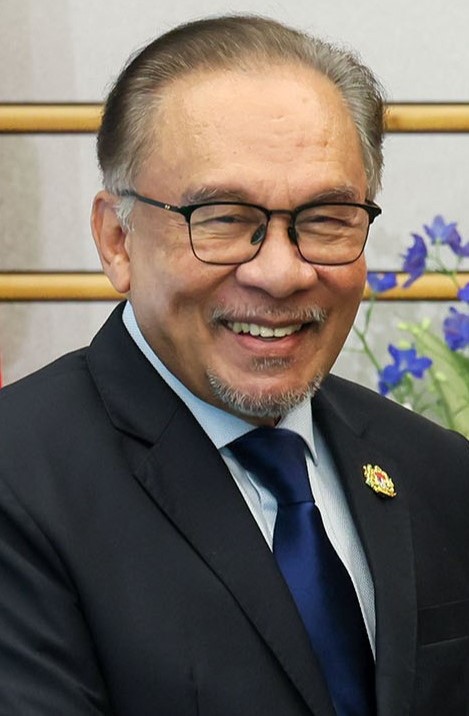
Malaysia's government has issued a fresh appeal for citizens to maintain compassionate values when considering the situation of the Rohingya community residing within its borders, even as public discourse and journalistic coverage of the displaced group continue to intensify. The statement, delivered from the administrative capital of Putrajaya, underscores official recognition that balancing adherence to national laws with acknowledgement of fundamental human dignity represents a delicate challenge demanding careful navigation.
The Rohingya crisis remains one of the most complex humanitarian issues confronting Southeast Asia. Originating from Myanmar's Rakhine State, over one million Rohingya fled between 2017 and subsequent years, with hundreds of thousands reaching Bangladesh, while smaller but significant populations dispersed across the region. Malaysia, as a Muslim-majority nation and ASEAN member, has become home to hundreds of thousands of Rohingya despite lacking the formal infrastructure or international funding typically associated with refugee-hosting countries. This reality has created substantial tension between legal categorization and practical humanitarian necessity.
The government's reminder about upholding compassion reflects awareness that Malaysia's treatment of the Rohingya operates within an increasingly polarized public sphere. Media coverage—both domestic and international—has drawn heightened attention to the community's precarious circumstances, including restrictions on movement, limited access to formal employment, educational barriers for children, and vulnerability to exploitation. Simultaneously, segments of Malaysian society have expressed concerns about resource allocation, security implications, and the burden imposed by sustained hosting of a stateless population.
Understanding the complexity requires recognizing Malaysia's dual position. As a signatory to international humanitarian conventions and a nation with deep Islamic traditions emphasizing mercy toward displaced peoples, Malaysia carries both legal and moral obligations. Yet domestically, the government must address legitimate concerns from citizens about infrastructure strain, economic impacts on local labour markets, and social cohesion. The minister's call for balance acknowledges this difficult terrain without offering immediate policy solutions.
The Rohingya presence in Malaysia extends beyond simple presence statistics. An estimated 180,000 have registered with the United Nations High Commissioner for Refugees, while many others remain undocumented, creating vulnerability to trafficking and exploitation networks. Children born in Malaysia face profound uncertainty regarding nationality, education access, and future prospects. This generational dimension transforms the issue from temporary crisis response into a structural challenge requiring long-term frameworks rather than short-term containment strategies.
The rising public sentiment to which the minister refers encompasses diverse perspectives. Some Malaysians emphasize Islamic brotherhood and humanitarian responsibility, viewing support for Rohingya as fulfilling religious obligations. Others express concern that Malaysia's capacity to absorb displaced populations has limits, particularly when other nations with greater resources contribute minimally. These competing viewpoints reflect genuine tensions between moral imperatives and practical resource constraints, not merely political positioning.
From a regional perspective, Malaysia's approach carries implications for how Southeast Asia collectively responds to refugee crises. The Association of Southeast Asian Nations has traditionally prioritized non-interference in member states' internal affairs, a principle that historically has limited coordinated response to humanitarian emergencies. Malaysia's unilateral absorption of significant Rohingya populations, despite lacking official refugee status under domestic law, demonstrates how individual nations bear disproportionate responsibility when regional coordination fails. This creates precedent and expectation dynamics that influence future humanitarian responses.
The reference to rising media attention signals government concern that coverage shapes public opinion in ways affecting policy flexibility. International human rights organizations have criticized Malaysia's restrictions on Rohingya movement and employment, while sympathetic local media outlets have highlighted success stories of Rohingya self-sufficiency and community resilience. Government messaging around maintaining compassion suggests official recognition that public opinion constraints limit policy options, whether toward greater integration or toward more restrictive approaches.
What distinguishes this ministerial statement is its implicit acknowledgement that purely legalistic approaches prove insufficient. Malaysia's classification of Rohingya as undocumented migrants rather than refugees reflects constitutional and sovereignty considerations, yet this categorization creates legal ambiguity that complicates humanitarian provision. The appeal for balancing humanity with law suggests awareness that governance frameworks themselves require evolution to address contemporary displacement crises that national legislation predates and underestimates.
Implementing such balance demands concrete measures beyond rhetoric. This might include clarifying legal pathways for Rohingya documentation, expanding educational access for children without jeopardizing national systems, formalizing labour market participation through regulated mechanisms that protect both Rohingya workers and Malaysian employment standards, and strengthening social cohesion programming that builds understanding among different communities. Without translating exhortations toward compassion into institutional structures and resource allocation, ministerial appeals risk appearing performative rather than substantive.
The sustainability of Malaysia's current approach warrants examination. Long-term hosting of hundreds of thousands of stateless individuals requires either international burden-sharing mechanisms, third-country resettlement pathways, or fundamental reconsideration of local integration frameworks. The government's appeal for continued compassion implicitly calls for patience from Malaysian society while international solutions develop. Whether such patience remains politically viable depends partly on visible government commitment to managing the situation through balanced, compassionate policymaking rather than solely through restrictive legal frameworks.