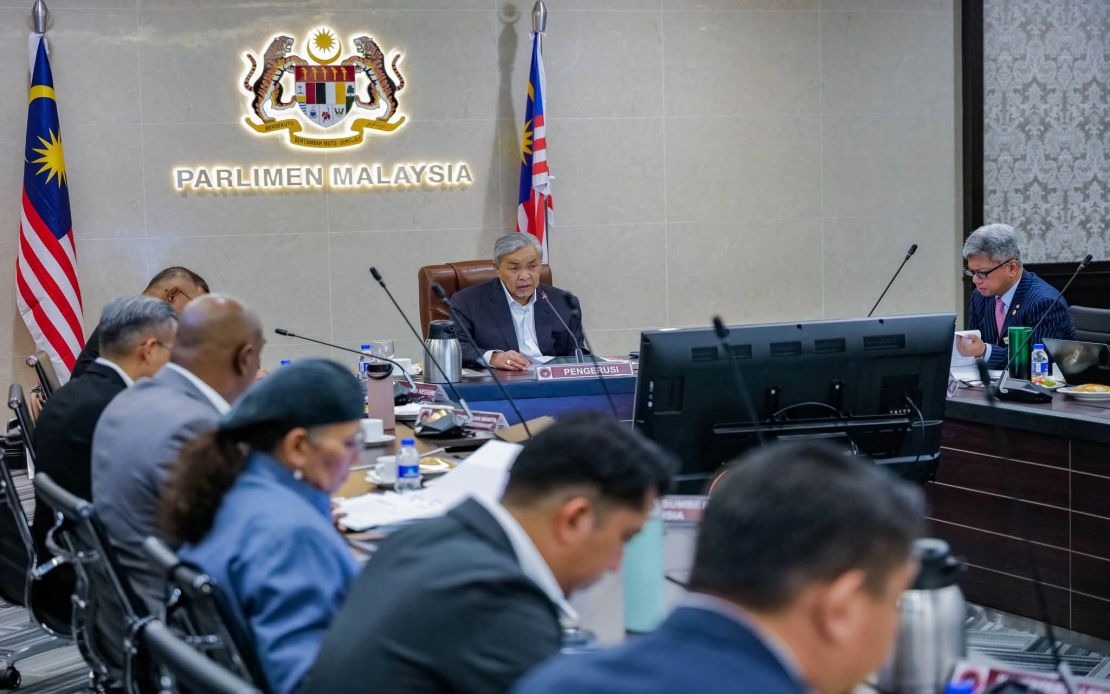
Malaysia must fortify its refugee management infrastructure to protect both humanitarian principles and national security, according to Deputy Prime Minister Datuk Seri Dr Ahmad Zahid Hamidi, who raised the matter following a high-level government meeting on asylum policy this week. The challenge has become increasingly pressing as the world grapples with an unprecedented displacement crisis, with global figures indicating that more than 122 million individuals have been uprooted from their homes due to warfare, persecution, and regional destabilisation. For a nation positioned at the crossroads of Southeast Asia, balancing these competing imperatives presents both an opportunity and a test of governance.
Ahmad Zahid, who also holds the Rural and Regional Development portfolio, emphasised that crafting appropriate refugee policies transcends routine bureaucratic administration. Rather, he framed the issue as fundamentally intertwined with protecting Malaysia's borders, maintaining public safety, and ensuring that policy decisions reflect the legitimate interests of Malaysian citizens and the nation's territorial integrity. This framing acknowledges a reality that many policymakers across the region are confronting: that humanitarian generosity, while morally compelling, must operate within frameworks that do not compromise a state's ability to manage its own security apparatus effectively.
The Deputy Prime Minister's remarks came during his stewardship of the 6th Meeting of the High-Level Committee on the Management of Refugees and Asylum Seekers, a coordinating body tasked with overseeing the implementation of Malaysia's refugee policies and mechanisms. The committee's agenda focused on evaluating how existing frameworks function in practice and determining whether current procedures continue to serve Malaysia's broader national interests. Such regular reviews signal governmental recognition that refugee management is not a static challenge but one requiring ongoing reassessment as circumstances change.
Central to the committee's discussions was the status of the Refugee Registration Document, commonly referred to by its Malaysian abbreviation DPP. This credential represents a critical administrative tool through which Malaysia identifies and monitors refugee populations within its borders. The DPP system has become essential infrastructure for tracking who is present in the country, understanding demographic patterns, and ensuring that services and protections are extended appropriately. Improving the efficiency and reliability of this registration mechanism was highlighted as a priority, reflecting a desire to base policy on better data and clearer categorisation.
The committee also examined the coordination mechanisms governing refugee access to essential services, particularly education and healthcare. These are areas where humanitarian concerns intersect directly with public administration, as decisions about resource allocation can affect both refugee welfare and domestic citizens' access to the same services. By streamlining guidelines, the government aims to establish clearer, legally defensible standards that enable government agencies and service providers to make consistent determinations without unnecessary bureaucratic friction. This approach reflects an understanding that arbitrary or opaque decision-making can create both humanitarian problems and administrative vulnerabilities.
For Malaysia specifically, the refugee question carries particular weight given the nation's geographic proximity to conflict zones and displacement sources. The country has historically hosted significant refugee and asylum-seeking populations, including Myanmar nationals fleeing instability, Rohingya fleeing persecution, and others displaced by conflicts across the region. These populations have created genuine humanitarian obligations, yet their presence has also generated social tensions, raised questions about labour market impacts, and prompted security concerns among segments of the Malaysian public. Finding workable solutions requires political leadership willing to articulate how security and humanity can coexist.
The global context framing Ahmad Zahid's statement underscores how Malaysia's refugee challenges cannot be divorced from international dynamics. The 122 million displaced persons globally represent historical highs, driven by protracted conflicts in Syria, Afghanistan, Ukraine, and Somalia, alongside newer crises in Gaza and Myanmar. This scale of displacement creates systemic pressures on countries throughout Asia, particularly those with lower development indicators or limited absorption capacity. Malaysia, as a middle-income nation with relatively advanced institutions, faces pressure from multiple directions: from international humanitarian organisations urging greater openness, from neighbouring countries experiencing even greater refugee burdens, and from domestic constituencies concerned about security and economic impacts.
The emphasis on ensuring that the refugee framework remains "systematic and aligned with national interests" represents an attempt to move refugee policy beyond purely reactive crisis management. Rather than treating asylum and refugee arrivals as emergency situations to be contained, the government appears to be attempting to establish proactive mechanisms that can accommodate humanitarian principles while maintaining order and predictability. This systematic approach could include clearer timelines for processing claims, better integration pathways for refugees who will remain longer-term, and more transparent criteria for determining eligibility.
One implication of this policy direction is that Malaysia may be positioning itself differently within regional refugee diplomacy. By articulating a framework that takes humanitarian concerns seriously while explicitly prioritising sovereignty and security, the government may be attempting to chart a middle course between countries that have adopted highly restrictive asylum policies and those perceived as having insufficient border controls. This positioning could influence Malaysia's role in regional discussions on burden-sharing, as ASEAN nations increasingly recognise that refugee challenges require coordinated responses rather than isolated national strategies.
The reference to legal compliance in discussions about service guidelines suggests that the government is conscious of potential legal vulnerabilities in existing arrangements. Malaysia is not a signatory to the 1951 Refugee Convention, which means refugee protection relies on domestic legislation and international agreements rather than being anchored in global treaty obligations. This creates both flexibility and fragility in the system, as protections depend on specific domestic policy rather than treaty-based entitlements. Ensuring that guidelines remain legally compliant may reflect concerns about potential legal challenges or the need to ground policies in solid administrative law.
Looking forward, Ahmad Zahid's position indicates that Malaysia's approach to refugee policy will likely continue evolving within this dual-track framework: acknowledging humanitarian responsibilities while strengthening mechanisms for security oversight and resource management. This reflects a pragmatic recognition that neither extreme—unrestricted asylum nor complete exclusion—serves Malaysia's interests. The challenge lies in implementation, particularly in ensuring that security considerations do not become pretexts for abandoning vulnerable populations, while humanitarian commitments do not create vulnerabilities that compromise legitimate state functions.
The government's focus on systematic improvement suggests that future policy developments may include enhanced training for administrators, better inter-agency coordination, clearer communication about eligibility and rights, and potentially new mechanisms for international cooperation on refugee burden-sharing. How successfully Malaysia executes this balancing act will influence not only the lives of refugee populations within its borders but also the country's reputation as a regional player capable of addressing transnational challenges with both principle and pragmatism.

