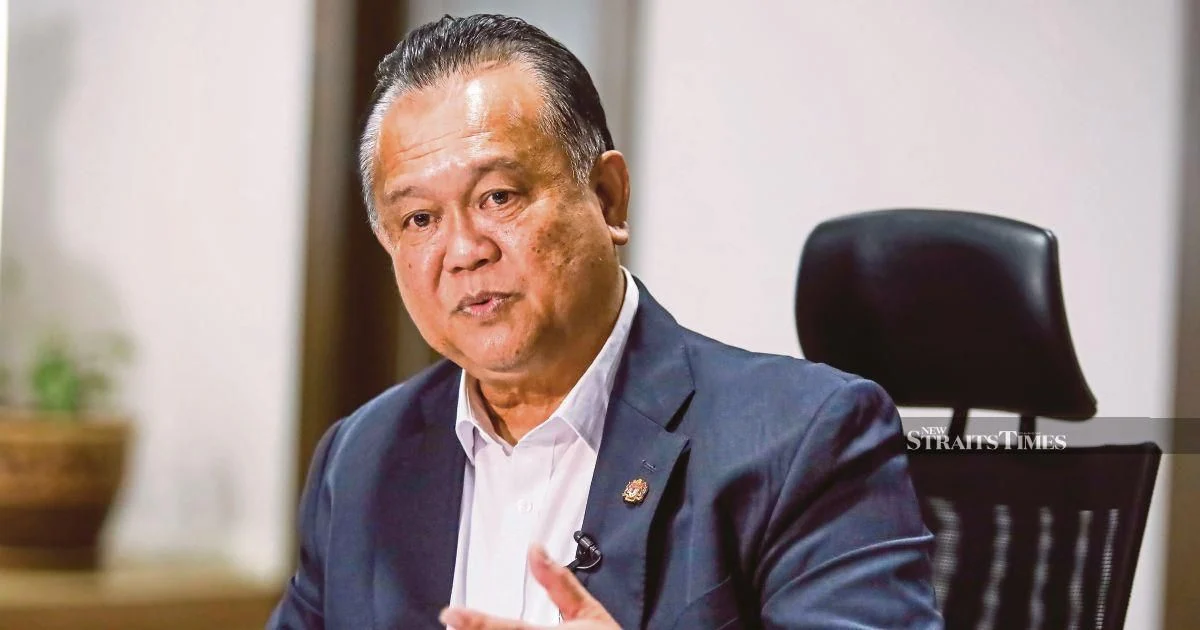
Malaysia's approach to transport infrastructure is undergoing a fundamental recalibration, according to Works Minister Datuk Seri Alexander Nanta Linggi, who argues that the nation cannot sustain indefinite highway expansion. Speaking in Kuala Lumpur, the minister articulated a vision where road networks remain integral to the country's infrastructure landscape but occupy a less dominant position in future development planning. The shift reflects growing recognition among policymakers that conventional highway-centric strategies have limitations in addressing congestion, environmental concerns, and the mounting costs of maintaining sprawling road networks.
The minister's statement marks a departure from decades of transport policy that prioritised motorway construction as the primary solution to mobility challenges. While acknowledging that highways will continue to exist and serve essential functions, Nanta Linggi indicated that the pipeline for new highway projects will narrow considerably. This constraint stems partly from fiscal realities—Malaysia's infrastructure budget faces competing demands across healthcare, education, and digital infrastructure—and partly from mounting evidence that highways alone cannot solve urban mobility problems in densely populated regions.
Instead, the minister's emphasis on making existing road networks "smarter" suggests Malaysia will invest in intelligent traffic management systems, real-time data analytics, and technology-enabled solutions that optimise the performance of current infrastructure. This approach aligns with global best practices in cities facing similar constraints. Advanced traffic control systems, congestion pricing mechanisms, and vehicle-to-infrastructure connectivity could extract greater efficiency from existing highways without requiring costly expansion projects. Such technologies have demonstrated success in cities like Singapore and Seoul, where space limitations forced innovation rather than expansion.
The integration of highways with public transport systems represents perhaps the most significant strategic shift outlined by the minister. Currently, Malaysia's road-based transit remains fragmented, with limited seamless connections between expressways, bus rapid transit corridors, commuter rail networks, and last-mile services. Passengers travelling between modes face delays, inconvenient transfers, and lack of unified payment systems. Building this integration would require coordinated planning across federal and state governments, as well as alignment between different transport operators—a substantial institutional challenge that Malaysia has struggled to overcome historically.
For Malaysian cities already grappling with traffic congestion, this reorientation could yield tangible benefits. The Klang Valley, home to over 7 million people, exemplifies the shortcomings of highway-dependent transport systems. Despite substantial investment in expressways such as the North-South Expressway and the Middle Ring Road 2, congestion remains endemic, particularly during peak hours. A genuinely integrated system would enable commuters to choose between modes based on comfort, speed, and cost rather than defaulting to private vehicles because public transit remains inconvenient or unreliable.
The minister's vision also implicitly acknowledges the environmental imperative facing Malaysia. Transport accounts for a significant share of the country's carbon emissions, and continued highway expansion perpetuates vehicle-dependent mobility patterns that prove difficult to decarbonise. Conversely, densely-used public transport networks powered by electric or renewable energy offer a pathway toward meeting Malaysia's climate commitments and improving urban air quality, particularly in Kuala Lumpur and George Town where air pollution episodes occur regularly.
However, translating this strategic repositioning into concrete outcomes presents formidable challenges. Public transport in Malaysia remains underfunded relative to road investment, and fare revenues typically cover only a fraction of operating costs. Expanding and improving public transit to make it genuinely competitive with private vehicles requires sustained capital investment and operating subsidies that Malaysian governments have often been reluctant to commit. The 2024-2026 budget allocations for transport will signal whether this rhetorical shift translates into resource reallocation.
The timing of the minister's statement also reflects international pressure on Malaysia to demonstrate climate commitment. With global investors increasingly scrutinising the environmental credentials of countries seeking funding and investment, signalling a move away from carbon-intensive highway expansion enhances Malaysia's positioning. Regional peers like Indonesia and Thailand are similarly investing in mass rapid transit networks, raising competitive pressure for Malaysian cities to modernise their transport offerings to attract talent and business investment.
Implementing this strategy will require closer collaboration between federal, state, and local authorities, as well as private sector partners. The decentralised nature of transport planning in Malaysia, where federal highways operate separately from state-level urban transit, has historically fragmented decision-making. Achieving genuine integration demands institutional reforms that may prove more challenging than technological upgrades. Cities in Australia and Scandinavia offer models where unified authorities coordinate all transport modes, but replicating such structures in Malaysia's federal system would require political will and legislative changes.
The minister's remarks signal that Malaysia recognises the limits of infrastructure-driven solutions to mobility. Rather than building roads to accommodate increasing vehicle numbers indefinitely, the emerging strategy accepts constrained growth in highway capacity whilst emphasising better utilisation of existing assets and a structural shift toward public transport. Whether this vision translates into a measurable reduction in highway projects and corresponding increases in transit investment remains to be seen, but the articulation of this principle from the works ministry suggests a potential turning point in Malaysian transport philosophy.

