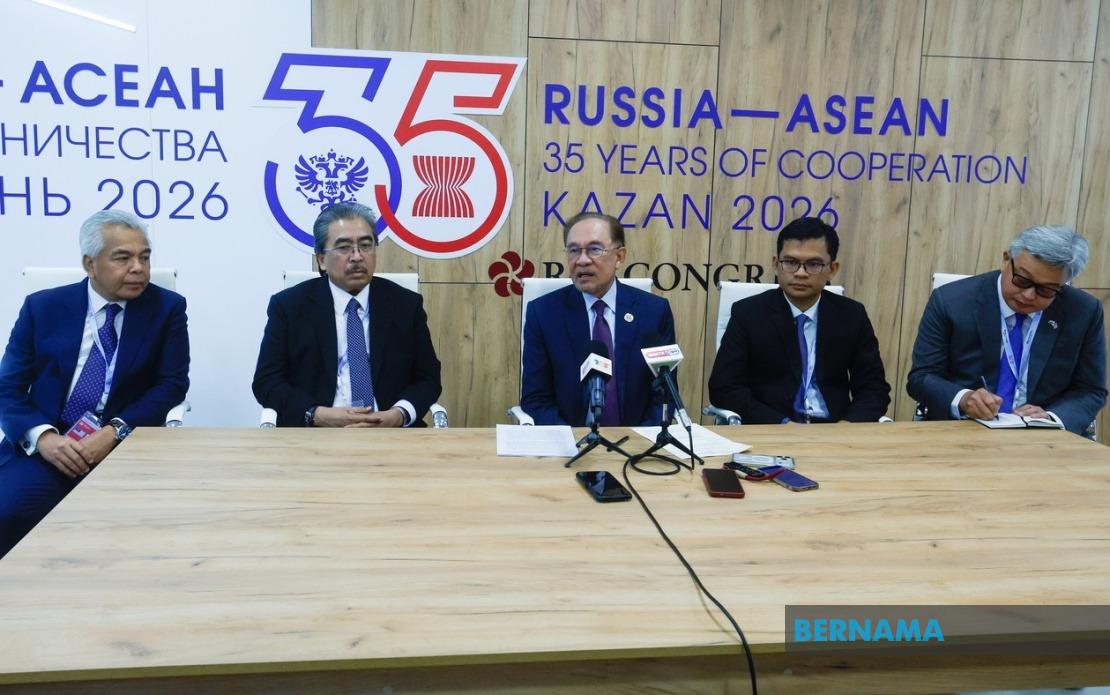
Prime Minister Datuk Seri Anwar Ibrahim has called for urgent steps to establish visa-free travel and direct flight connections between Malaysia and Russia, highlighting the disparity in visitor numbers from the Russian market compared to competing Southeast Asian destinations. Speaking at the ASEAN-Russia Commemorative Summit in Kazan on June 18, Anwar stressed that removing bureaucratic obstacles could significantly increase tourist inflows and strengthen bilateral ties with Moscow.
The Prime Minister's remarks underscore a strategic priority to diversify Malaysia's tourism revenue streams and deepen engagement with Russia at a time of broader geopolitical shifts in the region. During his two-day working visit, Anwar pointed out the stark contrast between Russian visitor numbers to Malaysia and those arriving in neighbouring countries with similar or newer diplomatic relationships with the Kremlin. The figures he cited paint a sobering picture of untapped opportunity: Turkey receives approximately five million Russian tourists annually, while Thailand welcomes around two million. Malaysia, by comparison, attracts only 100,000 Russian visitors yearly—a fraction that suggests significant market potential remains unrealised.
This disparity cannot be attributed to lack of interest or geographic distance alone. Rather, Anwar identified procedural and structural barriers as the primary culprits hindering Malaysia's competitiveness in attracting Russian travellers. He specifically highlighted the absence of direct aviation links and the complications surrounding payment mechanisms, which create friction at every stage of the travel planning and booking process. These challenges force prospective Russian tourists to consider Malaysia less favourably against easier alternatives, effectively ceding market share to Thailand, Turkey, and other nations that have streamlined their entry requirements and payment systems.
Anwar's critique extended beyond visa and flight logistics to encompass a broader observation about Malaysia's approach to international engagement. He suggested that the country has become overly constrained by adherence to outdated administrative procedures and, more significantly, by excessive deference to the concerns of third parties regarding bilateral relations with Russia. This self-imposed caution, he argued, represents an unnecessary handicap in pursuing legitimate economic and diplomatic objectives. The Prime Minister's comments reflect a pragmatic recalibration of priorities, suggesting Malaysia should prioritise its own interests rather than allowing fears of international disapproval to dictate policy decisions affecting tourism and trade.
The case of Iran was briefly mentioned alongside Russia in Anwar's remarks, indicating a consistent principle: Malaysia should not allow apprehensions about how certain countries might react to deter it from fostering mutually beneficial relationships with other nations. This stance signals a subtly more independent foreign policy posture, one that acknowledges Malaysia's position as a sovereign state capable of managing multiple partnerships without requiring external validation. For policymakers in Kuala Lumpur, the message is clear: strategic flexibility and pragmatism should override anxiety about international perceptions.
From a tourism industry perspective, the implications are significant. The Russian market represents substantial spending power, particularly during high-season travel periods. Russian visitors typically stay longer than tourists from some other key markets and engage extensively with hospitality, retail, and cultural attractions. The travel and tourism sector in Malaysia, which has been recovering post-pandemic, could benefit substantially from expanded Russian arrivals. Hotels, airlines, travel agencies, and destination marketing organisations have vested interests in seeing these barriers dismantled, making them natural allies in advocacy for policy change.
The feasibility of visa-free arrangements between Malaysia and Russia is bolstered by existing precedents. Many Commonwealth nations and ASEAN members maintain reciprocal visa exemptions with various countries, demonstrating that such arrangements can be implemented without compromising security or administrative efficiency. Modern border management systems, supported by biometric technology and data-sharing agreements, provide the infrastructure needed to facilitate visa-free entry while maintaining appropriate oversight. The question, therefore, is not whether such arrangements are viable but whether the political will exists to pursue them despite bureaucratic inertia.
Direct flight connections represent an equally achievable objective. Commercial airlines make route decisions based on demand projections and cost-benefit analyses. Should Malaysia signal clear interest through policy support and demonstrate sufficient demand potential, carriers serving Russia would likely evaluate Malaysia-based routes more seriously. Conversely, without explicit government backing and removal of administrative obstacles, Malaysian airlines and their international partners lack incentive to establish such connections. The investment required for new routes is substantial, and airlines need assurance that policy frameworks will remain stable and business-friendly.
Anwar's intervention on this issue reflects the broader context of ASEAN-Russia relations, which have been evolving against the backdrop of geopolitical realignments in Asia-Pacific. Malaysia's role as both an ASEAN member and a nation with independent diplomatic voice gives it particular leverage in navigating relations with Russia while maintaining other key partnerships. By actively seeking closer ties with Moscow through tourism and commerce, Malaysia positions itself as a pragmatic actor rather than one bound by external pressure. This approach aligns with Malaysia's historical foreign policy tradition of non-alignment and strategic autonomy.
The removal of visa and flight barriers would also carry symbolic significance beyond tourism statistics. Such measures would represent formal recognition of deepening Malaysia-Russia relations and constitute a public commitment to normalising engagement across multiple domains. Investors, business associations, and civil society organisations in both nations would view such developments as indicators of sustained commitment, potentially catalysing broader economic cooperation in sectors beyond tourism. The cumulative effect of seemingly technical policy changes can therefore generate momentum across the entire relationship.
Implementing these measures does require coordination across multiple government agencies and potentially legislative action to modify existing regulations. The Finance Ministry, Immigration Department, Aviation Authority, and Foreign Ministry must all align on priorities and timelines. However, the fact that Anwar personally raised these issues during an official summit visit suggests that senior leadership has already coalesced around the objective. Implementation should proceed relatively rapidly once bureaucratic coordination machinery is activated. Timeline expectations from the tourism industry and business community should serve to maintain urgency.
Looking forward, Malaysia's willingness to remove barriers with Russia could establish a template for reassessing entry requirements and connectivity with other important but underserved markets. The underlying principle—that Malaysia should pursue its own strategic interests without excessive concern for external disapproval—extends logically to engagement with other nations. This reframing of foreign policy calculus, articulated during the Kazan summit, may ultimately prove as significant as the specific measures regarding Russia, signalling a more assertive and independent approach to international relations.

